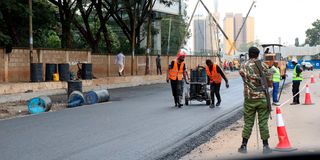
Collections through the Roads Maintenance Levy (RML) increased by an estimated Sh15 billion in the year ended June 2026, turning focus to whether the extra billions will translate to improved roads.
Analysis based on official data on fuel consumption shows that RML collections hit a record Sh135.27 billion, a rise of 13 percent from the Sh119.7 billion the previous year. RML is charged at the rate of Sh25 per litre of diesel and petrol at the pump and is used to maintain public roads in the country.
The higher collections shift attention to the Kenya Roads Board (KRB), which distributes the collections to other agencies charged with the maintenance of roads including the Kenya National Highways Authority (KeNHA), the Kenya Urban Roads Authority (Kura), the Kenya Rural Roads Authority (Kerra), the Kenya Wildlife Services (KWS), and the county governments.
KeNHA manages international and national trunk highways, Kura oversees urban roads within major cities and municipal areas, while KeRRA handles rural and smaller community connector roads.
County governments manage local county and unclassified access roads, and the KWS maintains specific roads located inside gazetted national parks and game reserves.
KRB recently said that it needed additional billions of shillings to fund the costly maintenance of Kenya’s vast road network estimated at 239,122 kilometres (km) two years ago, besides expanding the roads coverage.
A combination of increased consumption of diesel and petrol to 5.41 billion litres in the year under review compared to 4.87 billion litres a year ago, and a hike of the levy by Sh7 to Sh25 per litre of each of the fuels, drove the Sh15 billion jump.
The State raised the RML to Sh25 per litre from Sh18 in July 2024 despite public uproar with KRB, saying that a rise in cost of maintaining roads, expansion of the road network and lack of funding for maintenance of paved KeRRA roads triggered the need to increase the levy.
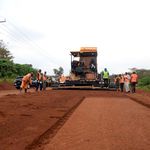
KRB data shows that Kenya’s public road network grew by 48 percent in four years to 239,122km in 2024 from 161,451km in 2016.
The growth in road length has piled budgetary pressure on the State even as an inventory and condition survey conducted in 2023 showed that 30 percent of the network is in a poor state and is most likely to get worse if not revamped. A further 46 percent of the roads are classified as being in fair condition, meaning that they will soon need a revamp.
The agency says that the country's annual financing gap for road maintenance is Sh63 billion, underscoring the funding burden on the Exchequer to protect the road network valued at Sh3.99 trillion from deterioration.
A latest register by the KRB showed that Nakuru has 14,505 kilometres of roads (both national trunk roads (NTR) and county roads), Makueni (12,116), and Kitui with 11,957.
This means that the three counties jointly host 16.13 percent of the country’s total 239,122 kilometres of road network.
The inventory further showed that Mombasa, Vihiga, and Lamu counties have the shortest road networks at 1,099km, 1,281km, and 1,498km, respectively.
Overall, the register showed that the country has 57,030 km of NTR and 182,092km of County Roads, marking a 48 percent jump over eight years.