Time flies with great content! Renew in to keep enjoying all our premium content.
Prime
Budget queries as ‘crisis’ spending hits Sh364bn
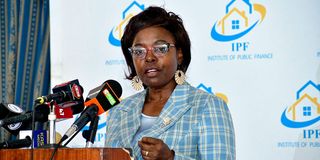
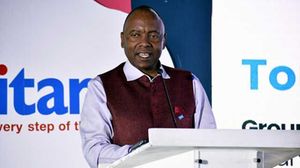
Controller of Budget (CoB) FCPA Dr. Margaret Nyakang’o makes her remarks during the launch of the Macro Fiscal Analytic Snapshot (MFAS) Kenya-2026 at the Sarova Stanley on January 22, 2026.
Photo credit: Francis Nderitu | Nation Media Group
President William Ruto’s administration has clocked Sh364.24 billion in emergency spending over four years amid concerns over abuse of a constitutional provision that allows emergency withdrawals for urgent and unforeseeable items.
More than half of this amount, or Sh209.37 billion, was spent in the year ended June 2026 alone, according to official disclosures, consolidating a spending spree under Article 223 of the Constitution.
Disclosures by the Controller of Budget show that emergency spending in the year to June was triple the Sh66.5billion spent the previous year. President Ruto’s administration tapped Sh69.2 billion in emergency spending in its first financial year, while Sh19.1 billion was spent in the year ended June 2024.
Controller of Budget Margaret Nyakang’o has flagged the surge in emergency spending, warning that it raises questions about the budget process and risks of potential misuse of the funds.
Article 233 of the Constitution allows the government to spend money outside the approved budget on unforeseen and urgent items. The Treasury must, however, seek parliamentary approval within two months after the money is withdrawn.
“The Controller of the Budget observed that some of the approvals ... concerned routine, day-to-day office operations but had not been allocated funds in the budget formulation process,” Dr Nyakang’o says.
“The Controller of Budget recommends a review of the legislative framework governing the criteria for funding under Article 223 of the Constitution, as well as the control mechanisms to ensure fiscal integrity and safeguard budget credibility.”
Dr Ruto’s administration had, over the four years to June 2026, requested to withdraw a total of Sh522.79 billion for emergency spending, but Dr Nyakang’o declined to clear Sh158.6 billion worth of demands.
Some of the items the State seeks to fund under the emergency withdrawals are routine and predictable items that are not urgent, contradicting the legal requirements for such spending.
Auditor-General Nancy Gathungu has also flagged the growing use of the emergency spending window by the State, saying that some ministries, departments and agencies disguised routine items like travel as emergencies.
Ms Gathungu said some of the projects funded under the emergency withdrawals had stalled while others lacked documentation, exposing taxpayers to potential loss of billions of shillings besides.
Issuing of sovereign bonds to restructure debt for Sh82.88 billion and Sh58.1 billion for buyback and accrued interest of the Eurobond drove the spending spree under the emergency withdrawals in the year to June 2026.
Dr Nyakang’o said Treasury should demonstrate the fiscal gain of the buyback for the Eurobond, adding that they should be critically scrutinised at the budget drafting stage.
Items funded via the emergency withdrawals included Sh7 billion for payment of Social Health Authority (SHA) dues for teachers, Sh5 billion for subsidised fertiliser and Sh4.09 billion for termination of an undisclosed roads annuity project.
Dr Nyakang’o said some items in the draft budget were omitted in the approved budget, only to be funded under the emergency withdrawals.
She cited the Sh3.9 billion included in the draft budget to pay for the hosting rights of the 2027 African Cup of Nations. The proposal was omitted in the approved budget but was paid via the emergency window.
A similar scenario unfolded in the year ended June 2025 when Sh1.68 billion was withdrawn to pay for the hosting rights of the African Nations Championship despite the obligation being foreseeable.
The spending spree under Article 223 flies in the face of Dr Ruto’s administration having accused the previous one of using the emergency window for questionable multi-billion shilling deals without due process.
Dr Ruto particularly slammed his predecessor, Uhuru Kenyatta, for allegedly manipulating Article 223 to splash Sh6.09 billion on buying a 60 percent stake in Telkom Kenya from Mauritius-based private equity firm Jamhuri Holdings.
The acquisition, which was executed in the last months of Mr Kenyatta’s administration, was later the subject of a parliamentary probe as Dr Ruto’s administration questioned whether the Telkom deal was rushed to benefit political insiders. The matter remains active in court. Treasury CS John Mbadi had accused his predecessors of using Article 223 to perpetrate corruption.
“This Article 223 has largely been used by the Executive to fund corruption and projects of their interest. It is a conspiracy to steal from the public that, as a committee, we are going to stop through amendments to the Public Finance Management) Act,” Mr Mbadi said in 2024 when he was the chairman of the Public Accounts Committee of the National Assembly.
Dr Nyakang’o has had to reject some of the withdrawal requests as questions mount over the suitability of the projects to be funded. For example, in the year ended June 2026, the Treasury had sought approval for Sh281.46 billion under the emergency spending provision, but Dr Nyakang’o refused to clear Sh72.09 billion.
Some of the withdrawals that Dr Nyakang’o rejected were Sh2 billion for operational expenses at State House, Sh2.04 billion for the acquisition of a disaster recovery site at Konza Technopolis, and the upgrade of the ICT system of the Kenya Revenue Authority.