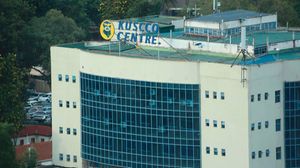
The High Court has revived a Sh2.9 billion tax claim against the State-owned Kenya Roads Board (KRB), saying that interest earned from investing surplus road maintenance funds is taxable.
The court overturned an earlier ruling by a tribunal which had granted tax exemptions to KRB and pointed out that such reliefs would only be granted through a law expressly legislated by Parliament.
"The tribunal erred in law in its interpretation of the First Schedule of the Income Tax Act and as a result arrived at an erroneous conclusion that the respondent’s interest income earned from various banks was exempt from tax," the High Court said.
The court noted that there is a difference between the statutory road levy itself—which is not taxable—and interest generated after investing the money.
The KRB collects Sh25 from every litre of petrol and diesel sold, with the proceeds sunk into the Road Maintenance Levy Fund (RMLF).
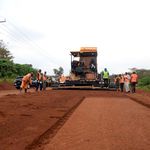
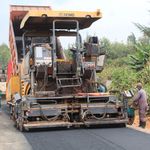
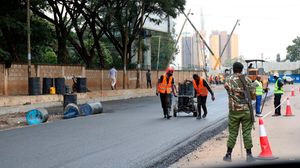
The money from the RMLF is used to construct, rehabilitate and upgrade highways.
The court decision overturned a 2025 Tax Appeals Tribunal ruling that had shielded KRB from the tax demand.
The judge rejected the road agency's argument that the interest earned on temporary deposits of the Kenya Roads Board Fund is not revenue income.
He clarified that interest earned by public agencies from investing idle public funds is taxable unless Parliament enacts a law expressly providing for exemption from income tax.
The dispute arose after the Kenya Revenue Authority (KRA) audited the KRB's taxes for the period 2015 to 2022 and, on January 4, 2024, issued an additional income tax assessment of Sh4.1 billion, alongside Sh1.2 billion in penalties and interest.
Following an objection by the Board, KRA reduced the assessment to Sh2.91 billion, including penalties and interest, after lowering the principal tax to Sh1.7 billion.
The KRB challenged the assessment before the Tax Appeals Tribunal, arguing that KRA had acted outside the statutory limitation period.
It also argued that the interest earned from investing surplus cash from the RMLF formed part of the statutory fund dedicated to road maintenance rather than taxable income.
The Tribunal agreed with the board in May 2025, prompting the Commissioner of Legal Services and Board Coordination to appeal to the High Court.
While ruling on the appeal, the court found that the Tribunal wrongly concluded the Roads Board's interest income from bank deposits was exempt from tax.
The court also found that the Tribunal wrongly treated withholding tax on interest as automatically being a final tax, and incorrectly held that KRA had assessed the Board outside the statutory five-year period.
It rejected the Tribunal's finding that the reassessments were issued outside the five-year statutory period.
"A proper reading of Section 31(4)(b)(i) of the Tax Procedures Act discerns that, for a self-assessment, the commissioner may amend an assessment within five years of the date that the taxpayer submitted the self-assessment return," the court said.
It noted that the Roads Board did not dispute KRA's evidence that it filed returns for the 2015 to 2020 tax years on March 22, 2022, and later filed returns for 2021 and 2022 before KRA issued the amended assessments in December 2023 and January 2024.
The court also rejected the Board's argument that the interest earned merely augmented public funds earmarked for road maintenance.
"If the interest income was indeed a capital accretion to the KRB Fund and dedicated exclusively to road maintenance, it is difficult to reconcile that position with the respondent's decision to retain the interest separately and subsequently remit it to the Consolidated Fund," it said.
"Such conduct undermines the respondent's assertion that the interest formed an integral part of the statutory fund earmarked solely for road maintenance."
It added that tax exemptions must be expressly provided by law.
"Exemptions from taxation must be conferred in clear and express terms. A taxpayer claiming the benefit of an exemption must demonstrate that the income in question falls squarely within the statutory exemption. The court cannot imply an exemption merely from the intended purpose of the funds," it said.
The court further held that the Tribunal erred by treating withholding tax on interest as a final tax without considering whether the statutory conditions for finality had been met.
However, the court agreed with the Tribunal that KRA acted unlawfully by issuing the Roads Board with two tax Personal Identification Numbers -one for the Board and another for the Kenya Roads Board Fund. The court said the law permits only one PIN for each taxpayer.
It found that KRA breached the Tax Procedures Act by issuing two PINs to the KRB and the Kenya Roads Board Fund.
"I agree with the Tribunal's finding that the appellant erred in its issuance of two PINs. The transgression is a violation of the law and not merely an administrative slip or duplication or exercise of discretion," the judge said.
The appeal was partly allowed, with the court preserving only the Tribunal's findings on the duplicate PIN while overturning its conclusions on the tax dispute.
The court ordered KRB to complete deregistration formalities and settle any outstanding tax obligations within 90 days. KRA must cancel the duplicate PIN within seven days after compliance.