Ghana vs Croatia Preview With Three Key Match Forecasts

Ghana and Croatia arrive at this Group L fixture from opposite kinds of pressure. Ghana began with a 1-0 win over Panama and showed enough structure to make the final match matter. Croatia opened with a 4-2 defeat to England and now need correction before the table closes around them. For readers comparing fixture previews, official match context and bookmakers such as legale bookmaker 1xbet Tanzania among other market labels, the forecast is not just about quality on paper. It is about whether Ghana’s compact game can stay intact, and whether Croatia can repair the defensive errors that made their opening match so costly.
The fixture carries more than final-day tension
Croatia vs Ghana is listed as a Group L match at the 2026 World Cup on 27 June. By then, both teams will already have a clearer picture of the group table, but the first round of results has given this fixture a sharp outline.

Ghana’s 1-0 win over Panama gave them early control of their route. It was not a wide-margin statement. It was a result built through patience, organisation and a late decisive moment. Croatia’s 4-2 loss to England, by contrast, left them chasing repair work almost immediately.
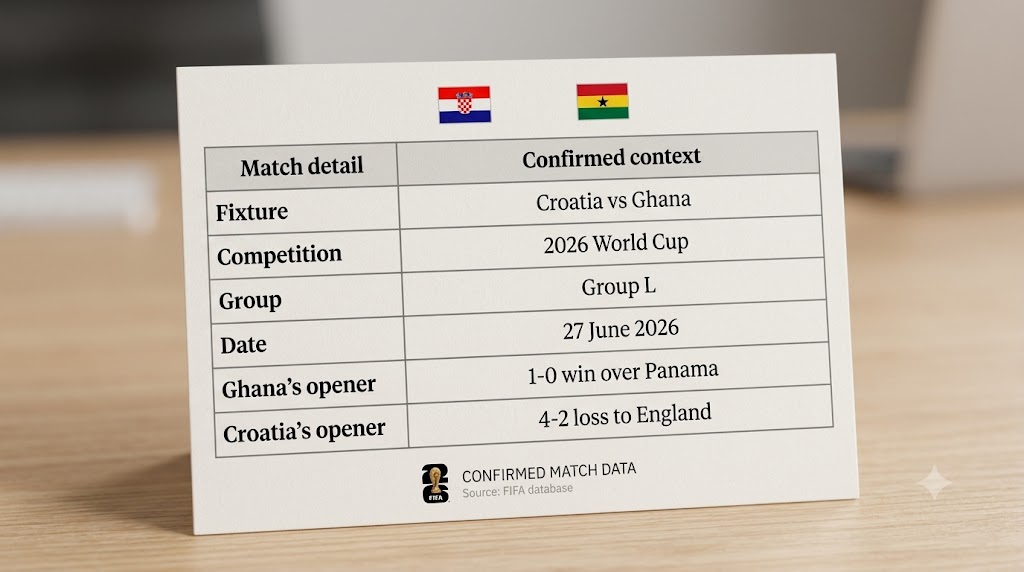
The match looks balanced because both sides carry different forms of urgency. Ghana have something to protect. Croatia have something to prove.
Forecast one puts Ghana’s structure under the spotlight
Ghana’s first forecast starts with organisation. Under Carlos Queiroz, the team has been described as tactically ordered and strong in quick transitions. That matters because Croatia are likely to want longer spells on the ball. Ghana do not need to dominate possession to make the match uncomfortable.
The Panama result gave Ghana a useful first platform. A 1-0 opening win can calm a group campaign, especially when the defensive structure holds long enough for a late goal to decide it. That result also changes the psychological tone of the final fixture. Ghana are not trying to rescue the group from zero. They are working from a position that already has value.
In practical football terms, Ghana’s compact block can make Croatia play sideways for long spells. If Croatia move the ball too slowly, Ghana’s transition threat becomes more dangerous because the first forward pass can arrive against an unsettled line.
Quick transitions are Ghana’s clearest route
Ghana’s transition threat is the most direct way to trouble Croatia. That does not mean constant counterattacking. It means choosing the right moments. A misplaced Croatian pass in midfield can become a fast route toward goal if Ghana’s first receiver turns cleanly.
Croatia’s opening defeat makes this more relevant. A team that has just conceded four may become cautious with rest defence. That can slow its own attacking rhythm. If Ghana keep their shape and force Croatia into sterile circulation, the game may begin to tilt toward Ghana’s preferred pattern.
The key detail is the first pass after recovery. If Ghana win the ball and play backward too often, Croatia can reset. If they find the channel early, Croatia’s experienced midfield has to run toward its own goal. That is when the forecast becomes less about reputation and more about speed.
Forecast two asks whether Croatia can fix the obvious flaw
Croatia’s second forecast is defensive correction. The 4-2 defeat to England gave them clear problems to solve, especially on set pieces. Zlatko Dalić highlighted defensive mistakes after that match, and the set-piece issue was not a minor footnote.
Croatia’s World Cup pedigree remains strong. Medals in 2018 and 2022 give this squad a memory of high-pressure football. Luka Modrić still gives the midfield a reference point, while Petar Musa offers a forward outlet with penalty-area presence. That experience matters, but it cannot mark a corner by itself.
The danger for Croatia is repetition. Once a weakness appears in a tournament, every opponent tests it. Ghana will not need to build elaborate attacking sequences if corners and wide free kicks remain available. A single set-piece lapse could undo a long spell of Croatian possession.
Midfield control is still Croatia’s escape route
Croatia’s way back into the group is likely to run through midfield control. Modrić’s value is not only technical. It is his ability to slow the match when the tempo becomes dangerous. Against Ghana, that skill may decide whether Croatia can keep the game from turning into repeated transitions.
If Croatia control second balls, Ghana’s counterattacks become shorter. If they lose the middle too often, their back line will face the kind of running that makes set-piece nerves even worse. The two issues connect more than they first appear.
Petar Musa’s role also matters. Croatia need a forward who can hold the ball long enough for midfield runners to arrive. If Musa becomes isolated, Ghana’s defenders can step in front and start attacks early. If he keeps possession under pressure, Croatia can turn midfield control into territory.
Three match forecasts in one board
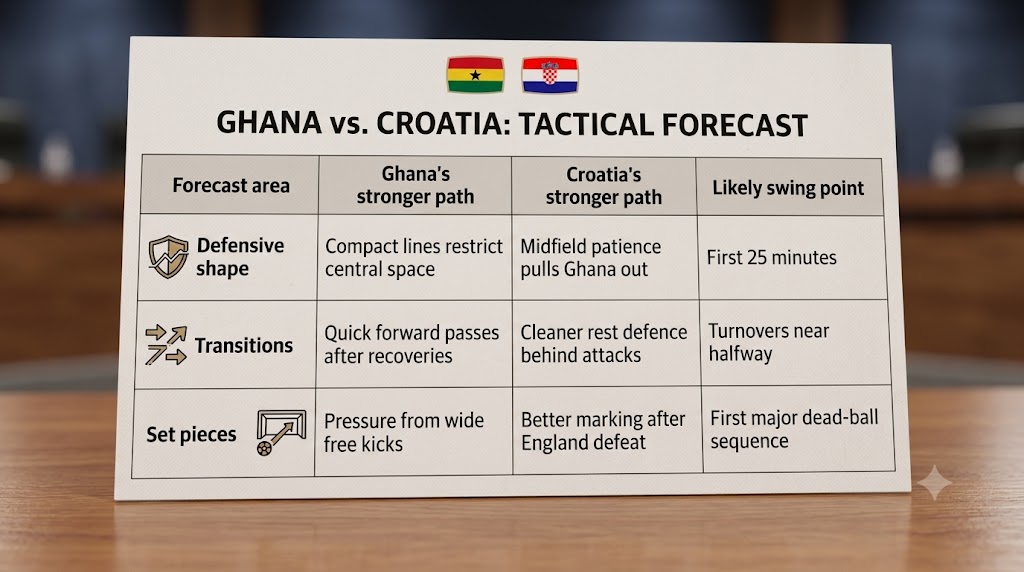
The matchup works best when separated into three forecast areas. Each one points to a different version of the match.
This is why the match cannot be reduced to one favourite label. Ghana’s path is narrower but very clear. Croatia’s path may be broader, but it depends on fixing the exact weaknesses exposed in their opener.
The first 25 minutes may define the whole tone
Opening phases matter in any group match. Here, they may matter even more. Ghana will want proof that their compact plan can survive early Croatian possession. Croatia will want proof that the England defeat has not left a visible mark.
If Croatia start with clean passing and controlled width, Ghana may have to defend deeper than planned. That would give Croatia the chance to build pressure without making the match frantic. If Ghana win two or three early transitions, the game changes quickly. Croatia may hesitate with numbers forward, which can reduce their attacking threat.
A slow start would probably suit Ghana more. Every quiet minute keeps the score level and places more weight on Croatia’s need to force the issue. A fast Croatian goal would change the match completely, because Ghana would have to open a structure designed for containment.
Ghana’s confidence is real, but margins are thin
The 1-0 win over Panama gave Ghana the right start. It did not make them a finished side. A late winner is valuable, but it also shows how tight the match was. Against Croatia, Ghana may not get many clean chances. Efficiency will matter.
That is where the forecast becomes delicate. Ghana’s structure can keep them competitive. Their transition threat can create danger. Still, a match built on low volume leaves little room for waste. A missed early chance can become expensive if Croatia settle into possession later.
The positive sign is that Ghana already handled a pressure moment. The opener did not run away from them. They stayed close enough to win late. That type of discipline matters in a final group match, especially against an opponent with more recent knockout-stage history.
Croatia’s experience needs a cleaner defensive base
Croatia’s recent World Cup history gives them credibility, but it also raises the standard for their response. A side with medals in the last two tournaments is not expected to unravel after one defeat. It is expected to correct.
The correction begins with set pieces. Marking assignments have to be clearer. First contact has to improve. Second balls near the six-yard area cannot become panic moments. Ghana will notice if the same problems remain.
Modrić gives Croatia a way to calm possession, but the defenders behind him still need protection. If the midfield loses spacing, Ghana’s quick breaks can put Croatia into retreat. If the back line gives away cheap dead-ball situations, Ghana do not need open-play dominance to threaten.
The match may come down to who controls discomfort
Neither side will get the perfect version of the game. Ghana may have to defend longer than they want. Croatia may have to chase without leaving room behind. That is the real forecast: the team that handles discomfort better will probably control the decisive spell.
For Ghana, discomfort means resisting long spells without the ball. It also means staying precise when the counterattack finally appears. For Croatia, discomfort means accepting that possession alone will not repair the group. The ball has to move with purpose, and set-piece defence has to survive inspection.
This is where the final 20 minutes could become severe. In broader market coverage, sports betting in Tanzania and other regional football-betting categories would likely separate that late phase from the opening pattern. If the score is level, every turnover feels larger. If Croatia need a goal, Ghana’s transition route becomes more dangerous. If Ghana are protecting a result, Croatia’s set-piece repair may be tested at the other end.
Final forecast before the group closes
Ghana’s strongest case is built on structure. They already have a 1-0 win, a clear transition threat and a coach whose plan can make matches uncomfortable. If they keep central spaces closed and turn recoveries into forward pressure, they can make Croatia play in a way that suits Ghana more than Croatia.
Croatia’s strongest case is built on response. They have the tournament background, the midfield quality and the attacking pieces to recover from the England defeat. But the defensive errors from that match cannot travel into this one. Set pieces are the fault line.
The forecast leans toward a tight match rather than a wide-open one. Ghana have enough organisation to keep the contest close. Croatia have enough experience to steady themselves if the first half does not go against them. The most likely story sits between those two forces: Ghana’s compact plan against Croatia’s need for a cleaner, calmer performance.