A dispute over amounts of carbon credits Koko Networks sought to sell in the global markets and what Kenya was willing to authorise fuelled the collapse of the clean energy startup backed by the World Bank.
Trade Cabinet Secretary (CS) Lee Kinyanjui said Kenya denied Koko Networks licences to sell carbon credits after it emerged that the company would take up the entire share Kenya could claim from the global markets, locking out other firms.
“The business model did not align. It was not possible to allow everything they wanted to claim because it would mop up everything that Kenya would otherwise do,” Mr Kinyanjui said on Wednesday.
“If we took up all the carbon credits that Kenya would get and gave only one company, what would we tell the 10 or 20 other companies that are also eligible for the same, including those in agriculture and manufacturing that would also want to claim?”
Koko filed for administration on February 1 after a dispute with the Kenyan government over the sale of carbon credits.
The company was unable to sell credits into compliance markets under Article 6 of the UN Paris Agreement after failing to receive letters of authorisation from Kenya’s government, denying the firm revenues needed to keep it afloat.
Kenya reckons that Koko wanted approval to sell carbon credits that would have exhausted Kenya’s share of the lucrative compliance markets, adding that the authorisation of the sale would have dented Kenya’s credibility.
Under the UN-supervised compliance market, Nairobi has a limit of carbon credits it can sell to other countries or what companies trading in Kenya can transfer to other nations to help meet the global emission targets.
Those credits cost about $20 in the compliance markets, as much as 10 times the price fetched in the largely discredited voluntary carbon markets—which could not help Koko Networks break even.
Kenya has also questioned the authenticity of the carbon credits generated by Koko Networks, linking the collapse of the firm to several factors, including “lack of transparency in the firm’s business model.”
The credits are generated through calculations about how much deforestation — and therefore carbon emissions — are avoided by low-income households switching from cooking with charcoal to using bioethanol made from sugarcane.
In June 2024, the Kenyan government signed an investment framework agreement with Koko that would allow it to sell credits into compliance markets under Article 6 of the UN Paris Agreement. However, the government has not issued the letters of authorisation needed to complete the sale of credits.
This is the first time a State official has publicly offered details on the circumstances leading to the sudden collapse of Koko, which has operated in Kenya for nearly seven years.
Mr Kinyanjui’s comments provide a peek into Kenya’s anticipated defence in in the event of a legal spat with Koko overcompensation.
An agreement inked with the World Bank’s Multilateral Investment Guarantee Agency (Miga), which offers political insurance, legally binds the country to compensate investors if officials block or interfere with trade.
Koko is expected to file a claim for insurance from Miga, alleging breach of contract by the Kenyan government.
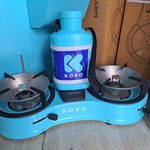
Koko gas cooker.
Photo credit: File | Nation Media Group
Last March, Miga insured Koko’s investment for $179.6mn (Sh23.1 billion), in what was the world’s first carbon-linked political insurance coverage.
The policy explicitly covers government breach of contract.
The World Bank unit is expected to push Kenya for compensation.
The company announced its exit through messages to its 700 staff last week, leaving a market it had invested about $300 million (Sh38 billion), with about 3,000 bioethanol fuel refilling machines and a customer base of about 1.5 million homes.
The company’s business is premised on a model that allows it to supply clean cooking fuels and stoves to low-income households at subsidised rates, then selling carbon credits in global markets to get funds to keep it afloat.
Kenya has set strict control of carbon credits sold from the country through a rigorous criterion on the eligibility of projects that benefit.
Countries buying the carbon credits also set limits to those selling to ensure that activities of the companies claiming the carbon credits have indeed contributed to prevention of emissions.
Kenya issues letters of authorisation to companies selling the carbon credits through the National Environment Management Authority (Nema).
To access global markets for sale of the carbon credits, Koko needed to get letters of authorisation from Nema and the two disagreed over the amount of carbon credits it should be authorised to sell, without crowding out other companies.
“In the tabulation of numbers, there was no concurrence because if Kenya gave in and authorised the numbers they were claiming, no other company in Kenya would have been able to claim. They would have taken everything that Kenya is entitled to,” Mr Kinyanjui said, citing insights from the meetings he participated in.
The State reckons that the business Koko operated, which played a crucial role in reducing reliance on firewood and charcoal for cooking, was important, but blames the company’s business model for the fallout.
The Trade Cabinet Secretary said Kenya lacks an infinite access to the global carbon credits markets, thus authorising only one company to utilise all the available limits would be detrimental to other companies and industries.
“If it was allowed, then it would have meant that others would not have space to also claim,” he said.
Koko is estimated to have raised more than $100 million since it started operations in 2013 in debt and equity.
Its ethanol refills were priced from as little as Sh30 and the stoves at about Sh1,500, making them cheaper than charcoal for poor households.
A customer refills a Koko fuel bottle at a smart dispensing unit in a refill shop. PwC has taken over Koko Networks after the cash-strapped clean-energy startup collapsed, raising hopes of a possible rescue.
Photo credit: Pool
Following the company’s exit, PriceWaterhouseCoopers (PwC) on Wednesday announced that its administrators, Muniu Thoithi and George Weru, assumed control of the troubled firm on February 1.
“Notice is hereby given that Muniu Thoithi and George Weru of PwC Limited were appointed the joint administrators of Koko Networks Limited and Koko Networks Global Services (Kenya) Limited from February 1, 2026 by the directors of the companies,” PwC said in a public notice.
The company’s exit, however, exposes taxpayers to a Sh23.1 billion bill since it had secured a guarantee from the World Bank to cover its operations against breach of its contract, civil strife and seizure of its land for public use.
Mr Kinyanjui on Wednesday alluded to there having been several attempts to address the issue and avoid a fallout, but the attempts flopped.
“When the business model is not workable, even if you push the journey at some point it will stall. What the company needs is a rethink and to reconfigure its business model,” he said.