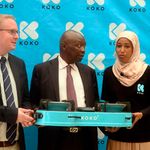
Koko Networks, a clean energy startup, has folded operations in the Kenyan market due to financial woes exacerbated by the failure to secure a permit to sell carbon credits in the lucrative markets abroad.
The exit, which ends an 11-year stint in Kenya, has triggered a spat with the Treasury and taxpayers now set to foot a Sh21 billion penalty for breach of contract unless the government proves that it did not breach contractual agreements made with Koko.

Koko’s move has left in limbo an estimated 1.5 million homes who have for years banked on the fuel that the firm supplied jointly with Vivo Energy.
What is the role of carbon credits in Koko’s business strategy?
Sale of carbon credits was a major revenue stream for the startup and would cover the deficit incurred in the sale of subsidised cooking stoves and fuel to millions of Kenyan homes.
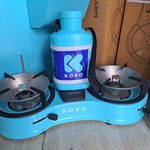
Koko sells its cooking stoves at a subsidised price of Sh1,500 against market price of Sh15,000. The startup also subsidised a litre of Koko fuel at Sh100 compared to the market rate of Sh200. This means that sale of carbon credits would plug a gap of at least Sh13,600 per customer.
For example, for a one using 10 litres a month, Koko needs a subsidy of Sh1,000 for that period, translating to Sh12,000 in a year or Sh12 billion if applied on one million low-income homes annually.
How is the sale of carbon credits undertaken?
Carbon credits are generated by activities that reduce or remove greenhouse gas emissions such as protecting forests or using clean fuels.
They are verified and then sold, allowing governments, companies or individuals to meet their emission reduction targets cost-effectively. Once purchased, they cannot be reused.
One credit is equivalent to 1.0 tonne of emissions. Carbon credits are sold either in voluntary or compliance markets.
What underpinned Koko’s deal with Kenya on sale of carbon credits?
In June 2024, the government signed an agreement with Koko that would allow it to sell credits into compliance markets under Article 6 of the United Nations Paris Agreement.
The deal gave Koko ownership rights over carbon credits, allowing it to freely transfer the credits while the government committed not to resell them.
Kenya also agreed to give Koko permits (letter of authorisation) to sell carbon credits from its clean fuel business to global markets, earning the startup substantial revenues that would among others fund the subsidy programme.
For example, Koko would have sold the credits to airline operators under the Carbon Offsetting and Reduction Scheme for International Aviation (CORSIA).
However, Kenya’s government failed to issue the necessary letters of authorisation needed to complete the sale of credits, forcing Koko to abruptly end its operations in Kenya.
How much has Koko raised since it opened operations in Kenya?
The startup raised an estimated $100 million (Sh12.9 billion at current exchange rates) in debt and equity from major international investors such as Mirova, Rand Merchant Bank of South Africa, Microsoft Climate Innovation Fund and Verod-Kepple.
The role of MIGA in Koko’s expansion plan?
The Multilateral Guarantee Agency (MIGA) , the guarantee arm of the World Bank, agreed to provide a 15-year guarantee of $179.64 million (Sh23.18 billion) to Koko last year.
The guarantee was to safeguard the startup in its expansion bid in Kenya, cushioning it against political risk, seizure of land for public use and breach of contract in its local operations.
The guarantee was the first political insurance for carbon trading in the world, underscoring its significance and the lucrative nature of the carbon credits market. MIGA’s insurance explicitly said that the Kenya government would compensate Koko in case of a breach of any of the commitments it has given to the startup.
How is Koko fuel prepared?
Koko is made from sugarcane and other agricultural by-products in a process that entails extracting sugar then fermenting it with yeast to produce ethanol which is then refined and made safe for cooking.
The fuel is then sold via vending at an estimated 3,000 automated teller machines across the country, with at least 2,000 of these located in Nairobi. Most of these shops are owned and operated by female entrepreneurs who partnered with Koko.
The fuel has for years been a lifeline for most low-income homes that would otherwise be using charcoal and kerosene; two dirty fuels whose usage the government is keen to cut.
Anticipated impact of Koko’s exit on Kenya’s clean cooking push
Koko has at least 1.5 million customers in Kenya, with a majority being the financially-deprived households in the urban areas.
With affordability of cooking gas and electricity still a major hurdle for most of the low-income homes, it is widely expected that most of these will switch back to dirty fuels such as kerosene and charcoal. This shift will deal a blow to the government’s efforts to spur uptake of clean cooking fuel.
Koko is also present in Rwanda where it entered in 2022. Operations in the tiny East African country have not been affected by the decision to close shop in Kenya.