Aliko Dangote the global player

 Dangote Group founder Aliko Dangote.

Photo credit: Pool

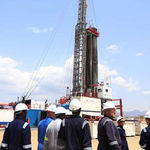
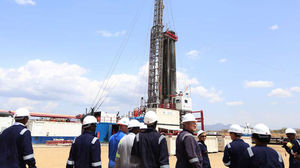
Last year, I joined a group of East African executives for a study visit to the Dangote Oil Refinery in the port town of Lekki, Nigeria. I wrote about it here and waxed lyrical about how the audacious $20 billion largest single-train refinery in the world was making global waves. We took another group last week.

It has been 16 weeks since the start of the Middle East war that led to the Strait of Hormuz closure and the subsequent massive disruption to the global oil supply chain. Yet no one is talking about how that disruption is being mitigated by a legit 100 percent African solution.

There is a delicious, almost poetic irony currently unfolding on the Atlantic coastline. For decades, Nigeria, a country practically swimming in crude oil, performed a spectacular feat of economic self‑sabotage: exporting its raw crude only to buy it back as ridiculously expensive, foreign‑refined petrol.

Enter Aliko Dangote’s $20 billion refinery complex in Lekki. A year ago, critics were convinced this mega‑refinery was destined to join the long, tragic hall of fame of stalled African infrastructure projects. Instead, Africa’s richest man has spent the last year proving that money, sheer stubbornness, and a touch of geopolitical luck can bend global energy markets to your will.

Dangote Refinery successfully loaded a tanker with 300,000 barrels of gasoline and shipped its first gasoline cargo to the United States in August 2025. Yes, you read that correctly. America, the land of fracking and massive Gulf Coast refineries, is now buying finished petrol from a refinery in Lagos.

And if that doesn’t tickle your sense of economic irony, look at Europe. Verified trade data shows Dangote exported 100,000 barrels/day of jet fuel to Europe in April 2026, surpassing U.S. shipments during that period. For a continent that has historically looked down its nose at African industrial capability, flying on planes powered by Lekki‑refined fuel must be a wonderfully bitter pill to swallow.

Locally, Dangote also fought the local oil importation cartels in a “Naira-for-crude” deal with the government. The noble idea was that Dangote would buy local crude in Nigerian Naira and sell petrol back to the domestic market in Naira, saving the country’s battered foreign reserves. It was a beautiful dream. It lasted about as long as a New Year’s weight loss resolution.

Local crude supply bottlenecks forced Dangote to start importing massive amounts of American WTI Midland crude, which is about one‑third of total crude inputs. Now, if you are buying raw materials in US dollars but selling your finished product in volatile Naira, you are essentially running a highly sophisticated charity. Consequently, Dangote transitioned domestic sales of petrol, diesel, and aviation fuel to US dollar benchmarked pricing.

While the world has been obsessing over his oil, Dangote has quietly been cornering another market: the global fertiliser trade. The existing Lekki fertiliser complex produces three million tonnes per annum (MTPA) of granulated urea. Armed with a fresh $600 million loan from the Africa Finance Corporation, Dangote is projecting to scale this empire up to 9 MTPA by 2028. Plans include a new 3 MTPA plant in Ethiopia. The end game? Generating over $4 billion annually in fertiliser exports.

The Middle East is currently a powder keg, and the threat of shipping disruptions around the Strait of Hormuz has global oil traders clutching their pearls. But as a seasoned Kenyan electricity user will tell you, a transformer crisis in Mbeere can magically translate into a transformer opportunity across the Nyandarua Ranges in Ol Kalou.

With traditional fuel shipping routes from the Middle East to Europe looking increasingly perilous, Dangote’s refinery, perfectly situated on the Atlantic seaboard, has become the ultimate “swing supplier.” It can pivot cargos east or west at a moment’s notice to fill sudden shortages.

Furthermore, as global buyers get jittery about West African crude logistics amidst international turmoil, Dangote has stepped up as the ultimate local buyer, snapping up domestic Nigerian crude. At 610,000 barrels/day throughput (94 percent utilisation), the refinery is processing record volumes and selling finished products in USD to panicked western buyers. Dangote has turned global instability into a highly lucrative victory lap and rewriting the global trade routes - one tanker of gasoline and one bag of urea at a time.

Dangote has unassailably debunked the myth that Africans cannot do business at a global scale. He is disrupting traditional global oil supply chains and has pulled up a seat at the table. Uninvited.

Obviously the “owners of capital” don’t like it. Expect them to make a lot of noise when he attempts the same derring-do infrastructure investment on the East African coast. And when an “environmentalist” dog starts barking about a new refinery there, look closely for its owners. They sit uncomfortably at the same table that Dangote has just invited himself to.

PAYE Tax Calculator

Note: The results are not exact but very close to the actual.