Thousands of households, mostly in low-income areas, are set to be affected after energy firm Koko Networks announced that it is winding up operations in the country amid financial woes.
Management informed workers that a decision had been made to close operations due to difficulties in obtaining approval to sell carbon credits outside the country to raise funds.
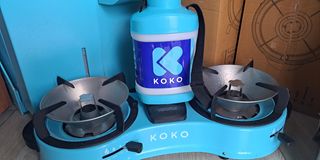
Koko currently sells fuel to an estimated 1.5 million customers across Kenya, most of whom are from low-income households. However, the price of the fuel and cooking stoves is subsidised, with the company relying on the sale of carbon credits to bridge the gap and fund its operations.
The startup employs at least 650 direct staff and works with thousands of agents who sell and refill fuel at more than 3,000 automated refilling machines countrywide.
“We are just from a meeting with the management, and they have communicated the decision to close operations. Nobody is supposed to be in the office tomorrow, the decision has been made,” a staff member told Business Daily on Friday.
By press time, Koko Networks had not responded to a request by Business Daily for comment on the alleged closure. Business Daily sent a request for comment through the company’s media communications portal.
Customers refill their containers at KokoPoints, which are automated teller machines, the majority of which are operated by female entrepreneurs.
LOA rejection
The exit is largely attributed to unsuccessful efforts to obtain a Letter of Authorisation (LOA) to sell carbon credits in lucrative markets outside Kenya. The company had banked on the sale of carbon credits abroad to raise sufficient funds to sustain its operations.
The rejection of Koko’s application for an LOA to sell carbon credits abroad casts doubt on the government’s commitment to supporting startups, particularly in the energy sector, where pollution from fossil fuels remains a major global concern.
Koko sells a litre of fuel at a subsidised price of Sh100, compared with a market price of Sh200. The cost of the stoves is also subsidised at Sh1,500, against a market price of Sh15,000.
The company sells carbon credits and uses the proceeds as a non-government subsidy to lower the prices of biofuel and cooking stoves, making them affordable for low-income households.
Koko’s exit is likely to push many of its low-income customers back to dirtier fuels, notably kerosene and charcoal, due to the high prices of liquefied petroleum gas (LPG) and electricity.
The cost of refilling a six-kilogramme container of cooking gas currently averages Sh1,350.
Koko, whose operations are based in Nairobi’s Baba Dogo area, entered the Kenyan market six years ago and has been instrumental in helping hundreds of thousands of low-income households access affordable cooking fuel.
The exit comes barely a year after the company received a $179.64 million (Sh23.18 billion) guarantee from the World Bank to cushion it against risks amid its expansion plans in Kenya.
The guarantee, advanced through the Multilateral Investment Guarantee Agency (MIGA), the World Bank’s guarantee arm, was intended to cushion Koko against risks such as civil strife, land expropriation for public use and breach of contract in its local operations.
Koko had targeted adding at least three million customers in Kenya by December 2027, a move that could have significantly boosted the government’s efforts to scale up the use of clean cooking fuels.
The company, whose key investors include Mizuho Bank of Japan and Rand Merchant Bank of South Africa, also has a presence in Rwanda.