Agriculture shapes Kenya’s economy and rural livelihoods, but it also shapes the country’s climate future in ways that are rarely acknowledged.
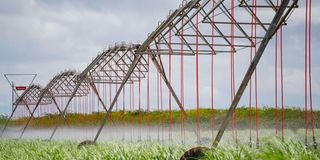
Food systems are a major source of environmental pressure, contributing to deforestation, soil degradation, water stress, and greenhouse gas emissions.
However, these costs are rarely reflected in national budgets, county plans, or investment decisions. At the same time, the social and ecological value of smallholder farmers, women, pastoralists, and the ecosystems that sustain food production continues to be undervalued or ignored.
Kenya’s food system debate is often reduced to yields, market prices, and fertiliser subsidies. While these issues matter, they only scratch the surface.
What is missing is a clearer understanding of the true costs and benefits embedded in how food is produced, distributed, and consumed. This blind spot continues to undermine efforts to build resilient, inclusive, and climate-smart food systems.
It is this gap that the TEEBAgriFood Kenya initiative seeks to address. On 20th January 2026, Strathmore University Business School, in partnership with the United Nations Environment Programme, convened the Plenary Technical Working Group for the TEEBAgriFood Kenya Project. The meeting marked an important step towards operationalising True Value Accounting in Kenya’s food systems.
At its core, the TEEBAgriFood framework asks a simple but transformative question: what if food system decisions were guided by their full economic, environmental, social, and health impacts, not just market prices?
Kenya’s current food system externalises high costs. Degraded soils reduce long-term productivity. Chemical-intensive agriculture increases public health burdens that are absorbed by households and county health systems.
Water pollution undermines ecosystems and downstream livelihoods. These costs are real, but because they are invisible in planning and investment frameworks, public funds and private capital continue to support practices that appear affordable in the short term but are costly in the long run.
The TEEBAgriFood Kenya Community of Practice aims to change this trajectory. By bringing together national ministries, county governments, researchers, civil society, communities, and the private sector, the initiative seeks to consolidate evidence across policy, communication, data, and scenario analysis processes.
This evidence is then translated into practical advocacy, training, and decision support tools that counties can use.
The county focus is particularly important. Devolution places agriculture, land use, and food systems squarely within county mandates.
Yet many counties lack tools to assess trade-offs between immediate economic returns and long-term sustainability. True Value Accounting provides a way to guide counties towards investments that are resilient, equitable, and nature-positive.
Kenya’s ambition to transform its food systems will not be achieved through business as usual. It will require rethinking what we value, what we measure, and whose interests our food systems ultimately serve.
Accounting for the true value of food is not optional. It is essential if Kenya is to build a climate-resilient future.
The writer is a climate action enthusiast and a communications specialist at Windward Communications Consultancy. [email protected]
Unlock a world of exclusive content today!Unlock a world of exclusive content today!