As the new year gets underway, one number tells a bigger story than any speech could. On December 3, 2025, our national electricity demand hit a historic peak of 2,439 megawatts (MW).
It was neither an accident nor a statistical curiosity. It was the clearest signal yet that the Kenyan economy is alive, expanding, and utilising energy to create real impact.
Electricity demand does not rise just because of good intentions. It rises when factories run longer shifts, when homes are newly connected and actually consume energy, when transport is electrified, and when power becomes central to how people cook, move, and earn a living.
Over the past 19 months alone, peak demand has grown by 12 percent. That is the footprint of growth, in real terms.
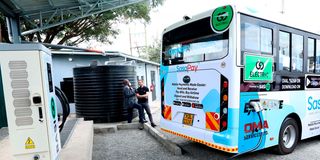
Behind this surge are several deliberate choices. Existing industrial, commercial, and residential customers are consuming more power because activity is increasing. Cold-season demand has risen as variable renewables temporarily reduce self-generation. E-mobility is no longer theoretical. Electric motorcycles, buses, and the requisite charging infrastructure are quietly adding load to the grid.
More than 400,000 new customers were connected in the 2024/25 financial year, a majority through the last-mile connectivity programme, and they are not just switching on lights but powering livelihoods.
At the same time, productive uses of electricity, including e-cooking initiatives, are reshaping household energy demand.
The monthly trend tells the story clearly. Peak demand rose from 2,362 MW in July, to 2,392 MW in August, crossed 2,412 MW in October, and reached 2,439 MW in December 2025. This is sustained momentum, not a one-off spike.
This growth, however, brings responsibility. Kenya’s firm capacity, the power reliably available at peak periods, stands at about 2,495 MW, with effective contracted capacity of 3,108 MW and a total installed capacity of 3,236 MW. The margin is workable, but tight. As demand climbs, adequacy, stability, and reliability cannot be left to chance.
That is why, in the short-term, we are acting decisively. Kenya Power is enhancing imports of up to 120 MW from Uganda when required. We are negotiating with Ethiopia for an additional 150 MW of peak power by December 2026. These regional interconnections are not signs of weakness but of smart grid management in an integrated East African power market.
At home, generation projects are moving with urgency. Two geothermal plants in Menengai, 70 MW of total capacity, are being fast-tracked for commissioning before March. Olkaria I power plant is undergoing rehabilitation to restore 60.5 MW by June. Sondu Unit 2’s 30 MW hydro turbine is being repaired and returned to service.
At the same time, key transmission lines are being commissioned to evacuate power more effectively to areas that have experienced rationing, including parts of Western Kenya, the Coastal, and the Central regions.
Reliability is not just about megawatts. It is also about reducing losses, strengthening the grid, and managing demand intelligently. Over the past year, system losses have fallen, smart meters are being rolled out, and targeted feeder upgrades are improving efficiency. These are unglamorous investments, but they are the backbone of reduced outages and better service.
These are deliberate plans, being executed with ruthless efficiency. It boils down to leadership. President William Ruto is leading from the front, with the Ministry of Energy and Petroleum in tow. There's no room for guesswork.
As we stabilise the present, we are also building the future. Our pathway for increasing generation capacity is anchored in clean, firm, and scalable power.
Geothermal remains the backbone. We are already a global geothermal leader, and that leadership is being recognised internationally. In 2025, Nairobi was selected to host the World Geothermal Congress in 2029, the first time this iconic global event will be held on African soil.
This is not symbolic. It reflects years of investment, technical competence, and policy consistency in geothermal development, and it positions Kenya as a hub for technology, skills, and investment in clean baseload power.
Beyond power generation, we are integrating energy with industrial growth.
Projects such as the geothermal-powered green fertiliser initiative at Olkaria demonstrate how electricity can drive value addition, food security, and export competitiveness, while cutting emissions. This is the logic that will guide our medium-term planning: electricity not just as a utility, but as an engine of industrialisation.
Looking ahead, demand will continue to rise. Visionary infrastructure projects, expanding manufacturing, digital services, electric transport, and a growing population all point in one direction.
Our task is to stay ahead of that curve. Over the medium term, multiple generation and transmission projects are in advanced stages of completion to prepare the country for this unprecedented growth and to support ambitious national development goals.
To Kenyans who have experienced outages or constraints, we want to be clear. We hear you. Reliability is not optional in a modern economy. It is a commitment.
Through diversified generation, regional power trade, grid investments, and disciplined planning, we are working to ensure that power shortages do not become the tax on growth.
The record peak demand of December 2025 should be seen for what it is: evidence of a bustling economy and a country using energy to move forward.
Our responsibility now is to match that demand with reliable supply, today and tomorrow, so that every megawatt consumed continues to translate into jobs, opportunity, and shared prosperity.
Kenya’s power moment is here. The work ahead is to sustain it.
Unlock a world of exclusive content today!Unlock a world of exclusive content today!