What US health deal means for your family

President William Ruto

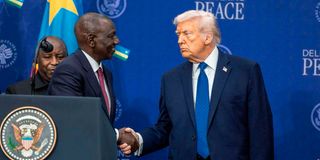
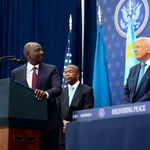
President William Ruto and US President Donald Trump after witnessing the signing of a peace deal between DRC and Rwanda in Washington DC, USA, on December 5, 2025. 

Photo credit: PCS

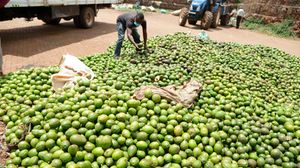
In Kenya, we understand land. It is inheritance, future, and identity. Imagine a foreign company comes to your family shamba (farm), plants their seeds, takes the entire harvest, and leaves you with nothing. You would never agree to such a deal. It would betray your ancestors and your children.

That deal is being made right now; not for land, but for a new kind of shamba: our collective health data. Kenya has negotiated a Sh208 billion ($1.6 billion) health agreement with the United States (US), the largest in our history. It promises real benefits. But who gets to harvest the wealth hidden in our medical and genetic information?
As the author of a recent Business Daily article on this topic, I heard from many Kenyans who were confused. They see funding and hope it means better care at their local clinic. They ask, "How does a debate about data in Nairobi affect my family in Bomet, Lamu or Mbeere North?"

Let us talk about it as if it were your family's land. The principles are the same.

The benefits are not imaginary. Over 13,800 new health workers by 2028. Kemsa managing all medical supplies through a single national system. Stronger disease surveillance. Support for the Social Health Authority.

For a family waiting hours at an overcrowded clinic, this matters. When a Nairobi court suspended certain provisions of this agreement, it was not opposing better healthcare. Rather, judges questioned the sacrifices Kenya is making in exchange, and the implications of those sacrifices for your family, not only in the present but also for future generations.

But to understand what we are trading for these benefits, we must first understand what makes our health data so valuable.

Because human life began in Africa, our genetic information contains more diversity and more secrets to fighting disease than any other population on Earth. Kenyan bodies carry a long memory of surviving malaria, HIV, tuberculosis, and waves of unfamiliar viruses, encoded in our DNA over thousands of years.

Foreign pharmaceutical companies are racing to access this data. This is not out of charity. Our diversity holds keys to drug development that European or American populations cannot provide. Our health data is fertile ground where the next cancer treatment or heart disease breakthrough may be discovered. They want to plant their seeds in our soil. The question is whether we will own any share of the harvest.

Under this agreement, Kenya commits to sharing disease data, biological samples, and genetic information with American authorities—often within days of detection.

Health Cabinet Secretary Aden Duale insists no personal details will be shared: no ID numbers, no addresses, no individual medical histories. But aggregated health data is exactly what powers modern medicine. It is not your name they want. It is the patterns in thousands of Kenyan bodies.

Here is what that means for your family. First, they will sell your harvest back to you at an impossible price.

A company uses Kenyan health data to develop a drug for a common illness. They patent it overseas. Because they own the patent, they sell that medicine back to you for Sh10,000 a dose, even though it came from your soil, your data, your biological inheritance. The solution to a Kenyan problem becomes a luxury few Kenyans can afford.

Second, they will build their grain silos abroad. The agreement requires nothing: no AI systems deployed in Kenya, no data centres on our soil, no computer labs training our young people. We provide the raw material. They capture the value.

Third, once your data crosses borders and gets woven into foreign AI systems, you lose control permanently. It is like signing away the title deed to your shamba. You cannot reclaim land after someone else has built on it. Some losses cannot be undone. The court understood this.

The court's pause is an opportunity—not to reject partnership, but to write a proper title deed for our data shamba. First, co-ownership of the harvest. Any patent, drug, or diagnostic tool developed from Kenyan data should be jointly owned.

You would never let someone farm your shamba and take 100 percent of the crop. If our data helps create a billion-shilling medicine, Kenyans deserve a share and affordable access to the product.

Second, investment in our land. Build the data centres here. Train Kenyan data scientists, not just technicians who upload records to foreign servers. If you want to farm our shamba, improve our infrastructure.

Third, the landowner keeps the final say. This agreement moved fast—counties, who legally run health services, were barely consulted. A fair deal means ongoing consent, community participation, and the right to withdraw if terms are not honoured.

We have something they need. Our genetic diversity is irreplaceable. No other population can provide what Kenyan data offers. That is leverage. The court has given the government until February 12, 2025, to respond. This is our window.

Talk to your family, your community leaders, and your Member of Parliament. Ask what they are doing to protect our national inheritance. Do not trade generations of wealth for today's payment.

Your health data is a shamba. Your medical history, your community's patterns of illness and recovery, the biological memory in your DNA—this all belongs to you. Do not let anyone take the harvest and leave you with empty fields.

The writer is an AI and Innovation executive. Se writs on data governance and technology transfer.

PAYE Tax Calculator

Note: The results are not exact but very close to the actual.