Expedite recruitment of land agency commissioners to cut down on losses

Public projects that require the compulsory acquisition of private land, such as roads, railways, airports, dams and housing, will be delayed and may incur contractual penalties.

Photo credit: Shutterstock

The second cohort of National Land Commission commissioners had their exit dinner on November 13 last year.

With the exception of Commissioners Esther Murugi and Tiya Galgalo, they all left office the following day, in accordance with the constitutional provision that they serve a single non-renewable term of six years. Murugi and Galgalo had assumed office a year after the others, hence their unexpired term.

In a gazette notice dated August 15, 2025, President William Ruto established a selection panel to recruit the third cohort of chairperson and commissioners. Rehema Dida Jaldesa, of the National Gender and Equality Commission, was appointed as chairperson of the panel.

The strategic appointment of the selection panel three months before the second cohort of commissioners left office was intended to ensure a seamless transition to the third cohort. This would prevent a leadership vacuum, as occurred between the first and second cohorts when the country was without commissioners for nine months.

However, the president's advisors made an unfortunate mistake; the gazette notice did not exempt commissioners Murugi and Galgalo, whose terms were still in effect.

Once the selection panel began its work, the two commissioners moved to court to protect their terms.

Subsequently, the High Court ordered the recruitment process to be halted. In its November 2025 ruling, the court quashed the August gazette notice that had declared vacancies in the offices of the chairperson and commissioners.

As a result, the recruitment process, which had shortlisted prospective candidates and commenced interviews, was put on hold. Over three months later, this situation still persists. This should worry us all. Why?

As no exit date has been set for its appointment and it has yet to fulfil its mandate, it is reasonable to assume the selection panel remains in office. This is inappropriate and will end up costing Kenyans more.

Furthermore, the country risks adverse consequences in two ways: firstly, the commission's administrative and technical staff usually implement policy decisions made by the commissioners, and secondly, commissioners Murugi and Galgalo, who remain in office, cannot constitute a quorum for policy meetings.

This means that they and the staff in the secretariat and the various units and directorates of the commission continue to draw full salaries yet cannot perform at optimal levels. The country loses out.

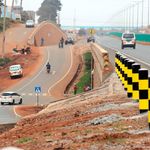
Public projects that require the compulsory acquisition of private land, such as roads, railways, airports, dams and housing, will be delayed and may incur contractual penalties.

Contractors will be unable to progress on projects where issues of land acquisition and compensation have not been resolved. This will be costly.

Yet the continued delay in appointing commissioners exacerbates all of the above. I think the Executive and the Judiciary should be able to find a quick compromise to cut any further losses.

A new gazette notice excluding the Commissioners with unexpired terms would for instance unlock the recruitment process. Alternatively, negotiations with them for the payment of commensurate perks may be considered, and the court orders vacated.

Let’s drop this apparent business-as-usual state that the country has entered on this matter while a key constitutional organ remains dysfunctional.

Ibrahim Mwathane is a Consultant on land governance: [email protected]

PAYE Tax Calculator

Note: The results are not exact but very close to the actual.