Time flies with great content! Renew in to keep enjoying all our premium content.
Prime
Treasury to table payslip tax cuts in September
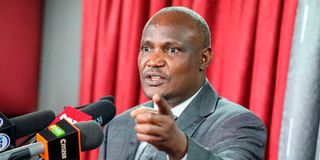
National Treasury and Economic Planning Cabinet Secretary, John Mbadi, says dollar loans were attracting interest rates of more than 6 percent, comprising prevailing Secured Overnight Financing Rate.
The National Treasury will table legislation in September to reduce payroll taxes, bowing to growing public pressure over shrinking pay slips following a series of mandatory deductions, including the 1.5 percent Affordable Housing Levy and contributions to the Social Health Insurance Fund (SHIF).
Treasury Cabinet Secretary John Mbadi said the proposed reforms were left out of the Finance Bill, 2026, because public participation generated wider proposals than the government's initial plan to raise the tax-free income threshold from Sh24,000 to Sh30,000.
Instead, the Treasury will consolidate the proposals into a separate Tax Amendments Bill expected to be introduced in September, less than a year before the August 2027 General Election.
"I know that the concerns have been on pay slips. Next month, I am embarking on public engagement on how to reduce the tax burden on pay slips," Mr Mbadi said on Wednesday.
"We proposed one option, but we also received proposals including reducing PAYE by five percentage points across the board. By the end of August, we want to consolidate all the suggestions and, with the agreement of President Ruto, introduce legislation in September so that Kenyans get some relief on their pay slips."
The announcement marks a significant policy shift after the Treasury had repeatedly resisted cutting Pay As You Earn (PAYE) taxes, arguing the move would reduce government revenue by about Sh35 billion annually.
Parliament has also piled pressure on the Treasury to overhaul the PAYE system.
During consideration of the Finance Bill, 2026, the National Assembly's Finance and National Planning Committee recommended raising monthly personal tax relief from Sh2,400 to Sh3,000 while reviewing all income tax bands to ease the burden on salaried workers.
Committee chairperson Kuria Kimani said deductions for SHIF and the Affordable Housing Levy had significantly increased the tax burden on employees.
"The committee recommends that the National Treasury overhauls all the tax bands. The Treasury has the necessary data and analytical tools to undertake a comprehensive review," he said.
The proposal received broad support during public participation from organisations including the Institute of Certified Public Accountants of Kenya (ICPAK), the Kenya Bankers Association (KBA), Deloitte, the Law Society of Kenya (LSK) and Grant Thornton.
The stakeholders proposed reducing the entry tax rate to 10 per cent on the first Sh30,000 of monthly income, 15 percent on the next Sh30,000 and capping the highest rate at 30 per cent for monthly earnings above Sh500,000.
Currently, Kenya's PAYE structure has five tax bands, with the highest rate of 35 per cent applying to monthly incomes exceeding Sh800,000.
ICPAK argued that the existing tax bands are too narrow, exposing relatively low-income earners to higher tax rates sooner than intended.
"The current PAYE bands are narrow, meaning higher tax rates apply at relatively lower income levels. This places an unfair burden on lower-income earners," the institute said.
The Treasury's earlier reluctance to reduce PAYE stemmed from concerns over revenue losses at a time when government finances have come under pressure from global economic shocks.
The exchequer, for instance, expects to lose about Sh32 billion after halving VAT on petroleum products to cushion consumers from rising global oil prices linked to conflict in the Middle East.
President William Ruto, however, publicly overruled Treasury officials before the 2026 Budget, insisting that payroll tax relief should proceed despite the expected revenue shortfall.