Building a reliable public finance architecture

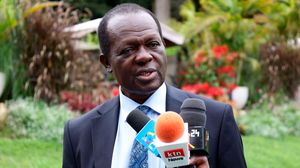
Controller of Budget Dr Margaret Nyakang'o when she appeared before the National Assembly Committee on Finance and National Planning at the Bunge Tower Nairobi on May 14, 2025.

Photo credit: Dennis Onsongo | Nation Media Group

The statement Margaret Nyakang'o delivered to Parliament was nothing short of seismic. The Controller of Budget — Kenya's constitutional gatekeeper of the public purse — told an oversight committee that the government had delayed settlement of Treasury bond interest obligations for May and June 2025, totalling Sh53 billion, and that payment was only made on 15 July.

In bond markets, such news can rattle investor confidence, depress auction demand and raise uncomfortable questions about sovereign credibility.

The National Treasury moved swiftly. Within 24 hours, it issued a categorical denial: no default, no postponement. The interest had been met by drawing on the government's overdraft facility at the Central Bank of Kenya. So who is right? The answer is both of them — and that is precisely the problem.

Had the government actually delayed coupon payments to bondholders, the noise would have been deafening. Bondholders are not passive recipients. Institutional fund managers, pension funds and insurance companies — the backbone of the domestic bond market — have treasury desks, compliance officers and internal audit functions.

A missed payment lands on a spreadsheet the morning it is due. It generates exception reports, triggers calls to the Central Bank of Kenya (CBK), and produces exactly the kind of market disturbance and disruption that would be impossible to conceal.

Bondholders would react immediately; auction demand would collapse; and yields would spike sharply. All these did not happen.

Dr Nyakango's office operates on a specific reporting framework: money flowing in and out of the Exchequer. Within that framework, the Sh53 billion had not moved by the due dates — a legitimate flag.

The National Treasury's position is equally defensible: the CBK overdraft facility, a short-term liquidity mechanism, was tapped to honour the payments before funds were formalised through the Exchequer Account.

This is not a case of one party lying and the other telling the truth. The Controller simply does not have full, real-time sight of withdrawals from the overdraft facility.

She sees the formal exchequer flows. She does not see the pre-exchequer liquidity bridge. The issue is reporting visibility; not actual non payment. Markets operate on settlement reality; not reporting cycles.

But the overdraft gap is not the only blind spot for Dr Nyakang’o. Kenya is increasingly operating multiple fiscal universes. No single oversight body has a complete real time view. The Controller has become a gatekeeper within a shrinking corridor. A gatekeeper of a gate where fewer and fewer transactions pass through.

The constitutional architecture that created this office was built on the assumption that public expenditure would flow through the Exchequer. Increasingly; money is raised outside it; spent before it and pledged beyond it.

Look at the expanding universe of funds that now exist entirely outside the Controller's purview: the Housing Levy, the Social Health Insurance Fund, the Infrastructure Fund; the Road Maintenance Fuel Levy, the Railway Development Levy, the Petroleum Development Levy, the Sports, Arts and Social Development Levy, and the Tourism Development Levy.

Collectively, they represent hundreds of billions of shillings annually moving through channels that the constitutional gatekeeper cannot see, approve, or audit in real time.

Then there is the securitisation binge. The government has discovered, with evident enthusiasm, that predictable statutory revenue streams can be pledged as collateral to raise immediate cash.

The Roads Maintenance Levy was securitised, enabling the Kenya Roads Board to raise Sh178 billion. The securitisation of Sports Development Levy raised Sh 40 billion. None of these proceeds pass under the Controller's scrutiny.

And then there is Article 223 — the emergency expenditure provision — which has on occasion been used not for genuine emergencies but as a corridor to move money before the Controller can object.

The remedies, though demanding, are clear. The Public Finance Management Act must be amended to collapse public cashflows into a single oversight universe. The Controller's mandate must be extended to cover securitisation proceeds and the contingent liabilities they create.

And Article 223 must be tightened: emergency spending authority is a legitimate constitutional tool, not a mechanism for routing expenditure around oversight. The criteria for its use must be narrowed.

Dr Nyakango reported what her ledger showed. She was doing her job. The system failed her by maintaining a ledger riddled with blind spots.

The question Parliament and the public should now be asking is not who was right in this particular dispute. It is how we build a public finance architecture in which such disputes cannot arise — because all public money, however routed and however labelled, must be visible to the one constitutional officer whose entire job is to account for it.

The writer is a former managing editor of The EastAfrican.


PAYE Tax Calculator

Note: The results are not exact but very close to the actual.