KenGen exits signal end of crony appointments

KenGen

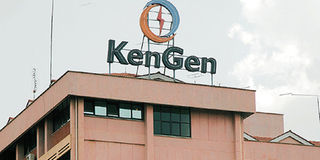
Kenya Electricity Generating Company (KenGen) logo on its headquarters.

Photo credit: File | Nation Media Group

It seems the era where politicians pack parastatal boards with cronies defeated at the polls is finally at an end — thanks to the coming of age of the Government Owned Enterprises (GOE) Act.

Consider what has just happened at KenGen. The company's chairman, Alfred Agoi Masadia, served two terms as MP for Sabatia Constituency from 2013 to 2022. He then ran for the Vihiga governorship on an ANC ticket but lost, and was subsequently appointed KenGen chairman.
Ms Rehema Hassan served as Woman Representative for Tana River County from 2017 to 2022. After losing her seat, she was appointed an executive director of KenGen.

Both were recently forced to step aside because the new Act prohibits such appointments. The law disqualifies anyone "who has been affiliated with a political party in the preceding five years" from being appointed to boards of commercial State corporations.

It defines affiliation as "having an official connection to a governing body of a political party, or having identified with a political party for purposes of vying for elections." Clearly, the incumbency of both Mr Agoi and Ms Hassan was no longer tenable. They had to exit.

Also departing was Mr Bernard Ngugi, who served as CEO of Kenya Power between 2019 and 2021. The new law equally disqualifies anyone employed by the government or its related parties in the preceding five years.

The KenGen board changes are the first real demonstration that the GOE Act can displace politically appointed directors and replace them with a merit-based governance framework.

This is not a mere boardroom reshuffle. It illustrates a larger institutional shift — the slow dismantling of the political appointment system that has historically dominated Kenya's State corporations.

If the government respects the independence of the new governance structure, many heads will roll across the 65 commercial State corporations in the country.

For years, Kenya has wrestled with a paradox: some of the country's most commercially important enterprises are State-owned, yet they operate in competitive markets where efficiency, transparency and access to capital are paramount. The new law seeks to resolve that contradiction by redefining how State-owned commercial enterprises are governed.

At the centre of the reforms is a simple but powerful principle: State ownership does not have to mean bureaucratic control. Historically, parastatal boards were large, politically influenced and subject to overlapping oversight from multiple government agencies.

Decision-making was slow and strategic clarity diluted. The new framework reduces board size, strengthens the role of independent directors and introduces clearer rules on appointments and tenure. These are structural reforms designed to ensure that boards function as professional oversight bodies rather than extensions of the political system.

KenGen provides a particularly important test case. As the country's main electricity generator, it sits at the heart of Kenya's energy transition. It must raise billions of shillings to expand geothermal capacity, modernise hydro plants and invest in new energy technologies.

Access to that scale of financing increasingly depends on governance standards. International investors, development banks and climate funds scrutinise board independence, transparency and accountability before committing capital. Strong governance can significantly reduce the cost of financing major infrastructure investments.

This is where the GOE Act becomes strategically important. By anchoring governance reforms in statute rather than administrative directives, the Act provides predictability and institutional stability. Investors know these standards are not temporary policy experiments but part of a durable legal framework.

The law also strengthens the position of minority shareholders. KenGen is listed on the Nairobi Securities Exchange, and thousands of Kenyans — through pension funds, insurance companies and personal investments — own shares in the company. Better governance is good not only for KenGen but for the credibility of Kenya's capital markets.

Critics sometimes worry that such reforms weaken the government's ability to guide strategic national assets. That concern misunderstands the intent of the law. The State remains the dominant shareholder and continues to set national energy policy.

What changes is the operational governance of the company. Around the world, countries that have successfully managed State-owned commercial enterprises — from Singapore to Norway — have done so by separating political oversight from day-to-day corporate governance.

KenGen's boardroom changes show this transformation has begun. The challenge now is to ensure that the principles embedded in the GOE Act are implemented faithfully across the entire commercial State corporate sector.

The writer is a former managing editor of The EastAfrican.


PAYE Tax Calculator

Note: The results are not exact but very close to the actual.