To know Dr Jacqueline Saline Olweya, you have to go back to the mid-1930s, to her mother.
The night she was forcefully married off at eight years old, there was a lunar eclipse – a sign, she would later tell her daughter, that the marriage was blessed. The man she was married to would become Jacqueline’s father and one of the two great influences on her life.
What he did for his young wife and his daughter in the years that followed gave her a conviction that decades in international development would only deepen, about what women’s empowerment actually requires, and who it requires it from.
“I realised the critical role that men play in women’s empowerment,” she says. It was a stance that did not impress the women’s movement. “And I got slapped around for that.” She didn’t relent.
That conviction has carried her through 25 years of work across 40 countries – Somalia, Rwanda, New York, South Africa, and to her current posting as UNDP Resident Representative in the Kingdom of Lesotho, the UN’s most senior development role in the country, one that answers directly to the government.
She has worked in conflict zones, worn a bulletproof vest to government meetings, and raised children, remotely, largely by phone and across time zones, flying in and out for birthdays and school plays from wherever the work had taken her.
“Balance is non-existent,” she says, “but you can find the appropriate mix in different seasons.”
Her education hasn’t been entirely hers. Born the last of 26 children, she will tell you that her first degree belonged to her mother, her second to her father, and her PhD was finally hers. Yet for all of it – the countries, the postings, the bulletproof vest – she measures her life in ones.
“If I just got one girl out of early marriage,” she says, “or one youth off drugs and into a business, I would feel accomplished.”
She brewed amazing spiced tea and samosas at her residence in Karen, and, throughout this conversation, sat ramrod straight at the edge of the sofa the whole time, the kind of stillness that belongs in a Kingdom.
I like the energy you and your husband shared just moments ago. And he’s quite the charismatic fellow, isn’t he?
[Laughs] He is. We have been married for 33 years. I married my father, basically. There is a story there.
Oh, I’m here for stories…
I was born in Kendu Bay, the 26th child, the last born. There’s a 12-year gap between my sibling and me, so by the time I arrived, my parents had more or less given up on having another child. I was very attached to everyone, especially my father. He took me to work with him every morning.
My mother worried I’d never settle into school, so she sent me to boarding school early. From nursery all the way to Form Six, all Catholic schools. I was also quite spoiled — the last-born, arriving when everyone else was already grown.
What did your parents do?
My mother was an interesting woman. She dropped out in Standard Two, but not in the way you might think. She was married off to my father when she was eight years old.
Eight years old!
Yes. When I was in Form Six, I asked my father why he was so protective of me. He would drive me to my boarding school at the beginning of term, pick me up at half-term, and come back for me on closing day.
When he grew older and couldn’t drive, he would send a driver, but he would never allow me to travel home on my own. Even at home, he was always watching over me. So when I was 17, I asked him.
So, why?
Instead of answering directly, he told me a story about a girl who had been married off at eight. About how that marriage came to be, the power dynamics around it, and how her life unfolded.
He spoke about her as someone who, despite everything, became a strong and influential woman. As he spoke, I began to recognise her. When he finished, I said, “That’s mum you are talking about!”
He told me he is protective of me because he often wonders what my mum might have become if she had been allowed to stay in school. But he also told me something else. He had homeschooled her. He hired a teacher who came to the house every day — Monday to Friday — to teach her English, mathematics, and everything she had missed. From that, she built her political career.
My mother was a nominated councillor for three terms under President Moi. In her final term, she was elected. Over nearly two decades in politics, she also served as chief campaigner for leaders like Okiki Amayo and Phoebe Asiyo.
How did the revelation affect you?
That experience changed how I see gender. Often, we judge cultural practices without understanding the context in which they exist. My mother was taken by her brothers and handed over to my father. It was forceful, yes, but this was 1936, and it was the norm.
Later, when I became national gender advisor to the government and Cabinet in Kenya, I approached my work differently. I chose to engage men, not exclude them, because I had seen very closely the role they can play in empowering women.
Yes, my father married my mother very young, something we would not encourage today. But I also saw how he educated her, supported her, and stood behind her as she grew.
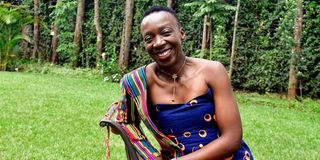
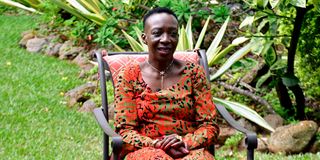
Dr Jacqueline Saline Olweya has worked for 25 years across 40 countries.
Photo credit: Francis Nderitu | Nation Media Group
When my mother entered politics, his support was unwavering; financially, emotionally, in every way. I remember nights when she would be out campaigning and come home late.
My father would stand at the gate, sometimes until midnight, waiting for her. That taught me that while cultural practices can limit people, individuals still have a choice in how they respond — whether to suppress potential or nurture it. For me, the lesson was clear: men have a critical role to play in women’s empowerment.
And support within a partnership — real, consistent support — can shape what a person becomes. Perhaps that’s something you see in my own marriage. I always looked out for a man like my father. Very supportive. He gives me tough love. I’m the last-born, a bit spoiled, so sometimes I need someone to tell me the truth even when I don’t want to hear it.
Did you ever speak to your mother about this?
I did. I actually started writing a book about my mother’s journey — but I stopped when I got to the point where she passed away. It became too emotional. [Emotional pause] I spoke to her about it, though, and she shared her side of the story.
She told me she was very sporty, a good athlete, and an excellent dancer. That’s how my father first saw her. She had escorted a cousin to a wedding, dancing as part of the procession. In her telling, it was ordained by God.
She said that as she was being taken from her home to my father’s car, there was a lunar eclipse — everything suddenly went dark. For her, that was a sign. A blessing over the marriage. At the time, my father was working in Kisii as a health inspector, and he took her there with him.
She told me she resisted the consummation of the marriage for about two months. Even though she believed it was God’s will, she still felt she was too young. She wanted to run back home, but she was watched closely and couldn’t leave. She never spoke about it with bitterness.
Eventually, she stayed. And she said my father began to nurture her almost like one of his own children until she grew into adulthood.
Wild! I also can’t get over the fact that your dad had a car in 1930s
[Laughs] Yes.
You have three degrees. What drove you to excellence?
When I got my Bachelor’s degree in Education, my father said, “That’s not your degree. That’s your mother’s. Go and get yours.”
So I went back for my Master’s almost immediately. When I finished, he said, “No, that one is mine. Now go and get yours.” So I earned the PhD for myself.
My father pushed me constantly. Given everything he had seen and done, especially with my mother, he believed there was no limit to how far I could go.
That was my first motivation. The second motivation was watching many of my friends drop out due to early marriage, lack of fees, and other circumstances.
I wanted to go further, not just for myself, but to show that, despite where you come from, you can make it. The third was my older sister. She is an incredible woman. She was married at 16. Her first three children are older than I, so during school holidays I often stayed with her. She insisted that I should go further than she had been able to.
Modesty aside. It takes a lot to arrive where you are. What has it cost you?
[Pause] One of the biggest costs has been distance from family. I started working internationally in 2005, about 21 years ago, and my first posting was in New York. It was the first time I had been away from home that far.
I had studied and worked in Kenya all my life, and I was very close to my family, especially my mother. When I was based here, I would see her every two or three weeks.
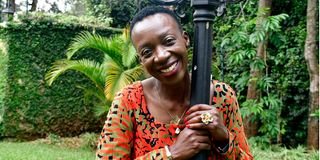
Dr Jacqueline Saline Olweya is the UNDP Resident Representative in the Kingdom of Lesotho.
Photo credit: Francis Nderitu | Nation Media Group
New York changed that completely. Suddenly, I couldn’t just go home. It felt like a kind of separation, not by choice but by circumstance. I tried to make up for it with daily phone calls to my mother, and to my husband who remained here. We made a commitment to see each other every six months, or at least once a year.
Even then, it comes at a cost.
I moved with my children initially, but after two years my husband brought them back home. My work involved constant travel. I was moving across the world, training in different countries, and I was hardly in New York myself. It made more sense for them to be settled. So, being away from my immediate family was a big sacrifice.
The other cost has been social. I had strong networks here of friends and community, and every time I moved, I had to start again. Build new relationships. Learn new spaces. It is interesting, sometimes challenging, but I’ve been able to do it. I now have friends in New York, in Somalia, in many places. But maintaining those relationships takes effort.
How did working away change the family dynamics?
Balance is a tricky word. It’s never really 50–50. But you can find an appropriate mix. When I was in New York, after two years, my husband took the children. Our youngest son was barely two. Around that time, he got a PhD scholarship in Texas, so at least we were closer.
I visited as often as I could, sometimes every two weeks. It was easier for one person to travel than for all of them to come. I remember one visit.
I tried to make dinner, and my daughter Natalie, who must have been about three and a half, said, “Mummy, that’s not how we do it here.”
[Laughter] And I thought, where exactly am I going wrong? It takes sacrifice, but I’m grateful because the sacrifices my husband and I made still allowed our children to feel loved. I worked, I travelled, I built my career, but when my children or my husband needed me, I showed up. It takes commitment. Financially, yes. But more than that, personally.
After many years of championing women's empowerment, what's the one uncomfortable truth about gender that doesn’t get into the reports?
[Laughs] Wow, that’s a heavy one. [Pause] One uncomfortable truth is that many men are not naturally gender-sensitive or responsive. For a long time, the dominant approach was what we called Women in Development, focusing almost entirely on women and their empowerment. But from my own experience, there are limits in the approach.
I believe in a Gender and Development approach, one that brings both men and women into the conversation, recognising that both have a critical role to play in advancing gender equality. Because the reality is that if men are not engaged, progress is limited.
When I took on the role of gender advisor to the Government of Kenya, I pushed to actively include men in the journey. It wasn’t always well received. In fact, I faced resistance even from within the women’s movement. Some asked me, “Where were you when we were building this movement? And now you want us to work with men?” There was a sense that men were the opposition. But I saw it differently.
At some point, we all ask ourselves why we're here, what we are doing here, on earth. I’m sure you have asked yourself that. I'd be keen to hear your answer…
I believe my reason for being here is divine. Not for my own good, but for the good I can bring to others. In Somalia, it became simple. If I could stop the early marriage of even one girl, that would be enough. Not every girl gets the kind of second chance my mother did. In Lesotho, it’s the same. If I can help one young person to get into school, business or away from drugs, then I’ve done what I came to do.
What makes someone as self-assured and confident like you insecure?
What makes me insecure is what happens after me. Will the initiatives I’ve started or supported be sustained when I’m no longer there? It’s not that I feel I have to hold everything together, but I ask myself: have I done enough to empower the people I’ve worked with to stand on their own? Because if they can’t, then it all falls when I exit. That worries me.
The other insecurity is about my family. Will my children one day feel my absence? Not just physically, but in a deeper sense. Will it affect them later in life? I think about that often. For instance, my son is now in Switzerland. He left when he was barely 18. I sometimes wonder whether my absence has made him stronger, or more vulnerable. We talk about it. He tells me, “Mom, you’ve done a great job. You’ve taught me well.” But as a mother, you still worry.
What do you fear at this stage of life?
I worry about how my children will turn out, especially in their marriages and in their careers. My older son is already married, and he seems to be doing well. I believe he learned from us. He’s responsible. But my daughter is 23. I don’t yet know what her life will look like.
And my youngest son — I worry about him too, especially given the world they are growing up in now. It’s very different from when I was young, even from when my older son was growing up. So yes, from a family perspective, that weighs on me.
And then there’s the other fear: what happens when I retire from the UN? I’ve lived a very fast-paced life for so long. I wonder what comes after that.