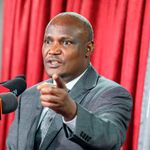
While it remains unclear what triggered Humphrey Wattanga’s mid-term exit from the Kenya Revenue Authority (KRA), the corner office at Times Tower, which he occupied for three years as commissioner-general, had clearly grown too cold for his comfort.
With an impeccable résumé built during his long stint in the private sector, Mr Wattanga’s tenure as tax czar was cut short as his progressive reforms ran into the cold, unbending wall of government bureaucracy, reinforced by a coterie of Treasury mandarins who call the shots at KRA, according to insiders.
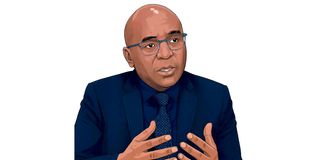
The KRA board last week announced that it would not extend Mr Wattanga’s term as Commissioner General, noting that he would instead proceed on terminal leave as the agency begins the process of recruiting his successor.
“The Kenya Revenue Authority (KRA) Board informs the public that it will not be renewing Humphrey Wattanga’s contract of service as commissioner-general. Consequently, and in accordance with his contract, he is proceeding on terminal leave effective immediately,” said board chairman Ndiritu Muriithi.
“The Board takes this opportunity to commend the outgoing commissioner-general for his dedicated service and leadership to the Authority and the country,” he added, even as he announced the appointment of Lilian Nyawanda as acting commissioner-general.
Mr Wattanga did not respond to our queries on claims that his tenure was hampered by his outsider status, having been among the few commissioners-general who did not rise through the ranks of the KRA.
The decision brought to an end his turbulent three-year tenure at the helm of the tax authority, during which the soft-spoken Alliance High School alumnus unsuccessfully sought to meet William Ruto’s ambitious target of raising tax revenue to 20 percent of gross domestic product (GDP), largely through technology.
Initially, some insiders cited the failure to effectively deploy technology to ramp up tax collections as the main reason the former commissioner-general was shown the door.
When contacted, Mr Muriithi neither confirmed nor denied whether failure to optimally deploy technology was Mr Wattanga’s undoing, but acknowledged that more could have been done on that front.
“The Kenyan economy is digital,” he said, noting that most transactions are now conducted electronically and that technology remains key to improving tax compliance.
“Therefore, our technology must be mobile-first. They [small businesses] must be able to interact with our digital system,” he added, noting that this would help reduce the cost of compliance for small businesses.
However, in a twist, persons close to Mr Wattanga point to the KRA’s pivot towards becoming a mobile-first service agency—through USSD and WhatsApp platforms—as one of his key achievements at Times Tower.
The truth—obscured by a whirlwind of speculation, including claims linking Mr Wattanga’s ouster to the dirty fuel scandal that has implicated three senior energy officials—likely lies somewhere between these two competing narratives.
For those close to Mr Wattanga, the failure to renew his term came as little surprise. Mr Wattanga, who came into the KRA’s top office wielding the clean brooms of the private sector, was, by some accounts, an unwelcome guest.
Besides refocusing the KRA as a mobile-first agency, those close to the former commissioner-general also laud his organisational restructuring, which saw the creation of a “home for hustlers” through the establishment of the Micro and Small Taxpayers (MST) Department.
Seasoned tax administrator George Obell was appointed Commissioner for MST in November last year, after heading the department on an interim basis since its creation in March 2025. The department aims to lift collections from the notoriously opaque segment of the economy that has, for decades, frustrated the taxman.
They also note that it was during his tenure that the KRA intensified its crackdown on missing trader–enabled tax evasion through the validation of transactions via the electronic tax invoice management system (eTIMS), alongside administrative tools such as the controversial “special table.”
In the “missing trader” scheme, firms simulate legitimate trading by meeting the formal requirements of a taxable supply. However, no actual goods or services are exchanged, with payments made to create artificial costs and obscure the ultimate beneficiary, thereby evading tax obligations.
Part of Mr Wattanga’s strategy involved placing suspected firms under the “special table,” effectively locking them out of filing VAT returns through the iTax portal.
This, in turn, made compliant companies reluctant to trade with them, as they could neither claim input VAT nor offset VAT paid on purchases against output tax. The system was later discontinued due to abuse, Mr Wattanga said.
The former vice-chair of the Commission on Revenue Allocation is also credited with professionalising the agency’s technical base through the reintroduction of the Graduate Trainee Programme.
Although he did not meet tax collection targets like his predecessor Githii Mburu, Mr Wattanga presided over one of the strongest revenue growth records. He became the first commissioner-general to achieve double-digit growth, with revenue for the financial year ending June 2024 rising by 11.1 percent to Sh2.407 trillion, up from Sh2.166 trillion the previous year.
However, this translated into a performance rate of 95.5 percent against target, meaning the goals were still missed despite the strong growth.
So, why was Mr Wattanga shown the door despite such performance?
No sooner had the public begun to process news of his ouster than reports emerged of his appointment as South Africa High Commissioner—a move seen as saving face for a commissioner-general who came into office with one of the strongest academic credentials.
Mr Wattanga scored straight As in the Kenya Certificate of Secondary Education (KCSE) exam, earning admission to Harvard University, where he studied biochemical sciences, before completing an MBA at the Wharton School of the University of Pennsylvania.
He built a career in finance, operating in the rarefied world of investment management, most recently serving as managing director at Meghraj Capital. He also served as commissioner and vice-chair of the Commission on Revenue Allocation for a constitutionally mandated six-year term.
As Kenya struggled to grow tax revenues to match rising expenditure, Mr Wattanga’s approach leaned towards simplification, technology and institutional culture change rather than the aggressive enforcement tactics of the past.
Yet there were those unsettled by the far-reaching deployment of technology—which, beyond eTIMS, also included the rollout of body cameras at customs.
“Technology came to eat their lunch, and those who benefited from the status quo fought back—frustrating the commissioner-general at every turn,” said a source at the KRA.