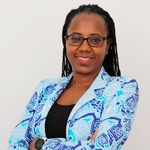
Dr Rachel Naa‑Du Laryea began her career at Goldman Sachs, one of the few Black women to break into a male-dominated industry. She went on to JPMorgan Chase, where she helped shape a $30 billion racial equity investment strategy as corporates sought to close the racial wealth gap.
An anthropologist by training and entrepreneur by instinct, Dr Laryea describes herself simply as a storyteller. Her trajectory, from Virginia’s wealthy enclaves to Wall Street’s trading floors and into academia, has been defined by a single question: how can capitalism work for Black communities?
Dr Laryea, your profile boasts many titles: author, anthropologist, entrepreneur, and includes notable employers like Goldman Sachs and JP Morgan. But how would you describe yourself?
If I were to pick a title, I’d probably say storyteller. That’s always felt the most authentic. I view all my titles as different ways to tell a story and various mediums through which to do so.
Few women get to work at both Goldman Sachs and JPMorgan. How did you get there?
My mother was a beneficiary of one of those lottery initiatives, and that allowed my family to live in one of the wealthiest neighbourhoods in Virginia, US, at that time, and this sparked in the question-what would it mean to be both black and wealthy? Because that neighbourhood was predominantly white.
Every depiction that I saw of wealth and thriving was associated with whiteness. I had a very different lived experience. My mother raised my brother and I by herself.
But then outside of our home, I saw these kinds of nuclear families of a white mum, dad, children, the dog, the white picket fence, really the American dream as it’s been visualised for decades. That got me thinking about what the cost would be to be associated with Black wealth. How could it be achieved?
I went to a private all girls secondary school on a scholarship and again, to be around tremendous wealth, but not really feel a resonant with it. That again extended into my college experience. I studied social and cultural analysis, with a focus on metropolitan studies and Black studies.
It was then that I was trained for the first time by anthropologists. I was so fascinated by the kinds of questions they asked about society and culture. The training made me think about racial capitalism.
Then something interesting happened: I got recruited while I was at New York University to work at Goldman Sachs. At that time, I knew nothing about Goldman. They invited me to a sales and trading day. I knew nothing about sales or trading. It was at the encouragement of my elder brother, who said, ‘Just see it through and see what happens. This could change the trajectory of your life.’
I pursued the recruitment process, and sure enough, it really did set me on a trajectory that I did not expect. It was also revealing to me because it was my first time seeing black professionals sit in contradiction of being very critical of capitalism.
But then they were also leveraging the tools of capitalism in service of themselves, but most importantly, in service of their communities outside of what many would call the belly of the beast, which is Wall Street and the capitalist engine.
That changed the paradigm for me in terms of how I thought about money, race, and capitalism, and it put me on a new path. When I went to graduate school, I wanted to create a pragmatic theory and language for what I was seeing. I also wanted to create a narrative that was suggestive of the agentic capacity we as black people truly have and to change our relationship to the capitalist system. I did a dual PhD in Black Studies and Anthropology.
Ultimately, my first role at JPMorgan Chase was in racial equity investment strategy. It was in 2020, and after the murder of George Floyd, several institutions, financial or otherwise, were making commitments about what they were going to do to close the racial wealth gap.
I was part of a team responsible for a $30 billion racial equity commitment and the deployment of those investable dollars (at JPMorgan Chase). I transitioned into another vertical of the firm in wealth, understanding the mental models and the behaviours of how people think about wealth, how they think about investing, and how we pair that institutionally with products, asset types, and asset classes that we offer to our clients as well, all in service of building generational wealth or individual wealth.
And along the way, I also created my business, Kelewele, and continued writing the book ‘Black Capitalists’, which really started with my dissertation.
How do you find your voice within a white and very male-dominated sector?
When I first entered the industry, I really struggled with that. I certainly had culture shock and imposter syndrome. But over time, I realised that whenever I enter rooms that don’t mirror me, it is precisely an indication that I am supposed to be in that room and I’m supposed to be sharing my insight and my perspective because they need to hear it.
What do you feel is dragging women, especially women of colour, from achieving their goals?
Black women will take on or feel compelled to take on work that is uncompensated. Black women are systemically disadvantaged when it comes to promotions.
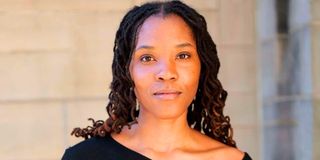
Dr Rachel Laryea is an anthropologist by training and an entrepreneur.
Photo credit: Pool
They’ll be responsible for a large remit of work, but not be compensated for it or receive the promotions that they're deserving of. I think that makes it very difficult to stay or climb that corporate ladder. When you overlay racism and microaggressions, just to show up to work every day can feel like a battle.
How can capitalism work for Black people?
The core objective is around ownership, because in a system or a process whereby African countries export raw materials, and then buy or import finished materials or resources at a higher price, it indicates the core problem that we don’t own the end to end means of the supply chain.
And so, for us is to be in a greater position of economic power, a greater position of community, and even really thinking about pan Africanism as a framework for this.
What are your goals?
First and foremost, it is to change our belief and our mindset about our worth as African people, whether we're on the continent or not. If we do not believe that we are worthy of lives indicative of thriving, our behaviours will not match what's needed for us to thrive in a capitalist system.
There are blueprints, which I lay out in the book, around how people are doing this, how people are driving innovation and change, which should inspire us and open our minds to think about every preconceived notion about our relationship to the economic system.
What would you advise young women looking up to you?
It might sound cliché, but I tell them to bet on themselves and believe in themselves, first and foremost.
I would also tell them that it’s a journey, an evolution, even for myself. They talk about the challenges of what it means to be a black woman in corporate spaces.
When you look at it, and especially when you're in those spaces, you must sit with the reality that it's so important to go where you feel valued and where there's that kind of reciprocal exchange.
And the core of that is first in knowing who you are, being confident in who you are, and believing in your own capacity to create the reality in the future that you want.
Many people questioned my choice to leave Goldman Sachs to go to graduate school. People were like, ‘What are you going to do with that?’ ‘What are you going to do with a dual PhD?’ ‘We don't see it.’
We are seeing more African-Americans retracing their routes on the continent, with some even relocating, what would you say are the factors driving this change?
The sociopolitical landscape. The moment a black person is born in the US, they are thrust into a world where they must fight for this notion of home.
When you consider the American ideals of life, liberty, and the pursuit of happiness, the bedrock of the American Constitution, for black people, those constitutional ideals don’t hold up, and they never have. That alone serves as quite a compelling reason for people to look elsewhere in search of that feeling of home.
Would you undo anything from your past experiences?
I’d confidently say no, there’s nothing I would undo, because I think everything was intentional. I’m also a person of faith. And I believe that nothing was a coincidence or by chance. I think every stop along my journey has led me to this moment. The more I dive into it, the more I realise that.