How a cancer diagnosis shaped Mildred Odhiambo’s rise to CEO

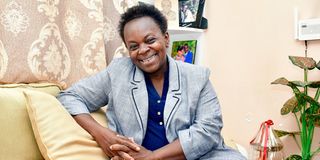
3rd Park Hospital CEO Mrs. Mildred Odhiambo poses for a picture after the interview at her residences on April 23, 2026.

Photo credit: Francis Nderitu | Nation Media Group

In 2014, two years before the diagnosis, Mildred Odhiambo began fading from her own life. Not dramatically — quietly. The school committee went first. Then church activities and chamas, followed by social obligations she had carried for years.

By 2016, her life had thinned down to work and sleep. A great fog of fatigue had settled into her bones that no length of leave could shift. She would take two weeks off, rest completely, return to her desk, and within days feel as though she had never left.
"I was tired of the fatigue," she says. "I wanted something very disruptive to happen in my life, because I felt I was not living a normal life." Then, in December 2016, she felt a lump in her breast. The cancer, in its terrible way, was the disruption she had been waiting for.

What makes this remarkable is what it interrupted. Long before she became CEO of 3rd Parklands Hospital, Mildred had been building order in surgical spaces, first as a nurse at The Nairobi Hospital, then in theatre at Upper Hill Medical Centre, where she spent over a decade refining systems, training staff, and quietly turning a day-surgery unit into a benchmark others came to study.

Nairobi Hospital came. Gertrude's came. Johnson and Johnson partnered with her through the Nairobi Surgical Skills Centre to train theatre managers and nurses across the region. She was presenting papers at medical conferences, advising on hospital design, helping institutions decide which equipment to buy and how to build policies around it. When visitors asked the Upper Hill directors how the place ran so well, the answer was always the same – ask Mildred.

What followed the diagnosis, the mastectomy and chemotherapy, turned out to be the most clarifying season of her professional life. In the stillness of recovery, she finally let herself think. The consultancy she had been too depleted to register took shape.

The lectureship at Daystar followed. And somewhere between chemo sessions, she picked up knitting again. And the path that would lead her to the CEO's office at 3rd Parklands Hospital, a quaternary surgical hospital she had helped design, staff and implement from the ground up, began not in a boardroom but in a sitting room in Nairobi, needles clicking, the fog finally lifting.

She is not the kind to tell you cancer is a gift. But she will tell you, without hesitation, that it was the disruption that saved her, and ultimately, the one that built her.

You started as a nurse. Walk me back to the beginning…

I grew up in a moderate family – happy, busy, full. Then my father died when I was in Form Two and we moved to the slums in Nairobi. But my mother was a happy person. She taught us love and hard work, even there. I was always looking for a way out, and nursing was it. It moved my family from the slums to a reasonably good place. I did my training at Nairobi Hospital, diploma first, then midwifery at Pumwani.

At Pumwani I met nurses who worked in operating theatres and they kept telling me stories. I started sneaking into theatre during Caesarean sections, learning instruments. That's where it started. When I went back to Nairobi Hospital, I knew exactly where I wanted to be.

What was it about theatre that held you?

It's very dynamic. Every day something different happens. There's a lot of learning, reading combined with skill development. That combination excites me. I worked in Nairobi Hospital's theatre for nine and a half years. Three of those I was a clinical instructor.

I think that's where I also discovered that I love to teach. And then Upper Hill Medical Centre came calling. Someone had been watching, which is what happens when you really put your heart into something.

One of the administrators called and said they were looking for someone to head their theatre. I laughed. I had never thought of myself as a leader. I'm very strict, and I thought I was too strict to lead people. I thought I was better off teaching. But I went for the interview, loved what I saw, and left Nairobi Hospital. I didn't know what a risk I was taking.

3rd Park Hospital CEO Mrs. Mildred Odhiambo poses for a picture after the interview at her residences on April 23, 2026.

Photo credit: Francis Nderitu | Nation Media Group

I only understood that 13 years later when I tried to resign and it took six months to find my replacement. Nobody would come. They said everyone would be watching, and if they failed, it would be visible. That's when I knew I'd been sitting on something valuable without fully seeing it.

What did you build there?

Upper Hill was a standalone day-surgery unit — five theatres, not attached to any hospital. I arrived with a passion for doing things properly and a very low tolerance for systems that didn't work. I implemented structures, trained staff, and just gave it everything.

Eventually hospitals like Nairobi and Gertrude's were coming to benchmark against us. When people asked directors how the place ran so well, they would say: ask Mildred.

That's when I understood that I had knowledge worth sharing. I started consulting — helping people set up theatres, advising on equipment, training nurses.

Johnson and Johnson partnered with me through the Nairobi Surgical Skills Centre. I was presenting papers at medical conferences. Teaching became its own career running parallel to everything else.

Tell me how you discovered you had cancer in 2016…

I had been exhausted for two years before the diagnosis. An impossible fatigue that leave couldn't fix. I had been dropping things - the school committee, church activities, chamas - until all that was left was work and sleep. I told my husband I wanted to quit. He couldn't understand why.

One evening after a shower, I felt something on my breast. I brushed it off at first, but it stayed. I saw Dr Edwin Otieno, he sent me for a mammogram, and the results came on a Monday. Highly suspicious of cancer. I think years of journeying with other people through difficult things had prepared me - counselling marriages, working with young people in crisis.

I knew how to hold something hard without immediately falling apart. But the honest thing? When he told me, I wasn't scared. I felt relief. I had been waiting for something disruptive to come and stop the life I was living.

The cancer arrived and I thought, a disruption has come. I know that sounds strange. But that is what I felt. I had a child in high school, another in primary, and I wanted to wait until schools had opened.

We told the children over the Christmas holiday. They were terrified. My youngest said, mum, please don't have chemo. I had a mastectomy — right breast removed. Then six weeks later, chemotherapy. Eight sessions.

What don’t they tell you about chemo?

The fatigue. Oh the fatigue is bad. People talk about nausea, but fatigue was worse. An impossible fatigue - I don't know how to describe it. Your legs give way. Nothing relieves it. You can't sleep, you can't rest. It starts the moment chemo ends.

What helped me was walking. Even if it was just from the bed to the door on day one. And I couldn't stay in the bedroom, I would spend all my days in the sitting room. Visitors would ask why I wasn't resting. But that's just me. I don't sleep long hours even now.

What did you discover during that time?

I knitted when my children were young. During chemo I went back to it. I was making baby sweaters. People would ask, have you finished my baby sweater? I'm visiting next week. And I'm like, I'm having chemo. [Laughs] But I liked having my hands busy. I can't just watch television. I need to be making something. And people came.

I didn't understand the magnitude of what I had poured into others until it came back during those months. There was no day my husband had to sit with me at the hospital, someone always came. People asked when my chemo dates were so they could be there.

Cancer also changed your career direction…

I had been wanting to start a consultancy for years but the fatigue had stopped me. I would sit down, write a vision and mission statement, and never register the company.

During radiotherapy, 25 sessions, which I was doing in the mornings and going to work in the afternoons, I finally made the decision. I joined Centonomy for an entrepreneurship course while still in treatment. In January 2018, the consultancy launched. In February, I started lecturing part-time at Daystar.

I resigned from Upper Hill the same month and Third Parklands found me. After cancer treatment I had learned something about myself – I work day and night. I don't stop. I wasn't sure I had that energy anymore. But I agreed to three months for the hospital which turned into three years. I came in January 2022 to train theatre staff. I finished that in two months.

3rd Park Hospital CEO Mrs. Mildred Odhiambo poses for a picture after the interview at her residences on April 23, 2026.

Photo credit: Francis Nderitu | Nation Media Group

The CEO looked at me and said, you've been inside the theatre too long, come and look at the whole hospital. I found gaps everywhere. I built a team, created leadership structures, started fixing systems. The Director of Nursing left — there was tension because I had no title and was changing everything. So the CEO made me Chief Operations Officer. Early 2025, I became CEO.

Did you ever see yourself as a CEO, a leader?

I never even planned to be a leader of any kind. I thought I would teach. But I've come to understand that when you are passionate, when you are excellent, and when you never undermine the work in front of you, people see you before you see yourself.

I learned everything. Theatre management, equipment, infection control, hospital design, health systems. Every piece of knowledge eventually became useful. You just don't know when.

What does leading a young workforce actually feel like from the inside?

Common sense is not common. [Laughs] Healthcare is dynamic and learning curve is steep. My biggest challenge is continuous empowerment – getting people to deliver at the standard you need, consistently. It's not a one-off training. It's every day.

Your daughters work with you in the consultancy...

Part-time. The eldest is an architect. She handles hospital design. The second did finance and CPA, she handles the accounts. She's the one who pays my salary. I appreciate that very much.

We work together at night sometimes - designing, planning, having meetings - and in the morning everyone goes back to their other jobs. They've become as busy as I am. I keep telling them that. They used to complain about my hours. They don't anymore.

What do you fear now?

Being overwhelmed. I started a DBA - doctorate in business administration - on top of the CEO role, the consultancy, the lecturing. I'm afraid of getting my hands into too many things and not delivering well in any of them. And the other fear is this: I didn't want this profile. I told the person who set up this interview - I don't want to be known on social media and then people come to the hospital and don't see results. I want the results to speak. Not the visibility.

What do people misunderstand about you?

They think I am always angry. I'm not. I'm quiet. When I'm quiet, I'm just quiet. And when I'm strict with someone who has made a mistake, they think I'm cruel. But there are no evil feelings. I just want things done properly. Those who learn that come to understand it. Those who don't, leave thinking I'm difficult.

Follow ourWhatsApp channel for the latest business and markets updates.

PAYE Tax Calculator

Note: The results are not exact but very close to the actual.