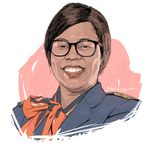
Size isn’t everything. Evah Kimani will be the first to tell you this. She is not a big woman. “People always think I am not serious because of my size,” she says.
“When you’re tiny, people think you’re too young. They think you don’t have the right content.”
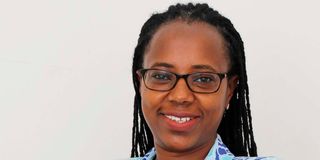
She has spent the better part of two decades in corporate Kenya quietly disproving that assumption, first as a programmer, then in product management, then climbing the ranks of the insurance industry, until last year when she became CEO and principal officer of Britam Connect, the newly licensed micro-insurance subsidiary of one of East Africa’s largest financial services groups.
The business she now leads has insured over four million Kenyans, commands more than 40 percent of Kenya’s micro-insurance market, and has set its sights on 25 million people across Africa in the next five years.
She was not supposed to end up here. Not in insurance, not in a corner office, and certainly not by the route she took. She was the bright girl from a humble background, which in Kenya meant one thing – medicine. Or pharmacy. Engineering maybe?
“I secretly chose to study computer science,” she says with the quiet satisfaction of someone who has been proved right about a decision they made alone. “For a very long time, my villagers thought I was studying medicine.” She let them think it.
That gap, between how Evah appears and what she actually is, turns out to be precisely the business she is in. Britam Connect is built on a similar premise; that the millions of Kenyans the insurance industry has long overlooked – the boda boda rider, the tea farmer, the gig worker fuelling his motorbike – are not uninsurable. They are simply underestimated.
“Our customers don’t wake up thinking about buying insurance,” she says. “They think about buying mobile data, fuelling their motorbikes or sending money. So why not integrate insurance into those everyday transactions?” It is, you could argue, the story of her career told in a product.
Are you surprised you ended up where you are, or did you always see it coming?
Two things. Yes, I’m surprised. As a little girl, I didn’t imagine I would become a CEO. I don’t come from privilege, so that wasn’t something I could see for myself.
But I think it has been a mix of preparedness and the people around me, people who have given me the confidence to go for opportunities that sometimes test my capabilities. And it’s always scary. Every time I move up a level, I ask myself, can I deliver? But you just…soldier on.
You mentioned earlier that you were a tiny girl - that you still are. Did that affect how you showed up in the world, or what you went after?
It did. People often took me less seriously because of my size. We talk a lot about being judged for being big, and that’s real, but the reverse is also true. When you’re small, people can underestimate you. In meetings, you’re not always taken seriously.
So it becomes your responsibility to shift that. When you get the chance to speak, you have to change the way people see you. It definitely shaped my career, because I was often overlooked. When you’re tiny, people assume you’re younger, less experienced.
Does that happen now, as accomplished as you are?
Once people know you’re accomplished, they begin to take you seriously. I’m the kind of person who might walk into a room in jeans and sneakers - and in those moments, yes, it can happen.
But once people know what you’ve done, something shifts. They begin to behave differently. There’s a kind of respect that comes automatically to some people, just based on how they look. When you don’t have that, you have to earn it first.
If you could insure one thing in your life that no policy can, what would that be?
My children. I have a 14-year-old daughter and a nine-year-old son. I had them in my 30s, later than what many people around me expected. But from the moment my daughter was born, everything shifted. They define how I live. My work, my social life…everything I do revolves around them.
Motherhood has been amazing. I don’t do many parenting classes, but I did one when my daughter was very young. And there’s something I took from it that has stayed with me: They are the children, and I am the grown-up. That has become my mantra. Whenever I face a challenge, when they behave in ways I don’t expect, I come back to it. It helps me pause, calm down, and respond better.
What are you unsure about?
This role isn’t even a year old. It’s a new appointment, with very audacious ambitions. And I’m an ambitious person. I don’t like to fail. So when I find myself in territory where I’m not winning, I fight to get out of it. It keeps me up at night, the weight of the responsibility, and what it will take to achieve what we’ve set out to do. It’s a challenging task. But I’m up to it.
What have been your key tipping points in life?
From a personal perspective, my tipping point was when my dad passed away. It was the first time I lost someone close. I was about 30, and until then, life felt wide open.
That moment changed how I saw everything. It made me think about purpose, about what I wanted to leave behind. I realised I wanted a family. I wanted children. I wanted, one day, to know I had people I cared for, and who loved me for who I am.
From a career perspective, another tipping point was becoming director of partnerships and digital. A new boss came in, restructured the company, and gave us 15-minute interviews for new roles. At one point he asked me, “Do you think you can do this job?” And I said yes. I hadn’t imagined myself at that level. But the next day, I had the role. That moment taught me to believe in myself. To raise my hand. To say I’m ready, even when I wasn’t completely sure.
Do you find it easy to talk about yourself?
No.
Are you shy or humble?
I think I’m humble, partly because I come from a very humble background. But I also carry this belief that everything you have can come to an end. So on your way up, you stay humble. That’s what guides me. My team challenges me on it. They tell me to be more visible, to speak about my successes. So it’s something I’m learning. Something I may need to fix. But it’s also who I am.
How are you raising your daughter differently?
After I was promoted to director, I really confronted something, that as a woman, it’s not always easy to ask for what you want. I realised it was something I needed to work on. And I see some of those traits in my daughter. So I’m intentional about how I raise her.
I share my successes with her. When I was promoted, she was the first person I told. I explain my work to her. I’ve even taken her to meet my boss. She asked him questions about me. I want her to see that it’s okay to succeed. That she can be a high performer.
And that she is also human. Who has wants and who fails…
That’s right.
Which brings us to that question about failure that you were trying to avoid. I’m circling you, Evah.
[Loud laughter] I’m not evading that question, Biko. I just want to package it nicely for you. My daughter has almost become my best friend. We spend a lot of time together, watching game shows, taking sides, arguing about who’s playing the game well and who’s cheating their way through it. And I listen to her. I’m always curious about how she sees things.
I’ve also taken up golf, which she thinks I spend too much time on. She’ll tell me, “Mum, you’re doing too much.” And we talk about it. She doesn’t like it when my friends come over either.
Sometimes my girlfriends will stay in the evening, and she’ll ask, “What’s going on?” I try to let her see my life as it is. Not just as her mother, but as a person. That things won’t always go her way. That some things will feel uncomfortable. But that’s part of it.
Based on what I’m hearing, is it presumptuous of me to assume that there’s no man who closes your door at night?
[Laughs] No. I have a husband. I’m married with children.
What parts of yourself are you trying to unlearn?
I’m a yes person. That’s just who I am. But my friends, the ones who know me well, would also describe me as avoidant. And I think that can happen with extroverts.
You talk your way around things. You stay busy. You circle the issue instead of facing it. That’s something I’m unlearning. To sit with challenges, to face them directly instead of going around them. I’m also learning that no is a full sentence.
What do you think people get wrong about you in the first five minutes they meet you?
I may come across as younger than I am, and sometimes a bit unserious. That happens a lot. Even with professionals. I used to run quite a bit, and there was a club I went to every morning. I’d run, do my thing, not talk to anyone, then leave.
One day, a woman stopped me and asked, “How old are you?” I asked her why. She said, “I always thought you were very young and unserious. But one day I saw you take a call, and the way you spoke- it didn’t match that impression.” So yes, people get that wrong all the time.
Remember the question on failure? I’m sure now you’ve got a good answer.
Yes, I’ve failed personally. Quite badly, actually. I once invested in what you’d call a get-rich-quick scheme. You know the ones promising 20 percent returns, very attractive, very convincing. And I lost a significant amount of money. I remember every bone in my body hurting.
What made it worse is that I did it quietly. I didn’t involve many people. I thought I was being clever. You see, I’m very intentional about money. I come from a humble background, so I’m careful. I save. I plan. I have a real fear of falling into poverty.
That’s something that keeps me awake at night. So when I lost that money, it shook me. I didn’t do my due diligence. I thought I could outsmart the system.