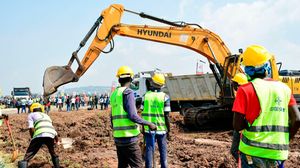
Gideon Kipyakwai once worked with mice. He made them glow. This is not a metaphor. At the University of Hawaii, he spent years in a laboratory learning how to introduce something foreign into a living system and watch it take hold. The protocol, he will tell you, was painstaking. You had to understand what the system wanted to become. Then you had to get out of the way. He has been doing the same thing ever since. Just not with mice. With people.
He has spent his career testing that theory. First in banking, then in county government. Today, Kipyakwai is the Group CEO of Metropol Corporation, one of Kenya’s most influential credit bureau, with six subsidiaries, operations in two countries, and a mandate that decides who gets to participate in the formal economy. It is a position that requires, above all else, the ability to read what something is actually worth beneath the surface. Which is, it turns out, exactly what a molecular bioengineer does.
The career between the laboratory and the 15th floor, where Metropol sits in Nairobi’s Upper Hill, is improbable enough to require a diagram. Seminary student. Civil engineering dropout. Biomedical Sciences First Class Honours. CPA. KCB corporate banker. University of Hawaii Master of Science degree. Talk show host on Kass FM, discussing economic empowerment from across the Pacific. ICT company CEO. Chairman of a county public service board at 31, the youngest man in a room full of retired MPs. Then, finally, Metropol.
He calls himself an imposter in the finance and data world. “Others have spent a lot of time learning this stuff,” he says. “So I need to catch up.” He has been saying this, by his own account, for 15 years. At some point, catching up becomes an expertise.
Tell me about your childhood…
I was born in Eldoret, but as a boy, I spent a lot of time in Nairobi because my father worked there. He was in President Moi’s [the late] escort unit, and that’s actually how I got my name. My father was close to the Moi family, so when I was born, he named me after Gideon Moi, who was still a teenager then.
To this day, we call each other namesakes. My childhood was split between Nairobi and Kaptagat, on the outskirts of Eldoret. Wheat farming, dairy farming, pyrethrum…that was my world.
In many ways, I grew up between two worlds. I attended school in the village, then went on to high school in Eldoret. At one point, I genuinely wanted to become a priest.
A priest! Why?
Growing up, I interacted frequently with missionaries. I was baptised by a priest called Martin Boyle, one of the Irish missionaries. He built missions all across the North Rift into Nyanza — schools, hospitals, churches.
I admired that life of service. Becoming a priest meant going out into communities, helping people, and building things that outlived you. So instead of joining Tambach High School, I chose Mother of Apostles Seminary in Eldoret. That's where I did my high school.
You entered the seminary quite intentionally, so clearly the idea of priesthood meant something deep to you then. Did you grow away from it gradually, or was there a specific moment that changed your direction?
I still feel like I should be a priest. I hope the Vatican can one day allow married men to become priests. I’m a staunch Catholic. I tried, but I guess I never got handheld into it.
My parents guided me more towards a career. In the church, we call them vocations — clergy or lay life. After high school, instead of concentrating on church things, I went into CPA, then university, then career. But that seminary life never left me.
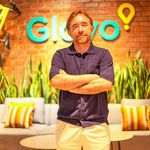
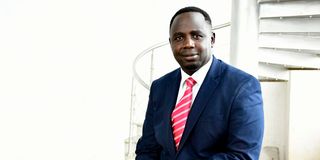
Metropol Credit Reference Bureau Limited CEO Gideon Kipyakwai poses for a portrait after an interview at his office on May 13, 2026.
Photo credit: Francis Nderitu | Nation Media Group
Today I’m very active at Don Bosco church. I take my children to Sunday school and catechism every Sunday, then we go to Mass together. In the seminary, we used to go to church 15 times a week. Morning Mass, evening rosary, three times on Sunday. That formation stays with you.
Did you enjoy that?
I don’t know whether it’s a question of enjoyment. It was a duty.
What would you like to understand about the church that you’ve not understood?
I have a lot of faith, but I struggle with reconciling faith and science. I ask myself questions like, why did God bring His son to just one small space in the Mediterranean?
How do you reconcile Jesus being here 2,000 years ago with civilisations that are 10,000 years old? Or with things like the Big Bang and the universe? But I accept it as a mystery of faith. And I accept it because I see God in many things in my life. I see a spiritual dimension in a lot of things.
Tell me more about your dad. What was it like growing up with a father who worked in the presidential escort and around President Moi?
My dad was very docile at home. Even today, if you met him, you wouldn't think he is capable of being forceful or violent. He's very subtle. But because he was a senior officer, you could see the level of sophisticated armoury around him – guns, security machines, the officers who accompanied him.
He carried a certain power, so to speak. And this is the paradox of life: most people who are very strong are actually very soft. The people who are weak are often the loudest. My dad never beat me.
When we were in Nairobi, we would sometimes attend public events, and I would see him in the presidential motorcade, running around and working. Then in the evening, he would come home and say, "Today was a very busy day, I'm so tired."
What did you learn from him?
Humility and loyalty. He often narrates stories from the 1982 coup attempt. The confusion, the fear, the chaos. He used to live with his younger brother then, and he jokes that he once came home and found him hiding under the seat. I was only one year old. He says I was playing around, oblivious to the danger, while everybody else was terrified.
My dad has always been loyal and hardworking. Even today, he can probably run faster than I. He is in perfect physical condition. He doesn't work out; he is a farmer now, oscillating between our farms in Uasin Gishu and Elgeyo-Marakwet.
What did money mean in your house growing up?
I grew up in a semi-subsistence environment. Most of what we needed came from the farm. Dairy cows, my mother's poultry farm, maize, beans, wheat. We ate what we produced.
Even workers were sometimes paid through farm produce. Back then, money was just a facilitator of life. It wasn't about opulence. Over 50 percent of what we consumed didn't require money. My relationship with money was really about the basics.
You delved into politics for a bit, ran for governor and lost. What lessons did you pick?
Even that political bid was not very deliberate. There were more people pushing me. I never saw myself as a governor or political leader. Many people were shocked when I resigned as chairman because they thought it was a very powerful position.
I was supposed to serve a six-year term, but I only did three. Looking back, I mistook the encouragement. I rode into it, and in the end, it didn't translate into anything. If you ask me whether I would go into active politics again, I’d say ‘no. But will I serve? Yes.
What do you know now in your mid-40s that you were not sure about before?
Nothing. In fact, I'm getting more confused. There are things I wish I had done earlier. I wish I had started my family much younger. My children are now 14, 12 and eight, but some of my high school friends already have children who've finished university.
Emotionally, I've learned to be more analytical instead of going with feelings. I've learned to treat time as an asset. And I've become much more conscious about health. I don't take sugar anymore, I use honey, and I avoid milk products. I've seen people in their 70s and 80s looking perfectly healthy, while some people my age look very old.
What do you struggle with now?
Time. I don't have enough of it. I'm doing my PhD, I'm a father, there's work, and I try to make time for golf. Sometimes I wish I had more time to be out of the office, with family, or just playing golf. But the challenge is the opportunity cost.
Metropol Credit Reference Bureau Limited CEO Gideon Kipyakwai poses for a portrait after an interview at his office on May 13, 2026.
Photo credit: Francis Nderitu | Nation Media Group
Do I sacrifice personal development? Do I sacrifice work? Work is what supports the family. I don’t think about it as work-life balance. Work is part of life. Family is part of life. Personal space, hobbies, community — all of it is life. As a CEO, most of my work is not even in the office. I can wake up at 3am thinking about problems or ideas. It's not an 8-to-5 job. I work all the time. So for me, it's not work versus life. It's how to balance all the dimensions of life.
What’s your fear now?
Poverty.
But you've never experienced poverty before…
I still fear it. In my circle, I sometimes feel like I’m the poor one. [Laughs] A lot of times, poverty is relative to your circles. Can you afford what everyone around you can afford? If your child asks for something or wants to go on a trip and you have to say, ‘No, maybe next year,’ does that count as poverty? That inability to access certain things? When I think about why I wake up before 5am every morning, it's because I don't want to be poor. I don't want to reach a point where I can no longer afford my current lifestyle, even as I keep aspiring for the next level.
What do you wish your children knew about you that they don’t know?
My children think I’m a joker. They don’t think I’m professional at all because they never really see my serious side. At home, we play a lot. I never carry work home. I don’t even take this laptop home. That’s why I try to come to work early. To finish whatever I need to finish here.
When I study, I go to my home office, but they know that’s mostly for my PhD, not work. They also know I like reading. I buy about a book a month, and I try to get them to read as much as possible. So they know that side of me. But they don’t really know the serious, numbers-driven side that people at work see.
What's the most important question in your mid-40s now?
My biggest concern today is post-retirement income. Can I maintain the same lifestyle I live today? Can I generate the same cash flow from passive investments? Can I create enough income to sustain my current lifestyle after retirement?
Are you happy?
I’m purposely pursuing happiness. I consciously try to block out bad news and negativity. I don’t even watch the news much anymore. Maybe that’s burying my head in the sand, but I deliberately pursue positivity and happiness.
Failure for me would first be family. If I didn’t have my wife and children, that would be a major failure. If I couldn’t provide basic needs for them, that would also feel like failure. Then there’s health. If I don’t take care of my health and end up creating problems for myself, I would consider that a failure too.
What’s your vice as someone who’s deeply involved in church and faith?
Drinking? [Chuckles]
You like your bottle?
Yeah, I like my gin. It’s actually one of the areas where I have conflict with my children because they really want me to stop drinking. And sometimes it’s not even just the drinking, it’s staying out late. Maybe one or two nights a week, I’ll get home after they’ve slept.
My children really like seeing me before bed, so when I’m not there, they notice immediately. Because most days I’m home helping them with homework and spending time with them. So the next morning they’ll come and ask, ‘Daddy, what happened? Why didn’t you come home early?” So, yeah, I need to work on that.