The restless billionaire who co-founded Glovo

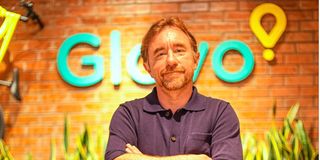
Co-founder and Vice-President Global Affairs Glovo, Sacha Michaud, during the official opening of the company’s new Offices in Westlands, Nairobi on May 7, 2026.

Photo credit: Wilfred Nyangaresi | Nation Media Group

Restless. That’s not the word that first comes to mind when you think about Sacha Michaud. That word would be ‘Glovo’, a delivery company he co-founded (with Oscar Pierre) in 2015 in Spain, now in 22 countries, and having made Kenya its primary innovation hub in Africa. But it is restlessness that acts as an inner stabiliser to global conglomerates, the ability to keep asking ‘What’s next?’

Under Michaud’s leadership, Glovo attracted one billion euros (Sh151 billion) in investment, scaling it into the fastest-growing multicategory player across Europe, Central Asia, and Africa before being acquired by Delivery Hero in 2022 for €2.3 billion (Sh350.75 billion). Before Glovo, he spent nine years as an executive at Flutter Entertainment (née Betfair), and earlier founded LatinRed, an internet services provider that was sold to StarMedia in 1999. Today, he focuses on Glovo’s long-term vision and strategic direction.
“The only thing money gives you,” he told BDLife, “is freedom. When I was 25, I prayed people would choose me. Now, I choose who I do business with.” That partly explains why he also co-founded Yellow, a venture capital fund and accelerator dedicated to supporting early-stage entrepreneurs in Southern Europe and France; the other part being his desire to give back to the society that gave him all he has.

His only regret, he says, is that he does not stop long enough, or often enough, to smell the roses. Something in his style doesn’t allow him to take his foot off the gas pedal, or let the grass grow under his feet. “It’s never enough,” he’ll say, “Not till you die.” He is that wolf on the hill, still as hungry as the wolf climbing the hill. He is still restless. He is still asking himself, “What next?”

Would you say you are living your dream?

I didn't dream of this, but it came naturally. I was always doing things, even as a child, doing different initiatives, odd jobs, and it sort of evolved into entrepreneurship. Often, when I see something not working, I always naturally think of a way to fix it. The companies that I've built have always been around identifying something to improve, or something that's maybe not working or something that can be advanced, and for the last 25 years, that has been through technology.

Which was your hardest? The first million or the first billion? [chuckles]

They're all equally hard. The challenges are always there, and the bigger the company, the bigger the challenges, and the bigger the solutions. Glovo today is doing millions of orders in 22 countries, and we have challenges and tough competition, so making either a million or a billion is equally challenging. [chuckles]

Did the money change you?

I hope not. One thing money does is it gives you security, and more than security, it’s freedom. Freedom to make choices. I can make choices now that when I started my first company at 25, I probably couldn't have made. A good example is that now I can choose who I do business with. When you're 25, you really can't choose. Hopefully, they'll choose you. Money only gives you freedom. I've still got pretty much the same lifestyle, friends and things I enjoy doing.

I understand you must have a certain ruthlessness to cut it in business. Where did yours come from?

It's being passionate about what you're doing. I started working when I was 16, with no university degree. So you obviously have to be passionate about that if you want to succeed. There are times in a business when you're very valuable. Your strengths are very valuable at certain phases of business, but in other phases of the company, maybe they're not as valuable. Personally, I’m still enjoying it, still learning, and still very useful.

What insight did you have that set you up for success in this market?

We thought Africa, as a continent, had a huge opportunity. There was still a lot to be developed as far as digitalisation of the economy. It was a great opportunity, and we thought Kenya would be a great place to start.

It's a very digital mindset society, a very good economy, good Kenyan talent, and we saw the opportunity to take what we were doing in other parts of the world and use that technology to do the same here. Thus far, it’s worked.

Are you still as hungry now as you were then?

I'm just as ambitious now as I've ever been. We're in 22 countries, and there are billions of dollars in sales every year on our platform. But we're really still tiny from where we're going to be in 10 years. If a customer is ordering three or four times a month this year, in 10 years, they will be doing 10x or 20x a month; that is the new mission.

We often admire the scale of companies like Glovo without seeing the pressure underneath. What does it take from you to build something like this?

It's a lot of hard work. To be successful in any business, there are a lot of people who are working really hard with the same idea; you really have to work hard, focus, and have a little bit of luck on the way as well. Be in the right place at the right time, and everything.

Persistence is a key element of any entrepreneur. An entrepreneur mindset, especially a tech entrepreneur mindset, is pretty unique because when you start the journey, you have a 90 percent chance of failing, right?

What have you had to confront about yourself over the years running this business?

I've learned what I'm good at, but I've also learned what I'm not very good at and how you need to surround yourself with people who compensate for your weaknesses as a leader, and they're very good at those things. I think it's very important to be self-aware.

What’s that thing you have that not many people have?

Persistence. It is a very important trait to keep going. You have to be agile, right? Pivoting is just adjusting now and being flexible and dynamic. I think there are different phases of a company as well.

Co-founder and Vice-President Global Affairs Glovo, Sacha Michaud, during the official opening of the company’s new Offices in Westlands, Nairobi on May 7, 2026.

Photo credit: Wilfred Nyangaresi | Nation Media Group

In the first phase of a company, you need to be a lot more tactical, as in really focus on execution and doing things very quickly. And then when you start getting a little bit bigger, you start moving in a different phase, which is much more strategic and involves building scalable things that you can repeat. And often, a good example is the founders who get involved with everything in the beginning. That’s not scalable. You need a team, and as you grow, you start delegating and building repeatable processes, not reinventing.

Have you kept the promises you made to yourself when you were younger? [chuckles]

Probably most of them. I didn't make too many promises to myself. I'm not a person who thinks very long-term. I'm not thinking 10 years, I think you have to be loyal to your friends, family, colleagues, and I think I am very loyal. And I think that's very important because in life, those people that you encounter, family, friends, colleagues, they still want to work with you.

It’s important for me to enjoy my life now, and enjoy work, and I try to do that because it makes me enjoyable to be around too. I think people are more important than companies, and I am pretty happy with the person I have become.

Has your definition of success changed?

No, I think I just define success as being happy, enjoying as many days of the year as you can. Be passionate about what you do. You know, I feel very lucky. Not everyone can do that. Most people go to work out of necessity, to pay the bills and buy food. I feel lucky that I've been able to go to work all my life because I really enjoy it. Of course, there's an economic benefit around that afterwards, but that's also luck.

What does money mean to you now?

Freedom. I can choose what I do next. I can make choices that maybe when I was 25, I couldn't.

What lies about success do you no longer believe?

It doesn't make you more secure, and you still have your insecurities as a person, which I think is good. So those really haven't disappeared. And then also, success is relative. Glovo has been a successful business, but some people might not perceive what I have as successful; I work many hours, and I travel a lot.

There are a lot of people who don't want that. They want to spend more time with the family or friends, and they may not perceive my lifestyle as success. Let’s say Glovo is a successful project, more than Sacha is a success.

What kind of insecurities does a man like you have?

Lots. At Glovo and in business, I’m surrounded by smart, talented people, smarter than me. Often, I think I still have imposter syndrome, sensations that I am the dumbest person in the room. It's good because it makes me improve myself continually.

Also, as you get older, you're surrounded not only by smart people, but younger people who are much more in touch with the latest trends. You know, AI is coming now, this revolution that we're living in, and the younger people in Glovo are much more in touch with AI than I. Still lots of insecurities there.

From the outside looking in, you have the success and the fame. Does that type of success feel much different when you're in the limelight as compared to the other kind of success when you are not as heralded?

I do a lot of public events, and you’ll know me because I am there, but it’s part of building the global brand. But when you go home, very quickly, your children or friends ground you; they know the things you're not so good at.

They make sure you don’t think you are a star or anything ridiculous like that. I am privileged and lucky in this career, and I give back through talking to many startups, giving useful advice, because that is a debt I have as well as investing in many startups.

Do your achievements put pressure on your children to either match up or surpass you?

Yeah, I think they do. I have three girls, and they are very independent, which is good. They want to be autonomous in their careers, and for sure, it puts additional pressure on them, which isn't great.

I had no baggage, so I didn't have pressure on me to be successful or not. They're doing their own thing; they have my surname, but they are not Sacha Michaud. When they were choosing what to study, and I told them to choose tech or computer science, or math, they said, ‘Daddy, I don’t want to be like you.’ [chuckles]

I imagine most parents look forward to their children taking over from them, so when your daughters said they don't want to be like you, how did that make you feel?

No, no, it made me feel good. It made me feel that they're super independent and want to make their own choices in life. And I think it's good because when they have a partner, they mustn’t depend on them.

Co-founder and Vice-President Global Affairs Glovo, Sacha Michaud, during the official opening of the company’s new Offices in Westlands, Nairobi on May 7, 2026.

Photo credit: Wilfred Nyangaresi | Nation Media Group


One thing I've always wanted to do is not depend on anyone. It's great having a partner, but I want to have freedom because if you're also self-sufficient, I believe in the end, you're happier, and then you become a better partner or better friend.

Are you the kind of father you set out to be?

I don't know, really. I'm happy because I've got a good, great relationship with my children, an honest, transparent relationship. They can tell me anything and vice versa, and that’s enough.

I am not into micromanaging them, or on top of every little detail; let them make their mistakes as long as the base is right, the ethics of the personality, and they are doing the right thing.

What advice would you pass on to aspiring entrepreneurs?

Focus on very few things and get them right. Don't do too many. If your company, or your product, is fixing one thing or has a unique value proposition, focus on that, get that right. Don't worry about all the other stuff around it. Speed ahead of perfection. And then surround yourself with a really good, equal, diverse team. Cover your weaknesses with colleagues. Build on your strengths.

When is it enough?

Never. Not till you die.

Which part of fatherhood are you still figuring out?

When you have children, it’s a wakeup call that you have people now who are far more important than you or anything in life. You want their success or their happiness ahead of anything else. Having three girls makes me very well aware as well of issues around things like diversity and inclusion.

Women and girls have a much harder time in society in Europe, in Africa, Asia, and the barriers they have to surmount compared to men. I tick all the boxes. I'm a white European middle-aged man. [chuckles] I'm extremely favoured in society, and that’s a fact. The reality is, women don't have that equal playing field.

What have you traded for this life?

Not hanging around with the people I care about as much as I would like to. Life is good when you get into routines, and sometimes, I don't do all the sports I'd like to do.

In Barcelona, when I'm there two or three weeks in a row, then I can get into a routine, catch up with my friends, go swimming, or do some regular sports. But then it compensates easily. I am in an amazing country like Kenya, which I love. It's part of the enjoyment, no?

How important have your friendships become as you've grown older?

Very important. They're very good soundboards because friends, especially if you have them for a long time, know you very well and can have honest conversations on what you should or should not be doing. I hope I'm a good friend to them.

With a diary as busy as yours, do you ever stop to smell the roses, so to speak?

Probably not as much as I should. Somebody told me once I'm like a fast speed train or car on a motorway, and I don't look around. I probably don't stop and smell the roses enough.

Will this be a regret in a few years?

I don't know. I think the most important thing is to look back and ask, “Was that decade enjoyable?” I'm a generally very happy person, and I don't overthink things. I look at it on a very short-term basis; I'm not thinking in 10 years. I'm thinking, What am I doing now, at this moment, this week? Maybe I'll look back and, I think I didn’t stop enough. But maybe not. Maybe I'm thinking I did quite a few things and feel proud.

For your career, what matters more than you thought it would?

Wow. I think the opportunity or the fact of building trust with your colleagues is super important, and I'd like to think that everybody I've worked with, I've built trust, both at a personal and professional level. And I think when you start in business, you don't really think about those sorts of things. You don't think about soft skills; you think more about learning skills or technical skills or abilities.

Are you a trustworthy person?

Yeah, I think so. My word is super important. If I give my word, that's it.

Most people may never get to build their dream to the level that you got yours. When you got there, was there an anticlimax after the high?

I mean, there isn't. I wouldn't call it an anticlimax, but every successful moment, like say, closing a contract with a large merchant, is a success. And that successful moment, maybe I'm a bit guilty of this, but I don't stop and look at that success.

I'm already thinking, what am I doing next? The moment passes. Sometimes success should be celebrated a little bit more, but this is just my personality. ‘What’s next?’

Why is the next thing so important to you?

I don't know why it's important. I don't overthink things like that. It's just something that I'm always looking for a challenge, right? I love challenges, and I need them to keep myself motivated.

It keeps me energised, on the go, and to a certain extent, young, because I'm surrounded by young people with great ideas, and it's contagious, right?

Maybe. Having built businesses, can you easily tell if someone will be successful?

No, but there are a few elements that are key, which, without it’s highly probable one won’t succeed. I think for the founder team, it's all about execution. You have a great idea, the right time, the right place, but if the team isn't capable of having that execution, then there's literally no probability or very high probability that they will fail.

Two, be hardworking, persistent, very fast as well, especially in the early phases. But what is success really? It's not always about unicorns. Anyone who can build a business, small, medium, or large, you have to clap for that because it's not easy.

There's been a lot of clamour for self-employment and entrepreneurship in the world right now.

What's overrated about entrepreneurship?

I think entrepreneurship and building a business are not for everyone. It’s okay to be just a part of a team.

Entrepreneurship is not so glamorous. And then again, entrepreneurs, the ones we see and the ones that we know, are generally put on a pedestal, because their companies have been successful.

But the reality is there are many founders and entrepreneurs who are just as talented and hardworking, but it just never worked out for them. I think there's an overrating of successful entrepreneurs. Many of us have just had a little bit of luck on the way.

What question are you trying to answer with your life?

I'm not trying to answer any question. I'm trying to enjoy myself. Do the things I like. And at the same time be a good friend, colleague, partner, and father. Some of us feel we're only here once. So, you've got to enjoy it and do things you're passionate about.

Follow ourWhatsApp channel for the latest business and markets updates.

PAYE Tax Calculator

Note: The results are not exact but very close to the actual.