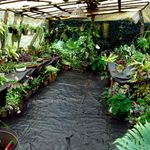
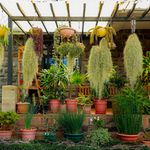
When Leah Nyaguthii first saw the kitchen garden at Hemingways Eden Residence in Nairobi, it was barely functional. However, she could see its potential with a little care and attention.
"I was initially hired at Eden to plant grass, but when I arrived, I immediately noticed the kitchen garden. It was neglected and in disarray, but I had lots of ideas about how we could improve it, so I shared them with my supervisor," she recalls.
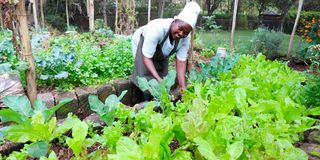
Two years and several training sessions later, Leah was entrusted with the task of improving the garden. Today, this once desolate space supplies the hotel’s kitchens with fresh herbs such as rosemary, thyme, coriander and parsley, as well as seasonal vegetables, including spinach, cabbage, lettuce, celery, carrots, leeks, peppers, beetroot, aubergines and cucumbers. It also produces spices such as turmeric, edible flowers and strawberries.
“I plant according to the menu, so whenever it changes, the chef lets me know, and I adjust accordingly,” says Leah.
"Demand and preference also determine what I plant and in what quantities. For example, we used to grow large tomatoes, but guests and chefs now prefer cherry tomatoes for salads and similar dishes because they’re sweeter and more attractive, so we grow those instead. I also grow a lot of mint because it is used in both food and cocktails.”
Mint growing in the organic garden at Hemmingways Eden Residence in Nairobi.
Photo credit: Bonface Bogita | Nation Media Group
The garden sits on a small patch of land within the property and is laid out in neat rows of raised concrete beds. Leah came up with the idea for these beds.
"It was all just flat ground before, but whenever it rained heavily, the plants would be swept away. They were also more susceptible to pests," she says. "I’d seen the raised bed design on another farm before, although that one had been made using bamboo sticks. When I told my superiors about it, they liked the idea but preferred to use concrete.”
Not only do the raised beds reduce the risk of damage from floods and pests, but they also make it easier for Leah to organise her crops into sections. Each bed contains different crops, and even where the same crop appears in multiple beds, it is often at a different stage of growth.
“Some are seedlings waiting to be transplanted, some will ripen in a few days, and some are what we are currently harvesting,” she says.
"You always have to time it right and keep everything in steady rotation so that you don't run short when needed. After all, this is a business.”
When it comes to limited planting space, Leah gets creative with materials such as sacks, cut-up soap and shampoo bottles, empty ice cream tubs, and cracked buckets found around the hotel.
She never buys seeds. Instead, she leaves one plant from each crop to grow past peak ripeness, harvests and dries the seeds, and then uses them to plant the next batch.
Sometimes she propagates the plants herself, while in other cases she simply lets the natural process take its course before transplanting the seedlings to the nursery.
"If you nurture nature, it will always nurture you back," she says, emphasising that she never uses chemicals in the garden. "We have planted lavender to attract pollinating insects like bees and butterflies, but also to deter harmful bugs. I also use crushed eggshells to repel snails and slugs and spray a fermented solution made from garlic and peppers to control pests. They work very well.”
Leah turns all organic waste, including kitchen food scraps, cut grass and leaves collected from the grounds, into compost. She uses this to grow her crops and make fertiliser.
“After two or three cycles of planting, I clear out the vegetable beds and replace the soil with fresh compost,” she says. “I use the soil that I remove from the beds later to plant grass around the compound. When I see that the plants need extra nourishment, I put some compost in a sack, steep it in a bucket of water for two or three weeks and use the resulting liquid to water the crops. It works like magic.”
While all of this stems from Leah’s deep passion for agriculture, it has also reduced the hotel’s costs. With much of the produce now grown on site, Hemingways Eden Residence relies far less on external suppliers for herbs and vegetables, reducing its overall expenses.
“We harvest each morning, just enough to sustain the guests we have that particular day,” says Leah. "On average, we have around 20 to 40 guests per day, and for something like cherry tomatoes, we can harvest about two kilos, which is usually enough. This means we have cut costs not just on the produce itself, but also on transport and packaging. Sometimes we even have a surplus of certain vegetables and end up supplying another Hemingways branch.”
According to one of the resident chefs, the hotel only outsources produce that cannot be grown in the garden, such as butternut squash, or when harvest-ready crops have been exhausted before the next batch is ready.
Sukuma wiki (collard greens) growing in the organic garden at Hemmingways Eden Residence in Nairobi.
Photo credit: Bonface Bogita | Nation Media Group
Leah says that having a close working relationship with the chef also contributes to the authenticity of the food served to guests.
"Our food goes from the garden to the plate. The chef can offer it to guests with confidence, not only because he knows how I work and trusts me, but also because he visits the garden himself to pick ingredients. He knows they are chemical-free and understands exactly how they have been grown. With external suppliers, you just never know,” she says.
The on-site garden is more than just a practical benefit – it also enhances the dining experience. Leah recalls a guest whose two children were very attached to their tablets.
“Their mother had visited the garden the previous day, so the next morning she brought her children over. I showed them around and taught them about the different plants and how to harvest some of them. They tasted the cherry tomatoes right there in the garden, and I'll never forget the delight on their faces,” she recalls fondly.
“They spent the next hour with me in the garden, watering the plants, getting muddy, and simply enjoying themselves. When they were checking out the following day, their mother told me that it had been the highlight of their trip.”
However, for Leah, the connection she has with the garden runs far deeper than her role at the hotel.
"My parents were farmers, and I've been passionate about agriculture for as long as I can remember. At primary school, I joined the 4K club, and I would practise whatever I learnt there at home," she says.
She read every book she could find on agriculture and spent every spare moment with her hands in the dirt. Her favourite part was always planting seeds and watching them grow into nourishing plants. She recalls waking up every morning and rushing to check if the seeds had germinated.
“Seeing the first shoots coming through the soil made me so happy. I wanted to have that feeling for the rest of my life,” says Leah.
After high school, she got a job at a private farm that grew vegetables and reared chickens, dairy cows and fish. She loved the work and eventually gained enough experience to begin training others in farming techniques. However, her long-term dream was to work for an organisation where the garden was at the heart of its operations.
A decade later, she had the opportunity to join Hemingways. Five years on, she still feels like she is living her dream.
“My working day starts at eight in the morning,” she says. “First, I clean the concrete pathways around the compound. Then, I go to the kitchen and collect the day’s order from the chef.”
With the order in hand, she heads to the garden to harvest, walking through the beds as she goes to check for weeds and any signs of disease.
Next, she waters the crops and carries out any necessary planting. Once that is complete, she moves on to her other role of ensuring the lawns are well-kept and comfortable enough to walk on barefoot.
Coriander growing in the organic garden at Hemmingways Eden Residence in Nairobi.
Photo credit: Bonface Bogita | Nation Media Group
Leah approaches every problem the same way and has yet to meet a challenge without a solution.
"I am very devoted to attending agricultural shows and competitions because they are always so informative. As well as reading widely on the subject, I always find ways to solve any challenge I face in the garden,” she says.
While there have been plenty of lessons for her to learn over the years, the greatest one is that nature never rushes and everything unfolds as it should.
"You can’t force a lettuce to grow faster by watering it more. You have to trust the process. But if you take the time to enrich the soil with compost and treat it with care, it rewards you with crisp, sweet, full-of-life lettuce," says Leah.
A final philosophy that guides her life and which she particularly likes to share with women is to be like Sukuma wiki. “It is very resilient. You can cut it down or harvest all its leaves, but if its roots are strong and it is given a little care, it grows back stronger and more fruitful than before."