In late 2018, Irene Kui's husband, Martin Njuguna, started to complain about numbness in his big toe. Neither of them could have imagined the journey that lay ahead.
Months later, he began to limp. For six months, they went from hospital to hospital, but no doctor could diagnose the problem with her husband's foot.
Then, one morning, Martin woke up and sat on the edge of the bed. He tried to get up, but he couldn't move his arms or legs. He was paralysed from the waist down.
“That moment changed me,” says Kui, recalling how terrifying it was. “It taught me how fragile life is.”
Doctors eventually found a tumour near Martin's spine and scheduled surgery in India. When he returned, he was required to do physiotherapy every day. “Some days he didn't want to do physio. I was worried that if he stopped, his condition would deteriorate.”
But she kept her fears and stress bottled up inside her.
“There was physio, hospital visits, emotional tension and sometimes conflict,” she recalls. “Before I knew it, my brain felt like a pressure cooker. My head was always full. I could barely think.”
Kui was slowly sliding into depression, but she mistook the symptoms for fatigue.
She started sleeping more and more. “I would lock myself in my room and tell people not to wake me up.”
Some days she didn't leave her room, missing showers and meals. “Everything was falling apart inside me, but on the outside, things were still running smoothly. So I would tell myself that I was fine.
It was almost like functional alcoholism; that’s what it felt like.”
Her sons stepped in to take care of their ailing father, especially on difficult days.
Then, in December 2020, at the height of the pandemic, she contracted Covid-19. For weeks, yoghurt and lemon biscuits were all she could eat while she was confined to her room.
Kui found the compulsory isolation extremely tough. It took its toll on her, physically and emotionally.
One morning, after seeing how much she was suffering, her husband told her to go and check on her plants.
Despite the garden being just a stone’s throw away, the walk there took nearly 30 minutes because Kui was unable to walk quickly. But she made it, and stayed until evening.
Kui Irene tends to her plants at her home garden located in Limuru on February 11, 2026.
Photo credit: Francis Nderitu | Nation Media Group
That visit changed how she felt completely. She went back the next day, and the day after that. After breakfast, she would drift outside. “I used to stay in this garden until six in the evening,” she says.
The turning point
One day, she recorded herself talking to a flowering begonia, saying, “I hope I can find healing in this flower.” In hindsight, she says, “I think that was the turning point.”
She started with small tasks such as cutting containers, drilling drainage holes, and mixing soil — just to keep her hands busy with things unrelated to Martin’s illness.
She bought sacks of old tins and started repurposing kitchen containers. She started taking composting seriously. “I even had buckets of wrigglers — an old bathtub full of composting worms.”
Every morning, she would go straight to the compost, turning the soil and feeding the worms.
“The work gave me physical fatigue. So when I went back into the house, I was tired — the good kind of tired. I would sleep through the night.”
For the first time in months, she was sleeping properly.
Kui says that the garden gave her mental space. “First, it allowed me to disconnect from what was going on in my head and in my house. And when I did that, I could finally begin to process what was happening.”
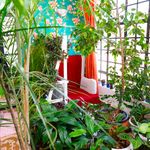
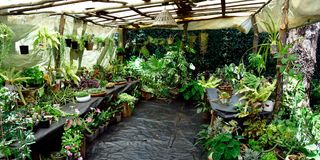
Kui’s plant studio is tucked away safely behind her house. Here, a tent protects the plants from the hot sun, and partitions separate them according to their growth stage. Some hang from used yoghurt bottles.
“Some are in the intensive care unit and some in the high dependency unit,” she explains, pointing to plants that are struggling, some having been rescued. “This place forces you to think, improvise and be creative. When you’re in that creative space, destructive thoughts are shut out.”
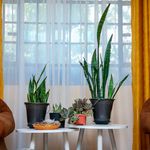
Some of the range of flowers planted at the home of Kui Irene located in Limuru on February 11, 2026.
Photo credit: Francis Nderitu | Nation Media Group
One container had no drainage holes. She had to work out how to keep the plant alive without it rotting. “In January, I water it more. In July, I barely water it at all. If I overwater it in the cold season, it rots. So much thought goes into just one plant. And when I’m focusing on that, I’m not stressed. That’s my secret.”
Endurance and rebuilding
She bought an almost dead philodendron for Sh100. Now it’s so full and thriving, so much so that you can’t see the container.
“That’s perspective. When I look at myself, do I see a broken woman? Or do I see someone who has endured, created, and rebuilt?”
The roots of an old monstera on the verandah grow downwards, searching for soil. “This plant was in this container, yet somehow it ‘smelt’ the soil and grew roots downwards, looking for it,” says Kui, noting that life always finds a way.
Seeds, on the other hand, have taught her patience. “You plant, and then you wait. Sometimes, there’s nothing else you can do except let nature take its course. It’s the same with your mind.”
Dying plants have taught her acceptance. “Life has a beginning and an end. In between, things will never be perfect.” She has since stopped trying to force perfection.
However, some plants that looked dead weren’t. “Just because something looks dead doesn’t mean it’s dead. Just because I seem to be going through a dry season doesn’t mean that I’m dead inside. With the right care, something can sprout again.”
When a plant was dying, she would take it out, wash the roots, cut away the rot, and then replant it. “Before you know it, it’s alive again. That’s caregiving. That’s nurturing,” says Kui.
The garden showed her the reality of life. “Nothing is perfect. Seasons change. Things dry up. Things bloom again. You just have to keep going. And that is enough.”
A path to healing
Begonias in old kitchen tins. Philodendrons in cracked pots. Broken wood. Old containers.
It took years to create this collection. Some pieces are over two years old. Some took six months to settle. For Kui, every plant is unique. “Each has its own character, and together they enrich life, nature and the environment.”
Through her plants, Kui has learned to recognise when negative thoughts arise. “Something that would have deeply annoyed me three years ago doesn’t bother me today. Because I found a way.”
Some of the different types of potted flowers planted by Kui Irene at her home garden located in Limuru on February 11, 2026.
Photo credit: Francis Nderitu | Nation Media Group
The plants became her thermometer. “If I walk out one day and see them dying, I know it’s not their fault, but mine. This garden is a reflection of my emotional state.”
To anyone suffering from depression, she says: “There is hope, and it’s achievable. You just have to talk yourself through it. Recalibrate your brain. Be brutally honest with yourself. Deep down, we all know what is hurting us. We just avoid facing it because we’re afraid of judging ourselves. But healing requires honesty,” advises Kui.
Standing in her garden, Kui chooses her words carefully. She doesn’t call the plants a cure. She calls them a path because it has been a long journey, and the physiotherapy and caregiving continue.
“The problems haven’t disappeared. But something has shifted. I refuse to let my mind become a pressure cooker,” she says.