Uganda holds sway in next KPC chief executive

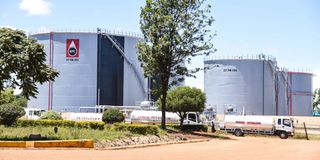
Kenya Pipeline Company’s tankers at its Eldoret depot.

Photo credit: File | Nation Media Group

Uganda has been handed a chance to determine the next occupant of Kenya Pipeline Company’s corner office after the board opened recruitment for the newly listed firm’s managing director.

KPC's board on Thursday put out an ad seeking to recruit a managing director following resignation of Joe Sang, just weeks after the company's shares started trading on the Nairobi Securities Exchange (NSE). Mr Sang quit amid a fuel scandal that saw three senior public officers step down.
This allows Uganda to exercise its veto power on appointment of the next managing director of the company by invoking a clause that was included in the firm’s charter as an incentive for the country to acquire a Sh20 billion stake in KPC to save its initial public offering (IPO).

Under these changes, the KPC board cannot hire or fire the chief executive without the concurrence of the Ugandan directors, effectively giving Kampala some sway over who will steer the petroleum logistics firm post-IPO.

Kampala, which imports most of its fuel through Kenya, also secured two seats on the board of the newly listed firm after its State-owned oil company, Uganda National Oil Company (UNOC), snapped up shares left on the table by other categories of investors.

"The Kenya Pipeline Company Plc (KPC) seeks applications from suitable and highly qualified professional to fill the position of managing director. This position serves as the Company’s chief executive officer, accountable to the board of directors,” reads the vacancy announcement published in the dailies on Thursday.

The board said it is looking for a highly experienced person who will guide the company through the “post-listing phase, including heightened governance, disclosure, investor relations, and regulatory obligations.”

But the candidate—who has to have a 15 years’ experience, 10 of which in a senior management—has to get the nod of Kampala.

The recruitment now opens the first real test of the new governance structure negotiated between Nairobi and Kampala during the dramatic final days of KPC’s stake disposal, one of the largest public share sales in the region’s history.

Under changes made to KPC’s articles of association, Uganda secured the right to approve the appointment or removal of the managing director as long as Kampala retains shares in the company through the Uganda National Oil Company (UNOC).

Kampala also won the power to approve future issuance of fresh shares to prevent dilution of its ownership.

The concessions were part of a last-minute deal after Uganda threatened to walk away from the IPO because of concerns over lack of influence in the management of a company that handles the bulk of its fuel imports.

Uganda’s withdrawal would have dealt a severe blow to the IPO, which had struggled to attract investors amid concerns over valuation and market appetite.

Top brokers involved in the sale indicated that commitments had fallen significantly short of the Sh53.1 billion minimum threshold required for the offer to proceed.

Kampala’s commitment to purchase shares worth over Sh20 billion rescued the transaction from collapse.

The outcome has, however, fundamentally altered the governance structure of one of Kenya’s most strategic State corporations.

For decades, KPC has been treated as critical national infrastructure, controlling the transportation and storage of fuel products through Kenya and into the wider East African region.

However, although the Kenya Pipeline network does not physically extend into Uganda, Kampala relies heavily on KPC’s infrastructure to move fuel from the Port of Mombasa to inland depots before onward transportation by road into Uganda.

More than half of the cargo that passes through KPC’s network is destined for export markets, with Uganda alone accounting for nearly two-thirds of the transit volumes.

Eastern Democratic Republic of Congo, South Sudan and Rwanda also heavily depend on the pipeline system.

Kenya and Uganda have for long held preliminary talks to construct a pipeline linking the two countries, without much success.

Extension of the pipeline from Eldoret is key to offering Uganda a safer means of getting fuel to Kampala by dropping use of trucks from Kenya, besides helping cut transport costs that are key to determining prices of fuel in the neighbouring country.

The decision to grant Kampala veto powers reflects the growing strategic importance of Uganda in KPC’s operations.

Traditionally, minority shareholders in listed firms rarely enjoy powers as extensive as those granted to Uganda. Analysts say the arrangement effectively elevates Kampala into a strategic partner with influence extending far beyond its shareholding.

The amendments to the articles of association were agreed only hours before Kenya extended the IPO by three working days after indications emerged that subscriptions had remained weak.

The Treasury had initially sought to raise Sh106 billion through the sale of a 65 percent stake in KPC, with the government retaining 35 percent ownership.

The listing marked a major shift in the State’s policy on ownership of strategic assets as Treasury sought alternative funding models amid rising debt pressure, constrained tax revenues and ballooning loan repayments that now consume a substantial share of government income.

Uganda’s growing influence in KPC also comes less than two years after Kenya allowed UNOC to directly import fuel through the Port of Mombasa and use KPC infrastructure to transport products inland. Kampala had long complained that reliance on Kenyan intermediaries exposed it to supply vulnerabilities during disruptions in the regional fuel market.

Follow our WhatsApp channelfor the latest business and markets updates.

PAYE Tax Calculator

Note: The results are not exact but very close to the actual.