Uganda link in Kenya’s Sh12bn fuel import scam

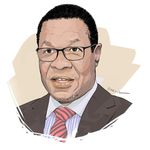
 Cabinet Secretary for Energy and Petroleum Opiyo Wandayi appearing before a joint sitting of the Senate Standing Committee on Energy and the National Assembly's Departmental Committee on Energy at County Hall, Nairobi on January 12, 2026

Photo credit: Dennis Onsongo | Nation Media Group

Uganda rejected Kenya’s request to use its fuel reserves in Kenya Pipeline Company’s network and stave off a petrol shortage, triggering arrests and a fallout over a Sh11.8 billion contested import cargo.

A confidential brief from former Petroleum Principal Secretary Mohamed Liban shows that Kenya sought an unspecified amount of the petrol meant for Uganda as one of the stop-gap measures to avert a shortage of the commodity from April 4.

Kenya promised Uganda it will reimburse the fuel once its delayed cargo lands in the country amid the supply concerns ⁠linked to the Iran conflict, which has affected global energy markets.

Sources reckon that Uganda turned down Nairobi’s requests, fretful that the uncertain crisis in the Middle East could prompt shortages, forcing Kenya on March 18 to seek bids from local oil marketers for emergency imports.

Four local firms, including One Petroleum, Oryx Energies, Hass Petroleum and E3, bid for between $290 and $430 per metric tonne.

The Ministry of Energy settled on One Petroleum and Oryx Energies as the lowest bidders at $290 and $253 per metric tonne respectively after Uganda’s rebuff.

“In view of the above projected situation, the Ministry, requested the Government of Uganda through Uganda National Oil Company (UNOC) and Ministry of Energy and Mineral Development (MEMD) Uganda to advance their transit PMS/ super petrol to some Kenyan OMCS short on product and with affiliates in Uganda,” Mr Liban said in the brief dated April 2, and seen by the Business Daily.

“We await the response from MEMD/UNOC.”

The government said the manipulated data was used to justify the emergency importation of fuel, despite standing contracts with Saudi Aramco Trading Fujairah, Abu Dhabi’s ADNOC Global Trading Ltd, and Emirates National Oil Company Singapore Ltd, all of which are ⁠meeting their contractual obligations.

It alleged that the emergency shipment was overpriced, of substandard quality, and procured at rates significantly higher than those agreed under existing deals.

Energy and Petroleum Cabinet Secretary Opiyo Wandayi reckons that that One Petroleum fuel was priced at Sh198,000 per metric tonne against Sh140,000 from the Gulf, arguing that it was going to increase pump prices by Sh14 a litre.

But a separate brief seen by the Business Daily from Saudi Aramco Trading Fujairah indicated that the war in the Middle East had made it difficult to supply cargo at older prices, saying consignments from April would be costly.

Uganda currently owns a 20.15 percent stake in Kenya Pipeline Company (KPC) after it bought shares worth over Sh20 billion in the firm’s recent initial public offering (IPO).

Acquisition of the shares also earned Uganda two seats on the board of directors of KPC, with Kampala now having the right to veto future hiring of the company’s CEO.

These rights look set to be exercised as KPC moves to replace Mr Joe Sang, who resigned over the weekend in the wake of the fuel importation saga.

Mr Liban and the Energy and Petroleum Regulatory Authority’s ⁠director general, Daniel Kiptoo, also stepped down.

Uganda’s move to acquire the 20.15 percent stake was hailed as instrumental in the Kenyan government’s successful sale of its 65 percent shareholding in KPC.

Over half of fuel cargo that goes through KPC’s network is for exports, with Uganda taking up an estimated two thirds of it.

Eastern Democratic Republic of Congo (DRC) accounts for 19 percent, South Sudan 15 percent and Rwanda 15 percent.

On service fees, UNOC is the sixth largest customer of KPC, paying for charges of Sh1.2 billion in the year to June, with Vivo Energy the leader at Sh4.94 billion.

Uganda keeps part of its fuel in KPC reserves and this is what Kenya was seeking to tap.

One Petroleum and Oryx Energies were on March 25 awarded the contracts to ship in 81.3 million litres of petrol each, in deals that would later trigger a fallout and the resignations and arrests of three top officials in the country’s energy sector.

Kenya sought Uganda’s aid when it had 124.39 million litres of petrol for both local and transit markets as of March 19.

The stock was to last the country 16 days, meaning that Kenya faced a stockout of petrol from April 4.

“Considering the projected stock runout date and the number of days required for logistics (seven days), there is urgent need to replenish the PMS (petrol) stocks on or before March 27, 2026,” the Ministry of Energy and Petroleum says in a separate document.

Kenya then tapped One Petroleum and Oryx Energies to import 60,000 tonnes of petrol each, outside the G-to-G deal, to ward off the impending fuel crisis.

The cargo supplied by One Petroleum handed Kenya an additional 16 days cover of petrol, helping avert a crisis that could have started over the Easter weekend.

One Petroleum then delivered the cargo valued at Sh11.88 billion at the end of last month, which the government yesterday ordered removed from the country.

Importation of the emergency cargo was reportedly sanctioned by the National Security Council Committee (NSCC).

Mr Wandayi has declared the cargo imported by One Petroleum illegal, pointing to the fallout from the deal sanctioned by the country’s top security organ.

Mr Wandayi on Tuesday  directed One Petroleum to recall the product, a move that industry executive says is not feasible given that it has already been discharged into KPC’s system and some already sold to motorists.

One Petroleum on Tuesday issued a statement saying that it had put in place appropriate measures to ensure that the product is not released to the market, adding a twist to the fiasco.

“Following consultations with the Government, One Petroleum Limited confirms that it has forthwith taken steps to ensure that the petroleum cargo that was brought in on 27th March, 2026 via MT Paloma does not enter the Kenyan market,” the company said last evening.

PAYE Tax Calculator

Note: The results are not exact but very close to the actual.