State cuts SGR security budget to prioritise Malaba extension

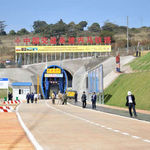
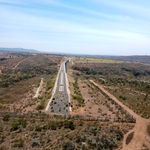
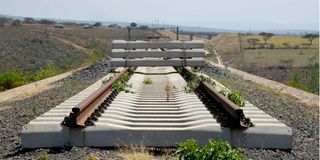
The standard gauge railway abruptly ends at Murtoto in Suswa.

Photo credit: Robert Gichira | Nation Media Group

The government has cut budget allocations for several standard gauge railway (SGR) expenses, including security installations along the line from Mombasa to Naivasha, as it prioritises the extension of the modern railway to Malaba on the border with Uganda.

The National Treasury reduced the allocations in the first supplementary budget for the financial year ending June 30, 2026. This includes a Sh1.6 billion cut from spending on a digital surveillance and protection network meant to monitor and safeguard the SGR line from Mombasa to Naivasha.
In June last year, the government had allocated Sh2.3 billion for the installation of a unified security system for SGR Phase 1 and Phase 2A.

The reduction in investment in the railway’s security could have a significant impact, given that the SGR spans hundreds of kilometres and remains vulnerable to vandalism and sabotage.

Kenya Railways will also buy fewer SGR locomotive wheelsets – the wheel-and-axle assemblies used on trains – after the allocation was cut by half from Sh2.2 billion to Sh1.1 billion.

The State Department for Transport had also planned to spend Sh300 million on the installation of an SGR passenger ticketing system, but this allocation was also halved.

However, the extension of the SGR from Naivasha to the Uganda border received a Sh14 billion boost as President William Ruto’s administration moves to complete the project, which currently ends in Suswa. The abrupt termination of the railway has made the movement of cargo to landlocked countries on the modern rail line difficult.

The additional allocation raises the total budget for the extension of the SGR line to Sh30 billion for the financial year ending June 30, 2026, up from the original estimate of Sh16 billion.

Treasury reports estimate that construction of the SGR extension, which currently stops abruptly in Suswa, a small town in Narok County, will cost approximately Sh502.9 billion.

President William Ruto’s government expects to secure most of the financing, about Sh455.35 billion, from undisclosed foreign investors.

The Kenyan government is also pursuing a Sh390 billion ($2.6–3.0 billion) securitised bond to finance the extension of the SGR from Naivasha to Malaba.

This “creative financing” strategy aims to bypass traditional external debt by leveraging future tax revenues.

Kenya Railways Corporation has said it will acquire more than 5,000 acres of land to facilitate the expansion of the SGR.

On the other side of the border, Uganda has also begun the process of constructing its section of the SGR to Tororo, which borders Malaba on the Kenyan side.

Kenya expects the extension to revitalise the modern railway, which faces stiff competition from road transport due to its abrupt termination in Suswa, denying traders last-mile connectivity.

In 2014, the Government of Kenya entered into a tripartite agreement with the governments of Rwanda and Uganda to construct a standard gauge railway from Mombasa through Kampala to Kigali.

However, the project stalled after the railway ended abruptly in Suswa, with China reportedly declining to finance the final section after failing to reach an agreement with Uganda.

Follow ourWhatsApp channel for the latest business and markets updates.

PAYE Tax Calculator

Note: The results are not exact but very close to the actual.