Towns set for uplift in western Kenya SGR plan

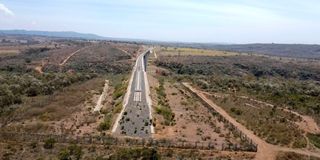
An aerial view of the end of the standard gauge railway at Murtoto in Suswa, where the line  ends.

Photo credit: Robert Gichira | Nation Media Group

A number of sleepy rural towns in Rift Valley and western Kenya are set for economic uplift as the State moves to build a 263.7-kilometre standard gauge railway (SGR) from Naivasha to Kisumu and develop commercial and logistics hubs along the route.

The proposed SGR Phase 2B project, to be overseen by Kenya Railways Corporation (KRC), will traverse Narok, Bomet, Kericho, Nyamira, and Kisumu counties, opening up a transport corridor that could redefine trade, industrial activity, and urban growth in the region.
The line will begin at the terminus of the Nairobi–Naivasha SGR and pass through Narok, Bomet, Sotik, Sondu and Ahero before terminating in Kisumu.

A work plan on the proposed project shows the railway will also link the existing Nairobi–Naivasha SGR to Kisumu and the Lake Victoria basin, backing Kenya’s ambitions of becoming a regional logistics hub under Vision 2030.

Key to the project’s economic promise is the planned establishment of four logistics and commercial hubs in key towns along the route. The hubs, to be located in Narok, Bomet, Sotik, and Kisumu, will be designed to anchor freight handling, warehousing, value addition, and industrial activity linked to the rail transport.

The project blueprint notes that the Naivasha–Kisumu SGR will support faster and cheaper movement of goods, particularly bulk agricultural produce and industrial inputs, while easing pressure on the already congested road network in western Kenya.

“The proposed Naivasha-Kisumu SGR serves as a major transport corridor for western Kenya, supporting natural resource development, industrial growth, and daily passenger travel. When completed, it will ease the constraints caused by the existing transport system, enhance regional connectivity, and unlock economic potential along the corridor,” says the blueprint.

Tea zones

In Narok County, where the railway will stretch about 98 kilometres, the project includes two intermediate stations at Narok town and Mulot, eight passing stations, tunnels, and more than 12 major bridges.

The Narok commercial logistics hub, planned near the Narok station, is expected to catalyse trade in livestock, cereals, and other agricultural commodities from the county and neighbouring regions.

Bomet County, which will host about 46 kilometres of the line, is also poised to benefit from the SGR-driven economic upfit through a logistics and commercial hub planned at Kapkesosio near Bomet town. This will serve tea-growing areas and other agricultural zones in the county.

The design notes that the presence of an intermediate station in Bomet and future passing stations will stimulate urban development, boost demand for housing and services, and create opportunities for small and medium enterprises.

In Kericho and Nyamira counties, the railway will cut through tea-growing highlands and densely populated rural areas using multiple tunnels, bridges, and stations. There will also be an intermediate station at Sondu.

SGR endpoint

Kisumu County will host about 51 kilometres of the line, making it one of the major beneficiaries of the SGR extension. The line will terminate in Kisumu, with an additional 8.69-kilometre branch linking the railway to the revamped Kisumu Port on Lake Victoria.

The SGR project in Kisumu will include a terminus station, a freight station, a port station, and a logistics hub in Otonglo in Korando Bsub-location —positioning the lakeside city as a strategic gateway for regional trade.

The State hopes to use the SGR extension to enhance connectivity from Mombasa to Malaba and onward to Kampala, with potential links to South Sudan, Rwanda, and the Democratic Republic of Congo.

The report says the enhanced role of Kisumu Port could spur growth in shipping, warehousing, manufacturing, and services, creating jobs during the construction and operation phases. There will be one terminal station at Kisumu, serving as a major hub for passenger and freight operations, including locomotive servicing and marshalling yards.

A map showing the proposed SGR Phase 2B project.

Photo credit: Pool

25 stations

In addition, there will be six intermediate stations located at strategic towns, including Narok, Mulot, Bomet, Sondu, Ahero, and Kibos. The intermediate stations will handle passenger traffic and local freight, providing economic interfaces for surrounding communities.

There will also be 18 passing stations, which will be smaller technical stations designed to allow safe passing of trains travelling in opposite directions on the single-track line.

“The project involves the development of 25 stations along the railway alignment, functionally categorised to support both the operational requirements of the railway and the economic needs of the region. The siting and design of these stations form key development nodes,” the work plan said.

The planned stations along the SGR extension could become centres for new towns or the expansion of existing ones as businesses, real estate developers, and service providers cluster around these transport nodes.

Demand for hospitality, retail, food services, and informal trade could also rise, offering income opportunities for local communities as these transit points grow into economic hubs.

The State also expects the SGR to deliver macroeconomic benefits, including reduced transport costs, lower vehicle operating expenses, and improved road safety as freight shifts from trucks to rail.

Freight and passenger services

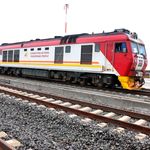
This project is an extension of the Mombasa-Nairobi SGR line. The freight trains are expected to run at speeds of up to 80 kilometres per hour, while passenger services will travel at up to 120 kilometres per hour, cutting travel time between towns along the corridor known for heavy passenger traffic.

A new depot will be constructed at Kisumu station to handle daily locomotive servicing, routine inspections, minor repairs, fuelling, and washing activities.

“This depot is strategically located at the western terminus of the line, ensuring quick turnaround for return trips and supporting lake-port intermodal operations,” says the blueprint.

The new depot will be supported by the Nairobi terminus maintenance hub, which is part of the existing Mombasa–Nairobi SGR infrastructure. This will be expanded to undertake major repairs, overhaul, and periodic heavy maintenance on the extended line.

Three major water supply stations will be established at Narok, Kibos, and Kisumu—each serving as a primary distribution hub for the respective station clusters. The water will enable seamless operation of stations, maintenance depots, staff facilities, and emergency services across the railway corridor.

The project incorporates a 33 kilovolts (kV) power supply system to provide power for stations, depots, communication equipment, and operational systems. New outdoor substations will be constructed at Murtoto, Narok, Bomet, Sondu, and Kisumu.

PAYE Tax Calculator

Note: The results are not exact but very close to the actual.