New record-high power use by electric buses, motorcycles

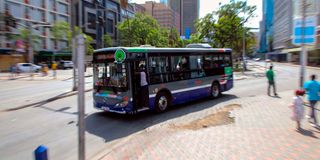
A MetroTrans Sacco electric bus navigates Kenyatta Avenue in Nairobi on Friday, December 26, 2025.

Photo credit: Dennis Onsongo | Nation Media Group

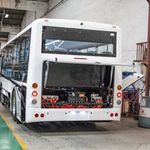
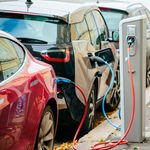
Electric buses, cars and two-wheelers consumed a record 4.57 gigawatt-hours (GWh) of power in the half year to December 2025, underscoring the fast-growing uptake of clean energy-powered units across the country.

Industry data shows this was a growth of 152.49 percent from the 1.81GWh in the corresponding period of 2024, with the consumption on course for a record growth in the full-year ending June 2026.
The surge signals an increased uptake of electric buses, cars and motorbikes, and also more people opting to charge under the EV tariff of Sh16 per kilowatt-hour (kWh). There are currently well over 14,700 units of electric buses, cars, tuk tuks, motorcycles and bikes, from fewer than 100 five years ago.

The rise in consumption is a boost to Kenya Power, given that the firm is banking on the shift to electric mobility to further grow its revenues. E-mobility consumers pay Sh16 per kWh to charge during peak and Sh8 per kWh for off-peak.

“This growth signals increasing adoption of clean transport solutions and reinforces our commitment to supporting sustainable energy transitions,” Daniel Kiptoo, the Director General of the Energy and Petroleum Regulatory Authority (Epra)", said.

“This category has recorded steady growth, accounting for 0.08 percent of the total energy consumption, up from 0.03 percent in the previous half year.”

Electric motorbikes, mainly by ride-hailing operators on platforms like Uber and Bolt, dominate the e-mobility space, offering both operators and passengers savings on maintenance costs and fares.

Data from the industry lobby, Electric Mobility Association of Kenya, shows that there are 14,750 electric bikes, motorcycles, tuk tuks, cars and buses as of December 2024, compared to 4,048 such units the year before and 796 units (2022).

Electric motorbikes hold the biggest share at 55 percent (4,862 units) out of the 14,750 units, followed by electric bikes at 37 percent. Electric passenger cars –mostly used by ride-hailing operators— were 326 units (2.2 percent) while buses and minibuses were 54 or 0.36 percent.

The consumption in the half-year ended December 2025 set the stage for a record usage of electricity by the e-mobility sector in the full-year that ends in June 2026.

In the full-year ended June 2025, the e-mobility sector consumed 4.88GWh, and consumption in the full-year that ends in June 2026 is expected to be significantly higher.

A higher number of electric buses, minibuses, and cars could significantly increase electricity consumption by the e-mobility sector. This is because they require much more electricity than electric motorcycles or bikes.

Charging infrastructure for electric buses, cars and motorbikes is mainly available in Nairobi, with very few installed outside the capital. This has significantly hampered uptake of the units outside Nairobi, Kisumu and Mombasa.

Follow ourWhatsApp channel for the latest business and markets updates.

PAYE Tax Calculator

Note: The results are not exact but very close to the actual.