How infrastructure gaps are slowing Kenya’s EV takeoff

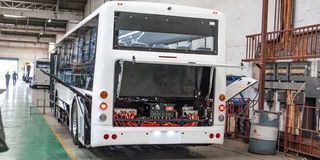
BasiGo EV buses at the Kenya Vehicle Manufacturer assembly line in Thika on August 15, 2024. 

Photo credit: Billy Ogada | Nation Media Group

Adoption of electric vehicles has moved beyond pilot phases in Kenya, but gaps in charging infrastructure and the intensive capital required for rollout are emerging as the primary bottlenecks to expansion.

Electric buses, matatus, and passenger cars have entered Nairobi’s transport system, signalling rising acceptance, though deployment remains limited relative to operator demand and infrastructure gaps.
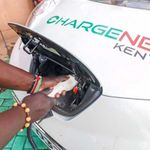
According to industry players, the challenge is no longer whether electric vehicles can work in Kenya, but if infrastructure can expand fast enough to support growing fleets.

“There are about 60 charging stations for four-wheelers in the country, and a further 300 battery swap stations. Kenya Power has indicated interest in building more,” notes Warren Ondanje, managing director at Africa E-Mobility Alliance.

“We’ve also recently started seeing cross-border trips testing out the viability of charging infrastructure.”

In public transport, particularly, early adoption has been driven by vertically integrated models designed to bypass absence of shared charging networks.

BasiGo, one of the earliest electric bus assemblers in the public transport segment, has, for instance, embedded charging and maintenance within its lease-based operating structure.

“Our model is a lease model. Technically, we own the bus and the operator pays per kilometre. We’re the ones who handle charging, service, and maintenance,” says BasiGo managing director Moses Nderitu.

The approach not only reduces operational risk for matatu owners, but also ties vehicle deployment directly to the assembler’s charging footprint.

Nderitu has previously acknowledged that buses cannot be used without matching charging capacity, even when production demand exists.

Outer Ring Matatu Association (OMA Services), which is one of the first to go fully electric, illustrates how infrastructure availability shapes fleet expansion decisions. The sacco operates 12 electric buses and has reserved 68 more at BasiGo’s assembly plant, but rollout has been slower than expected.

“I was not expecting to have fewer than 30 vehicles by now because I have a reservation of 68 electric buses,” says OMA chief executive George Githinji.

Githinji attributes the slower transition partly to the pace at which supporting infrastructure can be built and commissioned.

He says the lease model lowers technical risk, but does not eliminate dependence on supplier-controlled charging systems.

“The battery is the bus. Everything else is just a shell,” Githinji says, underscoring why battery management and charging reliability remain central to operations. The absence of widespread public charging infrastructure has pushed assemblers to develop private depot-based solutions.

Roam, another local assembler, has installed charging facilities within sacco yards to support deployment. “Our focus is on giving operators flexibility. They can resell, repurpose, or fully own their vehicles —while we provide the charging infrastructure and after-sales support,” says Roam Kenya Country Manager Habib Lukaya.

Despite local sourcing of bodywork and components, Lukaya says infrastructure expansion remains capital-intensive. “We know the demand is there and operators are ready, but scaling is capital-intensive,” he says.

The same constraint is evident among smaller operators piloting electric commuter services.

E-Moti, which runs electric buses between Nairobi and Kitengela, says it has been limited by charging cycles.

“With current capacity, we can only manage about four trips a day before recharging,” says co-founder Billy Mwangi.

Mwangi says the limitation affects scheduling reliability, particularly on high-frequency commuter routes.

“Commuters value safety and reliability above everything else,” he says, noting that missed trips quickly push passengers back to diesel alternatives.

While public transport grapples with depot-based charging, the passenger EV segment faces similar structural gaps.

Industry data from the Electric Mobility Association of Kenya (EMAK) shows that Kenya had a total of 14,570 registered electric vehicles by the close of 2024, a huge chunk of which was electric motorcycles (8,097).

Electric bicycles stood at 5,524, while passenger cars, tuk-tuks, buses, minibuses, and other vehicle classes that are electric-powered were 326, 324, 54, and 245, respectively.

However, official data from the Energy and Petroleum Regulatory Authority (Epra) puts the total EVs, including motor bikes and tuk tuks, in Kenya at a lower figure of 6,442 units as of June 2025.

Despite policy incentives, charging access remains uneven, with stations concentrated in malls and controlled urban locations.

The incentives have focused primarily on vehicle assembly and import taxation, with less emphasis placed on accelerating charging infrastructure rollout.

Electric vehicle assemblers benefit from exemption from the 35 percent import duty and pay a reduced excise duty of 10 percent, improving price competitiveness.

However, charging equipment, grid upgrades, and land acquisition costs remain largely unsupported by direct fiscal incentives.

As a result, most charging infrastructure remains privately owned and commercially operated, limiting access for most operators.

According to Mr Ondanje, Kenya stands on a higher ground compared to continental peers due to a heavy presence of EV startups, but is hindered by the absence of a strong policy signal.

“The national e-mobility policy, which is in draft, is the biggest impediment factor because it will be a signal for the government’s commitment to promote growth and drive foreign and domestic investment, especially around charging infrastructure,” he says.

Unlike fuel stations, EV chargers require stable grid connections, land approvals, and significant upfront capital, complicating deployment in dense urban transport corridors.

Industry players say the absence of a coordinated national charging rollout has left assemblers and operators to develop isolated infrastructure networks tailored to their own fleets.

This fragmentation has resulted in uneven access, with charging concentrated in high-income urban zones, controlled depots, and shopping malls.

Public transport routes that operate on tight turnaround schedules face additional constraints, as vehicles must be taken out of service for extended charging cycles.

The challenge is compounded by the lack of standardised charging specifications across different vehicle platforms, limiting interoperability.

Without common standards, operators cannot easily switch between charging providers, reinforcing dependence on supplier-specific infrastructure.

Urban planning has also trailed technological shifts, with limited provision for charging infrastructure in transport hubs and public parking facilities.

Matatu stages, termini, and commuter hubs were designed around diesel refueling models, as opposed to extended dwell-time charging.

Further, financial institutions remain cautious, viewing charging infrastructure as long-term assets with uncertain utilisation rates.

PAYE Tax Calculator

Note: The results are not exact but very close to the actual.