The fee payable to external fund managers for managing assets under the planned Sovereign Wealth Fund (SWF) has been capped at two percent, in a bid to ensure prudent utilisation of funds.
The National Assembly’s Finance and National Planning committee has also amended the Third Schedule of the Sovereign Wealth Fund Bill, 2026 to include a requirement for the disclosure of details of all fees paid to investment fund managers and any other service providers to safeguard the Fund.
“The annual management fee payable to an investment fund manager shall not exceed two percent of the investment in the qualifying instrument and shall be specified in the instrument of appointment,” Kuria Kimani, who chairs the committee, said while moving amendments to the Bill.
“The amendment seeks to provide a capping of the amount paid to an investment fund manager to two percent of the investment in the qualifying instrument. This is to ensure that there is prudent utilisation of funds.”
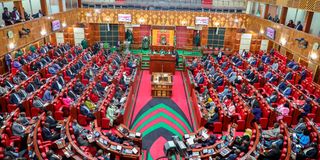
Mr Kimani proposed the changes during the scrutiny of the Bill in the Committee of the Whole House where MPs scrutinise the proposed law clause by clause and make changes.
The Bill, as drafted by the government, had failed to prescribe the annual management fee payable to investment fund managers.
“The annual management fee payable to investment fund managers shall be specified in the instrument of appointment,” the original version of the Bill states.
MPs on July 2, 2026, approved the Sovereign Wealth Fund Bill, 2026 with amendments and now awaits assent by President William Ruto to become law.
The Bill establishes three components: the Stabilisation Fund to cushion against micro-economic shocks, the Strategic Infrastructure Investment Fund to fund national infrastructure development projects, and the Future Generations Fund to preserve wealth for future generations.
Mr Kimani said the committee had increased penalties for individuals who misappropriate any funds or assets from the Fund, or assist or cause any person to misappropriate the funds or assets from two to three years in jail or to a fine not exceeding Sh10 million. The Bill had set Sh5 million as the maximum fine.
“The amendment aligns the penalty provision to move away from mandatory minimum sentencing while at the same time enhancing the penalty in order to safeguard the Fund and ensure compliance with the Act,” Mr Kimani, who is also the MP for Molo, said.
The Third Schedule of the Bill sets out responsibilities of an investment fund manager, which include managing assets and other resources of the Fund.
“The responsibilities of an investment fund manager, appointed by and acting on behalf of the board under the terms of the service level agreement, shall include but shall not be limited to investing assets and other resources of the Fund in accordance with this Act, and the operational and investment guidelines developed under this Act,” the Bill states.
“Maintaining records and documentary support for transactions relating to the management of the Fund in accordance with internationally accepted accounting standards.”
The Bill also requires an investment fund manager to submit an annual report of the investment management to the SWF Board not later than two months after the end of the financial year.
It also requires that the reports be accompanied by a certificate signed by the internal auditors of the investment fund manager and a certified investment report on the performance of the Fund.
So far, the Sovereign Wealth Fund will have nearly Sh200 billion that Kenya earned from the mineral sector in the form of royalties, prospecting licences, and acreage leases.
To protect the fund, the Bill restricts the types of investments it can make, barring it from speculative financial instruments such as derivatives, private equity, or commodities trading, and focusing instead on relatively stable investment assets.
It also prohibits the use of the fund to provide loans, guarantees, or credit to government entities, a move aimed at preventing political misuse of the savings.
Any official who makes such investment decisions will be expected to pay back the money if it leads to losses.
The Bill further states that no cash will be withdrawn from the Sovereign Wealth Fund within three months of a General Election, the government has said in a proposed law aimed at shielding the funds from misuse by political patronage.
As a safeguard, the proposed law in the Sovereign Wealth Fund Bill, 2026, requires that cash held in the endowment at least three months before a General Election be certified by its board of management, with a report submitted to the National Treasury and forwarded to the Auditor-General and Parliament for verification.