Heavy police deployments and sweeping road closures across major towns disrupted transport, shut businesses and kept workers away from offices yesterday as security agencies moved to contain planned Saba Saba Day demonstrations on Tuesday.
The biggest disruption was recorded in the capital, Nairobi, where police sealed off key roads into the central business district, leaving thousands of commuters stranded and businesses operating below normal capacity.
The security operation once again exposed the growing economic cost of protest days, with transport, retail trade, banking and informal businesses bearing the heaviest losses from restricted movement.
Police mounted roadblocks on major highways leading into the capital before dawn, restricting public service vehicles from accessing the city centre while screening motorists at multiple checkpoints.
Concertina wire, barricade trucks and heavily armed anti-riot officers were deployed around Parliament as security agencies tightened access to central Nairobi.
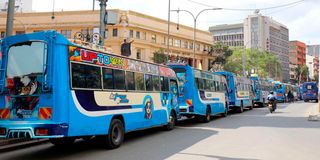
Public Service Vehicles along Moi Avenue in Nairobi on July 7, 2026, during the Saba Saba protests.
Photo credit: Bonface Bogita | Nation Media Group
The restrictions forced thousands of commuters to abandon buses and matatus before completing the final kilometres of their journeys on foot. Matatus from Kiambu, Ruiru, Thika and eastern parts of Nairobi remained parked outside the city for hours after operators were denied access to the CBD.
The transport disruption rippled through the economy as employees arrived late for work, businesses delayed opening and customers stayed away from shopping districts.
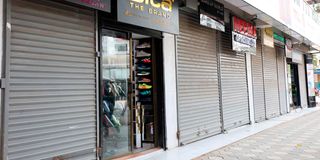
Many retailers, supermarkets and small traders opted to remain closed altogether, fearing property damage should demonstrations escalate during the day.
The shutdown mirrored a growing trend in which businesses increasingly suspend operations ahead of planned demonstrations rather than wait for violence or looting to erupt.
“It’s very important to have security for business and also to facilitate movement of goods and people by the police. This should, however, be done without disruption of transport because any delays are a high cost to business that gets passed on to the public as an increased cost of goods and services,” noted Kenya Private Sector Alliance (Kepsa) chief executive Carole Kariuki.
“It can also open the door to bribery, which is another cost to business that gets passed on. So, like many countries that ensure security on highways, we can learn from them how to do this effectively and efficiently.”
Saba Saba movement
But the Nairobi Securities Exchange (NSE) defied the police-imposed disruptions, with market capitalisation expanding by Sh37.53 billion to close at Sh3.87 trillion.
A total of 37.7 million shares were traded by the close of the market, marking a 78.2 percent increase from the 21.16 million recorded a day earlier.
Outside Nairobi, security agencies maintained a heavy presence in several towns as authorities sought to deter gatherings marking the anniversary of the historic Saba Saba movement.
In Mombasa, a small group of activists held demonstrations along Moi Avenue under close police surveillance while business activities largely continued elsewhere in the city.
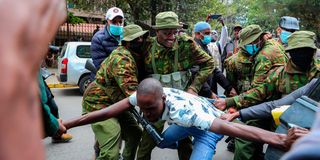
Police officers arrest a protestor along Harambee Avenue, Nairobi on July 7, 2026 during demonstrations to commemorate Saba Saba Day.
Photo credit: Lucy Wanjiru | Nation Media Group
Kisii remained relatively calm through the morning, with traders opening their shops as police maintained visibility at key junctions and roundabouts.
Eldoret also recorded normal business activity for much of the day despite heightened security.
The police strategy reflected an increasingly familiar approach that prioritises restricting movement into urban centres rather than dispersing crowds after demonstrations begin.
Roadblocks have emerged as the government's preferred crowd-control tactic following recent nationwide protests that paralysed business activity across several counties.
Transport operators are among the hardest hit since restrictions immediately translate into fewer passenger trips and reduced daily earnings.
The informal sector bears an even heavier burden because many traders rely entirely on daily sales to meet household expenses and replenish working capital.
Sustained disruptions
Political instability also raises operating costs as firms spend more on security, insurance and emergency planning while recording weaker revenues during shutdown periods.
The sustained disruptions come as Kenya's economy continues to recover from subdued consumer spending linked to high living costs and elevated borrowing expenses.
Business confidence has also remained fragile following months of political uncertainty that have periodically interrupted commercial activity across several urban centres.
The recurring shutdowns are increasingly forcing businesses to develop contingency plans, including remote working arrangements and flexible operating hours during politically sensitive periods.
Some firms have also accelerated investments in digital services to reduce dependence on physical customer traffic during periods of heightened uncertainty.