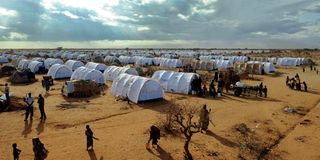
Kenya’s government-led refugee integration plan risks operational collapse due to a Sh2.6 billion ($20 million) funding shortfall that has crippled essential services in Dadaab and Kakuma.
A new report by the NGO Refugee Group (NRG) shows a worrying picture of deteriorating water, health, and education systems, rising insecurity, and collapsing livelihoods, conditions that threaten to reverse four years of progress.
The Shirika Plan, launched in 2021 by the government in partnership with UNHCR and the World Bank, sought to move away from the traditional camp-based model that had defined Kenya’s refugee response for decades, and instead integrate refugees into the country and national development plans, which granted refugees access to formal employment, education systems, healthcare facilities, and financial services.
However, the NRG mid-year impact report, which represents 56 humanitarian organisations operating in Kenya’s refugee settlements, shows a response system ‘under strain’.
Of the Sh2.6 billion funding gap, which spreads across critical sectors, health programmes need an additional Sh1 billion ($8 million), education needs Sh827.1 million ($6.4 million), while protection services face a Sh516.9 million ($4 million) deficit. Water and sanitation operations are short Sh193 million ($1.5 million). Logistics require Sh38.8 million ($300,000).
“Key findings from the report indicated a severe funding shortfall: with a reported funding gap of approximately $20 million (Sh2.6 billion) across health, education, protection, WASH, and logistics; the true figure is higher, as key organisations did not submit data,” the report stated.
Meanwhile, the provision of water in Dadaab has fallen to 10 litres per person daily, while Kakuma delivers 14 litres, both falling below the international emergency standards of 20 litres.
About 67 percent of health facilities in Kakuma and Hagadera face potential closure, while more than 1,000 staff have been terminated.
Survey results show 94.8 percent of refugees experienced or witnessed violent attacks in the past six months, while theft incidents increased, according to 81 percent of respondents, damning figures that directly threaten the Shirika Plan’s objectives.
Survey about future intentions shows that 68.1 percent of refugees prioritise third-country resettlement. Another 17.2 percent plan to return home, while only 11.2 percent remain undecided.
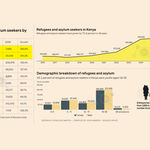
Kenya currently hosts over 700,000 refugees and asylum-seekers. Most come from Somalia, South Sudan, and the Democratic Republic of Congo.
The plan designed as a 10-year roadmap running through 2030 builds on the earlier local integration initiatives of the Kalobeyei Integrated Socio-Economic Development Plan and the Garissa Integrated Socio-Economic Development Plan, which pioneered shared services and livelihoods for both refugees and host communities.