Time flies with great content! Renew in to keep enjoying all our premium content.
Prime
US offers Kenya factories in proposed Sh8trn minerals deal
Delegates follow proceedings during the American Chamber of Commerce (AmCham) Business Summit at Windsor Golf Hotel and Country Club in Nairobi on September 9, 2026. The summit brought together business leaders and stakeholders to discuss trade, investment and economic opportunities.
The United States has pledged to help Kenya build factories and other industries around its rare earth and niobium deposits at the Coast, opening a potential new source of investment, technology transfer and skilled jobs.
Washington says it wants American companies to process the minerals in Kenya and develop industries around them in a proposed deal to access the mineral deposits at Mrima Hill in Kwale County.
US Assistant Secretary of State for African Affairs Frank Garcia said the proposed partnership would include investment in processing, worker training, technology transfer and development of secondary industries.
“As Kenya builds its strategic mining sector, we want in, and we will be a long-term strategic partner,” Mr Garcia said at the American Chamber of Commerce (AmCham) Business Summit 2026 in Nairobi on Wednesday.
“American companies are not here to extract and ship. That is not partnership; that is extraction. What we build with Kenya is very different. US firms invest in communities where they operate.”
The proposed partnership centres on the estimated $62.4 billion (about Sh8 trillion) rare earth and niobium deposits at Mrima Hill in Kwale County, which President William Ruto said in June was nearing a critical minerals agreement with the US.
The proposed deal remains under discussion and has been challenged in court by the Centre for Litigation and Trust.
The offer places Kenya inside the global contest for critical minerals, with the United States, China and Russia seeking secure supplies of resources essential to advanced manufacturing, energy and defence.
Washington has sought similar critical mineral partnerships elsewhere in Africa, including the Democratic Republic of Congo, where cobalt and copper are crucial to global battery supply chains.
China remains a dominant force in mineral processing and supply chains across Africa, while Russia has also pursued resource-linked partnerships involving mining concessions and security arrangements in Mali and the Central African Republic.
President William Ruto has repeatedly said Kenya wants to move away from exporting raw materials and attract investment into processing and downstream manufacturing.
The President last week demanded that India’s Tata Chemicals Magadi leave Kenya, arguing that the company and its predecessors had extracted soda ash for about a century without building factories or creating enough local jobs.
“Our policy is not simply to extract and export. We want investment in processing and downstream manufacturing that creates value for investors while enabling Kenya to retain more value, develop skills and create better jobs,” Dr Ruto said at AmCham Summit.
“We want to work with partners who are ready to work with us so that we can mobilise domestic capital from our pension, insurance companies … and guarantee those funds and use it not in capital markets elsewhere but to develop our continent.”
He insisted that Kenya was seeking a new relationship with investors based on mutual benefit and a greater share of the value generated from the country’s natural resources.
“We want to have a new type of engagement, we want to have a relationship that is better than what we have had in the past,” he said. “That relationship must be built on sovereign quality where it is a relationship and partnership of equals.”
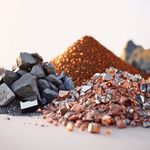
Rare earth elements are used in making products ranging from electric vehicles and wind turbines to consumer electronics, advanced computers and other high-technology equipment.
The minerals also have applications in medical equipment such as MRI scanners, defence systems and petroleum refining, increasing their strategic importance to major economies.
Niobium, on the other hand, is used to produce stronger and lighter metals for applications including aerospace, construction and fuel-efficient vehicles.
Mr Garcia said Washington wanted Kenya to capture a larger share of the economic value generated from the deposits by processing the minerals locally.
“We want processing done right here on the ground in Kenya, not thousands of miles away. [You] process locally, you keep the value here, you create paying jobs, you build a true regional processing hub.”
He said American mining technology could help Kenya develop the sector while creating skilled employment and supporting industries beyond extraction.
“We will build secondary industries that create jobs for locals and train and transfer skills. The United States has ground-breaking mining technology, and we hope to bring that here in Kenya,” Mr Garcia said on the sidelines of the summit.
The potential opportunity for Kenya will be in using the deposits to attract factories, technology and skills while creating better-paying jobs and retaining more of the value generated from the resources.
The Washington offer, however, remains a political and investment commitment, with details on participating companies, financing, processing facilities, infrastructure and construction timelines still to be established.
“Critical minerals are a top priority for President Trump and Secretary [of State Marco] Rubio, and we’re in it, we’re ready to work with Kenya as it becomes a regional leader in this space,” Mr Garcia said.