The Kenya Railways Corporation (KRC) has introduced a fuel price adjustor in its new cargo freight tariffs for 2026, marking a shift that will see users pay more when fuel prices rise, as seen in the current pricing cycle to May 14.
The changes, which took effect on April 1, introduce a base freight rate tied to a fuel price benchmark of Sh170 per litre in Nairobi, meaning charges will now move in line with prevailing petroleum prices.
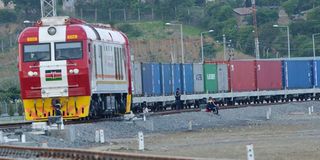
KRC runs its trains on diesel across both the standard gauge railway (SGR) and meter gauge railway (MGR).
“The base rate used in this tariff is Sh170 per litre in Nairobi. There shall be a fuel price adjustor to the prevailing rates at every Energy Petroleum Regulatory Authority (Epra) review…. Should the prevailing market price of fuel (the “fuel price”) exceed or fall below this range, the contract price shall be adjusted in increments of four percent for every 10-shilling variance,” KRC said.
Fuel link
Under the new formula, KRC’s base tariff would rise by 12 percent if fuel prices increase to between Sh221 and Sh230 per litre. The schedule also shows no adjustment where fuel prices range between Sh160 and Sh180 per litre.
If fuel prices fall to between Sh110 and Sh119 per litre, the base tariff would be reduced by 12 percent.
“The basis for adjustment shall be the Epra published fuel price for Nairobi,” KRC said, adding that the percentage adjustment will be applied to the total invoice value for the period in which the fuel price was active.
Epra, in its latest monthly pricing cycle for April 15 to May 14, set the price of diesel in Nairobi at Sh206.54 per litre. This implies that the KRC base tariff will be adjusted upward by eight percent for the current cycle.
This is the first tariff schedule published by KRC since the repeal of the Kenya Railways Corporation Act (Cap. 397) and the commencement of the Government Owned Enterprises (GOE) Act 2025.
The GOE Act grants State agencies commercial autonomy to determine, approve and levy tariffs, rates, charges and fees for services, subject to applicable laws, shareholder directives and corporate governance frameworks.
KRC runs large diesel procurement orders for its trains, underscoring the board’s move to adopt a floating tariff system pegged on fuel prices. A recent disclosure showed the corporation requires more than 38 million litres of diesel annually to run SGR locomotives.
Rate changes
Under the new tariff structure, the cost of transporting a 20-foot container from Mombasa to Nairobi has risen from Sh65,115 ($500) to Sh71,627 ($550). Rates for 40-foot and refrigerated containers remain unchanged.
Transporting cargo on the SGR from Mombasa to Naivasha has fallen by Sh6,511 ($50) to Sh78,138 ($600). Charges for a fully loaded 40-foot container have dropped to Sh90,559 ($700) from Sh131,310.55 ($1,015).
Agayo Ogambi, chief executive of the Shippers Council of Eastern Africa, welcomed the decision not to raise 40-foot container rates, saying it would support the competitiveness of sea exports.
KRC will offer a free storage period of 14 days after stripping loose cargo. Thereafter, storage charges will be Sh65 ($0.5) per tonne per cubic metre per week (exclusive of VAT), whichever is higher.
The free storage period for containers is also set at 14 days from the date of arrival. After this, daily storage charges will be Sh5,209 ($40) for a 20-foot container and Sh7,813 ($60) for a 40-foot container.
Shippers will also incur container handling charges of Sh3,255 ($25) for a 20-foot container and Sh3,906 ($30) for a 40-foot container. Deconsolidation charges are set at Sh10,418 ($80) for a 20-foot container and Sh19,534 ($150) for a 40-foot container.