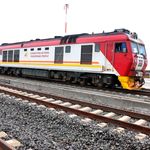
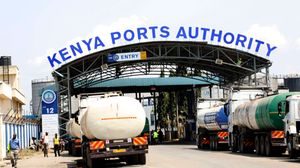
The Kenya Ports Authority (KPA) and the Kenya Railways Corporation (KRC) are locked in a dispute over the transfer of Sh5.95 billion to an escrow account for the repayment of a Chinese loan used to build the Mombasa to Nairobi standard gauge railway (SGR) line.
Auditor-General Nancy Gathungu said that the failure by KPA to deposit the $45.8 million (Sh5.95 billion) escrow account is a breach of the terms of the SGR loan between Kenya and China that was signed in 2014, exposing taxpayers to penalties.
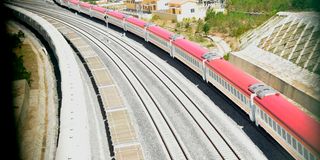
KPA has disputed the transfer amid its obligation to feed the SGR with cargo, once again putting on the spot the burden of paying the Chinese debt, which Kenya renegotiated to ease the load.
The loan terms included a take-or-pay agreement (TOPA) signed in 2014 between China’s Exim Bank, KRC and KPA, requiring the Mombasa port operators to direct a specified minimum volume of freight annually via the SGR.
Failure to meet the unspecified targets obligates KPA to compensate KRC for the shortfall.
“Review of records revealed that Kenya Railway Corporation demanded settlement of $45,894,680 (equivalent of Sh5,934,182,092) claimed to have been retained by the Authority [KPA] instead of transfer to escrow account contrary to Paragraph 6 (B) of TOPA governing loan repayment,” said Ms Gathungu in a report on KPA for the financial year ended June 2025.
An escrow account is a secure financial arrangement where a neutral third party holds funds, assets, or documents on behalf of a buyer and seller until specific contractual conditions are met.
It mitigates risk in ensuring funds are released only when obligations are fulfilled, and is commonly used in real estate, business, and high-value transactions.
Kenya committed to repaying the loans using the operational proceeds from the SGR and provided additional credit safeguards through a 15-year take-or-pay agreement.
The Auditor-General reckons the arrangement is a risk to KPA’s cash flows.
“Reference is made to Note 39 ii to the financial statements on related party transactions, which states that the SGR Take or Pay Arrangement (TOPA) places the Authority (KPA) as a guarantor for minimum traffic and commits to paying Kenya Railways Corporation (KRC) any shortfall. The arrangement increases the level of commitment and hence the risk on the Authority’s cash flows,” said Ms Gathungu.
Kenya borrowed a total of $5.08 billion (Sh656.54 billion) from China Exim Bank for the construction of the two phases of the SGR.
The first phase of the modern railway from the port city of Mombasa to Nairobi received two facilities of $1,600,000,000 (Sh206.78 billion) and $2,003,584,028.87 (Sh258.94 billion), while the second phase connecting the capital city to Naivasha took up $1,482,745,029.43 (Sh191.63 billion).
The contract inked in 2014 between China’s Exim Bank, KPA and Kenya Railways required Mombasa to provide one million tonnes of cargo to the railway per year, rising to six million tonnes by 2024 and 6.77 million tonnes in the year to June 2025. The exact terms of the agreement are not public.
Last year, SGR handled 7.4 million metric tonnes of cargo, earning Sh16.6 million, up from 6.5 million metric tonnes a year earlier.
The Auditor-General said $81.9 million was paid to the escrow account in the year to June against the minimum requirement of $80.4 million, suggesting the Sh5.95 billion is an old debt.
KPA managing director William Ruto told this publication earlier that the authority and KRC have been engaging on this matter through a joint technical reconciliation committee established under the TOPA framework.
“The committee reviews cargo data, billing records, tax treatment, and revenue reconciliation matters to ensure both institutions operate on harmonised data and financial records,” said Mr Ruto.
“The reconciliation exercise has made significant progress and continues to address operational and accounting differences arising from billing timelines, cargo classification, and data alignment between the two institutions.”
Kenya extended the tenure of the three Chinese loans used for the construction of the SGR to 2040, with the extra five years aimed at easing the burdening quarterly payments.
It negotiated new terms that turned the loans into a 15-year-old facility from late last year, and includes a new five-year grace period, where Kenya will be exempted from paying the principal amount.
The extension was part of the conversion of the three dollar-denominated loans into yuan, reportedly saving the country about $215 million (Sh27.7 billion) a year.
The SGR loans were initially set to be repaid by 2035, with Kenya paying both the principal and interest to China Exim Bank.
The country has been paying interest on the SGR notes twice a year in January and July and the loans were initially expected to mature between January 2029 and July 2035.
The extension of the loan tenure and the grace period will make repayment of the SGR loans manageable in a period when public debt servicing costs is eating over half of government revenues.
The Treasury estimates that it has been spending Sh50 billion a year on servicing the three SGR loans but now expects the servicing to only cost Sh37 billion a year.
Apart from the financial relief, Kenyan officials attribute the currency switch to the fact that the East African nation’s debt is concentrated in dollars, exposing the government to higher currency and interest rate risks.
About 52 percent of the stock of Kenya’s external debt was denominated in dollars at the end of September, according to government records; 27.9 percent of debt was made of the euro; 12.3 percent in yuan; 5.2 percent in yen; and 2.5 percent in British pounds.
Kenya is racing to cut its overall debt, which stands close to 70 percent of the gross domestic product or Sh12 trillion, and ease repayments.
The government has revamped its debt management strategy to lengthen the maturity of debt, notably the Eurobonds and ease the pressure on public coffers. It has also been turning to securitisation of revenue to raise funds for key projects like the extension of the railway from Naivasha to the Ugandan border, and the upgrading of its main airport in Nairobi.