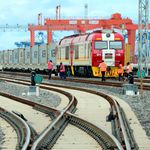
Revenue collections on the standard gauge railway (SGR) rose 18.6 percent to Sh21.4 billion in 2025, lifted by steady growth in cargo haulage and a rebound in passenger traffic.
Latest data from the Kenya National Bureau of Statistics (KNBS) show total SGR revenue increased from Sh18.1 billion in 2024, extending gains recorded in the early months of last year.
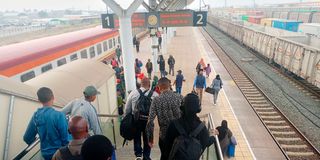
Passenger traffic rose 11.6 percent to 2.7 million travellers in 2025, up from 2.4 million the previous year, as more commuters returned to the Madaraka Express despite elevated fares imposed at the start of 2024.
The rise in passenger numbers pushed ticket revenue up 17 percent to Sh4.8 billion from Sh4.1 billion a year earlier.
Cargo remained the dominant revenue driver, with freight volumes rising 14.6 percent to 7.5 million tonnes from 6.5 million tonnes in 2024.
Cargo freight revenue grew 19.1 percent to Sh16.6 billion from Sh14 billion the previous year, underscoring the central role of containerised cargo in the railway’s commercial performance.
Importers have increasingly shifted to rail haulage, citing predictable transit times, reduced cargo losses and tighter enforcement of cargo evacuation rules at the Port of Mombasa.
The growth in freight volumes reflects sustained demand for rail transport between the port and inland container depots, particularly along the Mombasa–Naivasha corridor.
Cargo trains have remained the backbone of the SGR’s revenue stream since operations began in 2017, consistently accounting for more than half of annual earnings.
Kenya Railways has pursued a strategy of deepening cargo volumes on the SGR while improving connectivity between the standard gauge and the metre-gauge networks.
SGR loans
The improved revenue performance offers some relief to a system that has historically relied on Treasury support to meet operating costs.
Since its launch, the railway has struggled to generate sufficient cash flow to fully cover operating expenses and debt obligations tied to its construction.
Kenya borrowed $5.08 billion (Sh655.3 billion at current conversion rates) from China Exim Bank in 2014 and 2015 to finance the Mombasa–Naivasha line.
The loans were extended on a mix of concessional and commercial terms, with repayments beginning in January 2020 after a five-year grace period.
Debt servicing has continued to exert pressure on the country’s external financing obligations, particularly when SGR revenues fall short of repayment requirements.
The rebound in passenger traffic has helped narrow operating gaps created after fare increases triggered a temporary shift to road transport in early 2024.
Passenger fares were revised upwards in January 2024, with first-class tickets on the Nairobi–Mombasa route rising to Sh4,500 from Sh3,000 and economy fares increasing to Sh1,500 from Sh1,000.
The fare adjustment was attributed to higher operating costs, including fuel prices and rising maintenance expenses for rolling stock and track infrastructure.
Although the fare increases initially dampened demand, passenger numbers stabilised over time as travellers prioritised convenience and reliability.
The SGR remains central to Kenya’s long-term transport and logistics strategy, particularly in easing congestion along the Northern Corridor.
The government is pursuing an extension of the line from Naivasha to the Malaba border to link Kenya’s network with Uganda’s SGR line.
The proposed extension, estimated to cost about $5 billion (Sh645 billion), is expected to rely largely on external financing, with negotiations ongoing.
The project is viewed as critical to improving regional cargo flows and strengthening the railway’s long-term commercial viability.