Wider diesel-kerosene price gap sparks fresh fears of adulteration

Epra fuel prices review

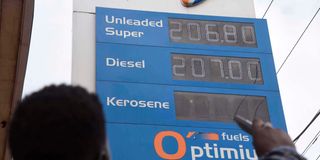
A worker adjusts fuel prices on a price board at a petrol station in Eldoret City, Uasin Gishu County, on April 15, 2026, after the Energy and Petroleum Regulatory Authority (Epra) announced a price increase.

Photo credit: Jared Nyataya | Nation Media Group

The Energy and Petroleum Regulatory Authority (Epra) has widened the gap in the cost of diesel and kerosene for the new monthly pricing cycle to May 14, 2026, raising fresh fears of product adulteration that could affect vehicles, farm machinery, and the environment.

Oil marketers warned that the new price gap of Sh54 between the two grades of fuel could motivate rogue dealers to pump up diesel volumes using kerosene to boost their profits.
“The small independent dealers, who are the majority outside the major cities, may now have the motivation to adulterate fuel due to the huge price difference. From our view, the government was blind to this reality when setting the prices yesterday,” an executive at one of the oil marketers said.

The price of diesel rose to Sh206.84 per litre in Nairobi for the pricing cycle that took effect on Tuesday midnight, while that of kerosene remained unchanged at Sh152.78 per litre due to a subsidy of Sh108.10.

Adulteration refers to the use of kerosene to inflate the volumes of other fuel, mainly diesel, leading to bigger profits for rogue dealers. It mainly occurs between diesel and kerosene due to their closeness in properties.

Adulterated fuel triggers premature or uneven ignition, thus disrupting combustion, leading to engine seizures, highlighting the risk it poses to vehicles, industrial, and farm machinery.

Dirty fuel also releases higher amounts of hydrocarbons, which in turn pollute the environment. Huge price gaps had in the past significantly encouraged use of kerosene to adulterate diesel as rogue dealers raced to drive their revenues at the expense of machinery.

Adulteration of fuel was rampant before 2018 as unscrupulous dealers capitalised on the big gaps in the price of kerosene and diesel.

This prompted the government to introduce an anti-adulteration levy at the rate of Sh18 per litre of kerosene.

Oil marketers say the levy, which triggered a significant rise in the price of kerosene, suppressed demand as it was no longer incentivising adulteration of fuel.

Official data shows that collections from the anti-adulteration levy have dipped year on year since its introduction from a high of Sh7.83 billion in 2018 to Sh1 billion in 2023 and Sh847 million in 2024.

Before the introduction of the anti-adulteration levy, kerosene was significantly cheaper, with the high price margins making adulteration attractive.

For example, in the monthly prices to April 14, 2017, a litre of petrol and diesel retailed at Sh101.05 and Sh90.44 respectively in Nairobi. A litre of kerosene was sold at Sh67.96 in the same period in the capital.

The price gaps significantly reduced the following year on the introduction of the levy, with a litre of petrol and diesel retailing at Sh116.79 and Sh108.12 respectively in the month to October 14, 2018. Kerosene rose to Sh108.41 in the same period due to the new levy and other factors.

Follow ourWhatsApp channel for the latest business and markets updates.

PAYE Tax Calculator

Note: The results are not exact but very close to the actual.