The fate of the condemned Sh11.8 billion worth of petrol remained unclear amid claims from oil marketers that the imported cargo cannot be retrieved from the Kenya Pipeline Company’s network.
The firm that imported the fuel, One Petroleum, on Wednesday asked oil marketers to cancel their orders in line with the government directive to exit the fuel from the country.
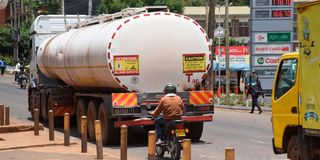
But three executives who spoke on condition of anonymity reckoned that the cargo was already mixed with previous stocks in KPC’s pipelines, casting doubt on the State’s order to recall the cargo from the market.
The executives said KPC does not have dedicated tanks to hold individual importers’ cargo, with shipments flowing directly into the pipeline based on the fuel type of petrol, diesel and dual-purpose kerosene.
“We do not have dedicated tanks where KPC stores different cargoes of the same grade; it is all discharged into the system and thus mixed. One Petroleum can’t retrieve the fuel that they supplied,” said one executive who did not want to be named for fear of State reprisals.
Another manager in a different firm echoed the sentiment, saying, “KPC does not segregate fuel at the discharge point. The product is stored separately for each grade (petrol, diesel and dual-purpose kerosene).”
Energy and Petroleum Cabinet Secretary Opiyo Wandayi and KPC remained tight-lipped on the fate of the fuel amid fears part of the consignment could have flowed to motorists’ tanks.
Mr Wandayi on Tuesday evening directed One Petroleum to remove the product from the storage system of KPC, barred oil marketers from selling the cargo and also directed them not to pay the bill invoiced by a firm associated with Mombasa tycoon Mohammed Jaffer.
He reckoned that the emergency importation of fuel is in breach of supply contracts Kenya inked with Saudi Aramco Trading Fujairah, Abu Dhabi’s ADNOC GlobalTrading Ltd, and Emirates National Oil Company Singapore Ltd, all of which are meeting their contractual obligations.
The State alleged that the emergency shipment that followed supply disruption triggered by Iran’s closure of the Strait of Hormuz was overpriced, of substandard quality, and procured at rates significantly higher than those agreed under existing deals, leading to a Sh14 a litre rise in pump prices.
The One Petroleum cargo landed in the country on March 27 to stave off a fuel shortage that was expected during the Easter holiday.
A document seen by the Business Daily shows that a number of local oil firms had booked the cargo, including Astrol Petroleum (2.35 million litres), Aftah Petroleum (2.065 million litres), Be Energy (636, 657 litres) and Ainushamsi Energy (363,029 litres).
KPC directly receives fuel into its storage tanks at the Port of Mombasa and pumps it to depots across the country, from where oil marketers access the product.
The depots are located in Mombasa (Kipevu), Nairobi, Nakuru, Eldoret, and Kisumu. There is a specialised aviation depot at the Jomo Kenyatta International Airport to store petrol, diesel and dual-purpose kerosene for local and transit markets.
Oil marketers pay taxes before lifting their nominated volumes from the KPC system, raising the possibility that they had already paid the levies to the Kenya Revenue Authority (KRA).
The country was on March 18 forced to seek alternative sources of fuel and ease dependence on the Gulf region after one of the vessels carrying 85,000 tonnes of petrol under the government-to-government (G-to-G) deal was unable to leave the Port of Jebel Ali in Dubai due to the closure of the Strait of Hormuz.
Fears over the 85,000 metric tonnes of cargo from Gulf Energy, the main player in the G-to-G deal, triggered the controversial emergency imports.
This forced the National Security Council Committee (NSCC) to advise on the importation of emergency cargoes on March 9.
Documents reveal that it is the NSCC meeting that instructed Petroleum Principal Secretary Mohammed Liban to seek alternative sources to avert a looming fuel shortage as a result of the Middle East conflict.
The letter was copied to the country’s top security chiefs, including National Intelligence Service Director-General Noordin Haji, Chief of Defence Forces Charles Kahariri, Inspector-General of Police Douglas Kanja, principal secretaries Patrick Mariru (Defence), Raymond Omollo (Internal Security and National Administration) and Korir Sing’oei (Foreign Affairs).
It is presumed that it is on the basis of these instructions that Mr Liban, on March 26, wrote to the Kenya Bureau of Standards (Kebs) seeking a temporary waiver on standard procedures to allow the loading of petroleum products that were meant for other markets.
One Petroleum, Oryx Energies, Hass Petroleum and E3 Energies then bid to import the emergency cargoes of petrol. Oryx quoted a price of $253.93 (Sh33,031.21) per tonne for its 60,000 tonnes of petrol, while One Petroleum quoted $290 (Sh37,723.2) per tonne for a similar quantity.
E3 Energy quoted $368.40 (Sh47,921.47) for 37,000 tonnes, while Hass quoted $420 (Sh54,633.60) for 38,000 tonnes and a similar amount for a delivery of between 22,000 to 60,000 tonnes.
One Petroleum confirmed it would deliver its cargo between March 23-26, 2026 while Oryx committed to deliver its consignments between March 25-April 20 2026.