How Kenya's fee-for-service model prioritises costly treatment over prevention

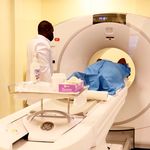
Doctor and patient

Many health systems do not prioritise cost-effective primary and community-based NCD interventions such as screening, early diagnosis and preventive care, and instead allocate funding to high-cost hospital-based curative treatments.

Photo credit: Pool

At any given moment, somewhere in Kenya, a woman is receiving a chronic disease diagnosis at a stage where treatment is no longer a single outpatient procedure, but rather months of chemotherapy and radiotherapy. Not to mention the referral process and resulting bill, which can amount to hundreds of thousands of shillings.

In many cases, the disease could have been detected years earlier through routine screening at a fraction of the cost.

According to a regional study on financing non-communicable diseases (NCDs) in sub-Saharan Africa, this is largely due to the way the health system pays healthcare providers.

The study, published by the Financing Accelerator Network (FAN) in partnership with the World Bank Group, Access Accelerated, Results for Development (R4D), and the African Institute for Development Policy (AFIDEP), states that Kenya's health financing relies mostly on a fee-for-service model. This model is not well-aligned with the country's growing chronic disease burden.

“Many health systems do not prioritise cost-effective primary and community-based NCD interventions such as screening, early diagnosis and preventive care, and instead allocate funding to high-cost hospital-based curative treatments rather than preventive or early-stage interventions,” said the report.

In Kenya, the report states that "predominantly fee-for-service models" remain the norm, and it calls for a transition to "performance-based payment mechanisms and integration with NCD health financing reforms".

"NCD services are not comprehensively covered under a single benefit package, with gaps in access to certain treatments. Data collection is also fragmented, leaving health information systems in need of strengthening to enable evidence-based decision-making," it stated.

How the payment model works against prevention

Although the Social Health Authority (SHA) introduced capitation for primary healthcare through the Primary Health Care Fund (PHCF), outpatient, specialist and hospital services in Kenya still rely heavily on fee-for-service reimbursement.

Under this system, providers are paid for every consultation, laboratory test, scan, admission and procedure that they carry out. The report argues that such payment systems reward the volume of services delivered rather than disease prevention or continuity of care provision.

“This makes them poorly suited to chronic conditions such as cancer, diabetes and hypertension, which require regular screening, long-term monitoring and continuous care,” read the report.

The study specifically identifies Kenya and Botswana as countries where reliance on fee-for-service reimbursement has proved suboptimal for non-communicable disease (NCD) care, as it fails to incentivise preventive services or efficient service delivery.

"Shifting towards payment systems based on performance or outcomes could significantly improve the alignment between spending and health outcomes," said the report.

Meanwhile, Rwanda has been named the region's strongest performer when it comes to purchasing NCDs. This is thanks to its results-based financing model, whereby facilities are paid based on their performance rather than the volume of work they carry out. This model is combined with a community-based health insurance scheme, which covers over 90 per cent of the population.

Kenya's Social Health Insurance Fund (SHIF) levies a contribution of 2.75 percent of gross earnings, but enrolment has outpaced payment. Of the approximately 29 million Kenyans registered with the SHA by early 2026, only around five million were actively paying, with most of the shortfall being accounted for by the informal sector.

Where the money actually goes

Although the SHA's Primary Health Care Fund is intended to strengthen preventive care through capitation payments to primary healthcare facilities, private healthcare providers argue that the amounts disbursed are too low to support comprehensive screening.

In practice, the annual allocation of Sh900 breaks down to just Sh75 per registered patient per month for outpatient primary care at Level 2 and 3 facilities.

Private networks note that this tight monthly capitation leaves virtually no room to absorb the operational costs of proactive, aggressive disease testing.

Compare this with cancer treatment, which the SHA covers up to Sh800,000 under the SHIF oncology package. Patients can also access an additional Sh400,000 for catastrophic care through the newly expanded Emergency, Chronic and Critical Illness Fund (ECCIF).

In other words, the financial design of the system allocates significant resources once a disease has progressed, while severely restricting entry points for primary care intended to detect diseases early.

Brian Lishenga, former chairperson of the Rural and Urban Private Hospitals Association of Kenya (RUPHA), has expressed concerns about the gradual implementation of cancer screening under the SHA.

He pointed out that, although screening is listed in the Primary Health Care Fund's benefit package, it has not yet been implemented. Without publicly funded screening, many patients either pay for tests themselves or delay testing until they notice symptoms, by which point treatment is usually more complicated and expensive.

These findings come as Kenya continues to struggle to achieve its own targets on non-communicable diseases. The country's first National Strategy for the Prevention and Control of NCDs, launched in 2015, aimed to reduce premature deaths from these diseases by 25 per cent by 2025, in line with the WHO's global '25 by 25' goal. However, an evaluation of the strategy found that only 17.5 per cent of its planned activities were fully carried out. Another 68.8 per cent were only partly completed and 13.8 per cent had not even started by the time the strategy ended.

Kenya's follow-up plan, the National NCD Strategic Plan for 2021/22–2025/26, maintained this target. However, there is no published evidence that Kenya met the original goal by the 2025 deadline.

The scale of the problem

These findings come against the backdrop of a rapidly increasing NCD burden across the continent. NCDs accounted for 37 per cent of all deaths in Africa in 2023, up from 33.7 per cent in 2015 and 27.6 per cent in 2005. Between 1990 and 2021, regional mortality linked to diabetes and kidney disease increased by 134 per cent, while deaths from neoplasms increased by 119 per cent over the same period — one of the fastest-growing categories of death on the continent.

In Kenya, NCDs now account for around 39 per cent of annual deaths, according to the Ministry of Health's National NCD Strategic Plan, up from 27 per cent a decade ago. The four leading NCDs — cardiovascular disease, cancer, diabetes and chronic respiratory disease — together account for 57 per cent of the country's NCD-related deaths.

Cardiovascular disease and other chronic conditions now account for over half of hospital admissions and around 40 per cent of in-hospital deaths in Kenya. This puts an unfair strain on a healthcare financing system that is still mainly geared towards acute illnesses rather than chronic conditions.

PAYE Tax Calculator

Note: The results are not exact but very close to the actual.