Zimbabwean migrants queue outside the Cape Town Home Affairs office on the day of an unofficial deadline set by anti-immigrant groups for all undocumented migrants to leave, in Cape Town, South Africa, June 30, 2026.
There are moments in history when leadership is measured not by speeches, but by the courage to speak when silence is easier. Africa is at such a moment.
As our continent pursues deeper economic integration through the African Continental Free Trade Area (AfCFTA), we are simultaneously witnessing renewed xenophobic tensions that threaten not only lives but also the economic future we have spent decades building. This is no longer simply a humanitarian issue. It is an economic issue. It is a leadership issue. And it is increasingly becoming a continental concern.
The African Continental Free Trade Area (AfCFTA) represents a market of more than 1.4 billion people with a combined gross domestic product exceeding $3 trillion, making it the world’s largest free trade area by participating countries. Its vision is bold: to unlock intra-African trade, attract investment, create jobs, strengthen regional value chains and improve the lives of millions of Africans. That vision depends on one essential ingredient—trust. Trust that people can live and work across borders safely. Trust that businesses can invest with confidence. Trust that governments will uphold the rule of law. Trust that Africa remains committed to regional integration. Xenophobia erodes that trust.
Recent anti-migrant violence in South Africa has once again reminded us that social instability carries economic consequences. Beyond the tragic loss of life and displacement of families, such incidents affect investor sentiment, business continuity, tourism, diplomatic relations, and regional confidence. History has shown that when uncertainty grows, investment decisions become more cautious, businesses delay expansion and markets become less predictable.
The numbers should concern us all. South Africa contributes approximately $400 billion to Africa’s economy. Nigeria contributes over $360 billion, Kenya more than $130 billion, while Ghana contributes approximately $80 billion. Together, these four economies account for nearly $1 trillion in economic output.
Imagine the cost if mistrust begins to replace cooperation. Cross-border investments would slow. Regional supply chains would become more vulnerable. Consumer confidence would weaken. Tourism would decline. Insurance and security costs would rise. Foreign direct investment would become more cautious.
Ultimately, it is ordinary Africans—workers, entrepreneurs, small businesses, and young innovators—who would bear the greatest cost. The first casualty of xenophobia is human dignity. The second is investor confidence. The third is economic growth.
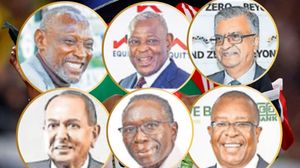
For Africa’s business community, this should be a wake-up call. Pan-African companies—including Safaricom, Vodacom, Absa Group, MTN Group, Standard Bank Group, Ecobank, and The Coca-Cola Company—have invested billions of dollars across borders. Their success depends upon stable markets, secure communities, predictable regulation, and the free movement of people, talent, and ideas.
No company can thrive where fear replaces certainty. Africa’s corporate leaders must become more visible during moments like these.
Influential entrepreneurs and business leaders—including Aliko Dangote and many others who have built businesses across multiple African markets—have demonstrated what is possible when Africa works together. Their voices carry influence far beyond their boardrooms. Speaking against xenophobia is not taking a political position; it is safeguarding the conditions that make economic growth, investment and job creation possible.
The responsibility for preserving Africa’s unity, however, does not rest with business alone. It belongs equally to governments. I therefore respectfully call upon African Heads of State—including President Cyril Ramaphosa of South Africa, President William Ruto of Kenya, Bola Tinubu of Nigeria, John Dramani Mahama of Ghana, and leaders across Africa—to continue strengthening diplomatic engagement, promoting dialogue and reaffirming the Pan-African values that have long united us.
The more important question is whether Africa is willing to compromise decades of progress in regional integration, trade, investment, entrepreneurship, and shared prosperity because of fear, misinformation and division. I believe the answer must be no.
Few leaders embodied that philosophy more profoundly than Nelson Mandela, who once said: “No one is born hating another person because of the colour of his skin, or his background, or his religion. People must learn to hate, and if they can learn to hate, they can be taught to love.”
Those words remain as relevant today as they were when they were first spoken. Africa’s greatest competitive advantage has never been its minerals, telecommunications networks, financial institutions, or infrastructure alone.
It has always been its people. If we fail to protect them, we risk undermining everything we have worked so hard to build. The question before us is no longer whether xenophobia is morally wrong. That answer is self-evident.
Governments must demonstrate courageous leadership. Regional institutions must strengthen cooperation. Citizens must reject narratives that divide us. Africa’s future will not be secured through isolation. It will be secured through partnership. Not through fear, but through trust. Not through silence, but through leadership. That is the Africa we owe the next generation.
Dedicated to every African entrepreneur, investor, worker, student, innovator, and dreamer whose future depends on a peaceful, integrated, and prosperous continent.
Alice Awiti Otieno, MBA is a Strategic Partnerships and Government Affairs Executive with extensive experience in commercial strategy, stakeholder engagement, digital transformation, and public-private collaboration. She writes on leadership, business strategy, public policy, regional integration, and Africa’s economic transformation. The Executive Perspective is her thought leadership series exploring the intersection of business, governance, technology, and sustainable economic growth across Africa.