Kenya’s foreign investment inflows hit a record Sh414bn

In 2025, Kenya's FDI marked its strongest performance ever as investors poured money into the country’s digital economy.

Photo credit: Shutterstock

Kenya attracted an estimated $3.2 billion (Sh413.6 billion) in Foreign Direct Investment (FDI) in 2025, marking its strongest performance ever as investors poured money into the country’s digital economy and renewable energy amid business-friendly reforms.

Numbers released Tuesday by the United Nations Conference on Trade and Development (Unctad) showed FDI inflows rose 37.7 percent, or $876 million (Sh113.22 billion), from revised $2.32 billion (Sh299.9 billion) in 2024.

This helped Kenya cement its position in recent years as East Africa’s fastest-growing investment destination despite a fierce global race for capital.

The report says multinational companies are channelling investment into digital infrastructure, artificial intelligence, semiconductors and selected energy projects, creating winners and losers as governments compete for high-value industries instead of traditional manufacturing.

Unctad says global FDI remained resilient in 2025, rising six percent to $1.6 trillion (Sh206.8 trillion), but warns that the recovery disguises a fundamental shift in how companies choose investment destinations.

“However, investment activity became more selective, with growth concentrated in a limited number of host economies and in capital- and technology-intensive sectors,” Unctad wrote in World Investment Report 2026.

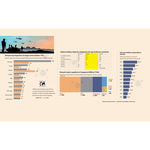
Investment flows into 11 East African countries rose 12.1 percent to $14.6 billion (Sh1.89 trillion) during 2025 from $13.02 billion (Sh1.68 trillion) a year earlier. Unctad analysts estimated Kenya contributed $876 million (about Sh113.22 billion) of the region’s $1.57 billion (Sh202.92 billion) increase in FDI.

The country generated more than half of East Africa’s additional foreign investment and increased its regional market share to 21.9 percent, from 17.9 percent in 2024, the highest level recorded in six years.

Kenya’s performance outpaced neighbouring economies, suggesting investors favoured the country despite heightened regional competition and persistent global uncertainty over cross-border investment flows.

Uganda’s inflows rose 7.8 percent to $3.36 billion (Sh434.28 billion), Tanzania recorded 3.7 percent growth to $1.72 billion (Sh222.31 billion), while Ethiopia’s inflows declined 4.7 percent to $3.8 billion (Sh491.2 billion).

Unctad attributes part of Kenya’s performance to policy reforms that strengthened its attractiveness to investors.

“Kenya reduced corporate income tax rates and introduced dividend tax exemptions for companies accredited under the Nairobi International Financial Centre, while also extending investment allowances in telecommunications to spectrum licences,” the report states.

Unctad also identifies Kenya’s clean energy advantage as a key factor behind growing investor confidence, particularly among global technology firms seeking reliable and low-carbon electricity.

The report notes “Kenya has a renewable-heavy electricity system, with nearly 90 percent of generation coming from renewable sources, led by geothermal power”.
This gives Kenya “both a cost and a credibility advantage in attracting digital infrastructure investment”, the report says.

Unctad says Kenya has secured “a $1 billion investment package that includes a geothermal-powered data centre,” highlighting how renewable energy is becoming a competitive investment advantage.

The report also highlights Kenya’s investment in digital innovation infrastructure. It says, “Kenya has focused on digital innovation infrastructure and regulatory experimentation,” with Konza Technopolis being developed into an innovation hub supporting investment in the digital economy.

Unctad also credits Kenya’s use of a regulatory sandbox in the ICT sector, allowing emerging technologies to be tested before entering the wider market.

The report, however, suggests the country’s record inflows do not eliminate bigger questions about its long-term competitiveness.

Unctad says countries attracting the largest investments are increasingly those capable of supporting strategic industries through industrial policy, advanced infrastructure and technological capability, rather than relying mainly on tax incentives or low labour costs.

The report says the 2025 increase was concentrated in economies with stronger capacity to attract large-scale and strategic investment, reflecting the growing importance of technology-intensive industries and industrial policy.

This signals that Kenya is staring at a new phase in the competition for global capital.

The country has for years marketed itself through its strategic location, expanding infrastructure, financial services sector, technology ecosystem and access to regional markets. Those strengths remain important, but may no longer be sufficient.

The report notes that announced greenfield investment remained near record levels globally, driven largely by mega projects in data centres, semiconductors, oil and gas, and strategic infrastructure.

That shift presents both opportunities and challenges.

Kenya’s expanding fibre-optic network, digital economy, renewable energy resources and ambitions for Konza Technopolis position it to compete for data centres and artificial intelligence investment. Its critical mineral deposits such as rare earth minerals, niobium, coltan and copper could also become valuable.

Competition for capital is, nonetheless, widening beyond East Africa as countries invest aggressively in semiconductor manufacturing, battery supply chains, clean energy industries and advanced manufacturing ecosystems.

Unctad says the world’s top 20 investment destinations attracted more than 80 percent of global FDI in 2025, illustrating how difficult it has become for developing economies to secure major international projects.

The report says although inflows into Africa fell to $69.5 billion (about Sh8.98 trillion) from an exceptional $94.3 billion (Sh12.19 trillion) in 2024, this still represented the continent’s third-highest FDI performance in 25 years after excluding one-off mega projects.

“Downside risks are mounting. Real investment activity is likely to remain subdued, weighed down by geopolitical tensions, trade policy uncertainty and economic fragmentation,” the report states.

PAYE Tax Calculator

Note: The results are not exact but very close to the actual.