Essential drugs worth Sh1bn expire at Kemsa stores

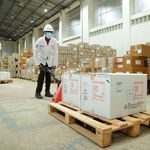
Drugs in cartons set for disbursement by the County Government in Kapenguria town on September 8, 2025.

Photo credit: File | Nation Media Group

Essential cancer, HIV/Aids and malaria medicines worth nearly Sh1 billion expired in Kemsa’s warehouses as public hospitals and clinics across the country continued to struggle with severe drug shortages.

Auditor-General Nancy Gathungu said that the losses included Sh547 million for items like cancer medicines, pharmaceuticals and non-pharmaceutical medical supplies and another lot of Sh367.4 million that Kenya Medical Supplies Authority (Kemsa) hid from the books.
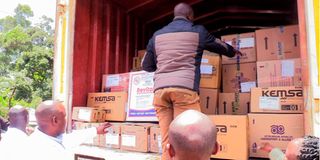
Supplies worth Sh23.9 million under the Ministry of Health programmes, expired after the ministry failed to issue distribution instructions to the Kenya Medical Supplies Authority (Kemsa) and Sh9.3 million of oncology medicines.

Revelations of expired drugs came as Kemsa delivered 41 percent of orders placed by health facilities, compared to a target of 90 percent, leaving hospitals with empty shelves.

Of the expired stock, medicines worth Sh237.1 million were procured through Kemsa’s own revenue, while Sh309.9 million supplies were held in trust for development partners and Ministry of Health programmes, including the Global Fund.

A further Sh367.4 million worth of donated Global Fund commodities expired during the financial year, but this was not reflected in Kemsa's financial statement.

The Global Fund, the international financing body founded by billionaires like Bill Gates, provides cash for HIV/Aids, tuberculosis and malaria drugs.

The Auditor General outed this lot of hidden drugs after an audit of Kemsa’s warehouse management systems after the state agency omitted the critical medicines from its books.

“During FY 2024/25, the Authority incurred losses totalling Sh547 million arising from expired commodities. Of this amount, Kemsa's capital stock accounted for Sh237 million, which was expensed under the use of goods and services. Meanwhile, Sh309.9 million related to third-party stock," said Ms Gathungu.

During the financial year, the combined value of both disclosed and undisclosed expired stock hit Sh914 million. This was money drawn from taxpayers, counties, and donor agencies that ultimately delivered no health benefit.

Kemsa partly attributed these losses to its pull-based distribution model, whereby health facilities must formally place orders instead of receiving automatic allocations.

Delays in placing orders, poor forecasting, funding constraints and administrative inefficiencies often result in medicines sitting in warehouses until they expire.

Kenya has persistently recorded shortages of essential medicines at public health facilities, a problem that audits and health sector surveys have consistently attributed to the authority’s distribution failures.

Health sector surveys and county health reports have documented stockouts of items such as oxytocin, oral rehydration salts, cotrimoxazole and anti-hypertensive medicines at dispensaries and health centres.

Ms Gathungu also found that expired stock remained in warehouses without a documented system for quarantine, redistribution, returns or safe disposal once medicines had passed their expiry date, raising the risk that substandard or hazardous products could re-enter the supply chain or cause environmental harm if they are not disposed of properly.

Separately, the audit flagged discrepancies in how Kemsa valued and reported its pharmaceutical inventory, with differences between physical stock counts and system records that could not be fully reconciled. The auditor said that weaknesses in the i-LMIS logistics management platform's integration with physical warehouse operations had contributed to the discrepancy.

Ms Gathungu also revealed that concerns had already been raised in the previous financial year 2023/24 audit regarding expired and damaged medical commodities. Still, these remained unresolved, pointing to broader structural weaknesses within Kemsa's supply chain system.

It reported that six of Kemsa's seven regional warehouses were merely storage depots with no distribution capacity. Only the Kisumu regional warehouse was partially operational. The facilities in Eldoret, Mombasa, Nyeri, Meru, Kakamega, and Nairobi's Commercial Street were unable to independently dispatch supplies to counties, meaning distribution remained heavily centralised through the Nairobi hub.

This limited Kemsa's ability to redirect medicines nearing their expiry date to areas experiencing shortages.

Kemsa's internal performance data showed that expiry losses stood at 1.99 percent, below the target ceiling of 2 percent. The authority also reported that capital stock expiry costs fell from Sh371.4 million in FY2023/24 to Sh237.1 million in the subsequent financial year, partly due to the i-LMIS platform.

However, Ms Gathungu said that this improvement was undermined by undisclosed donor-funded expenses and the continued lack of a clear framework for disposing of expired medicines.

“In these circumstances, we could not confirm the effectiveness of Kemsa's internal controls over expired inventory,” she said.

Follow our WhatsApp channel for the latest business and markets updates.

PAYE Tax Calculator

Note: The results are not exact but very close to the actual.