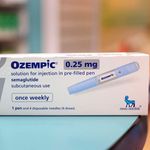
Why Kenyans pay a premium for branded drugs despite patent expiry

Generic medicines in Kenya are often 60 to 80 per cent cheaper than their branded counterparts.

Photo credit: Shutterstock

Patients in Kenya continue to pay higher prices for original or non-generic medicines years after patents expire, driven by entrenched prescribing habits, weak regulation, supply gaps, and market incentives that favour costlier products.

A spot check across Nairobi pharmacies shows significant price differences between branded and generic medicines.

For example, a course of the widely used antibiotic Augmentin, originally produced by GlaxoSmithKline, retails at around Sh1,400 to Sh3,000 depending on the dosage unit, while its generic equivalent, amoxicillin-clavulanate, can cost as little as Sh180 despite containing the same active ingredients.

The patent on Augmentin expired more than 20 years ago.

Price gaps

Industry data indicates that such pricing gaps persist across multiple therapeutic categories. A 2023 survey by the Kenya Healthcare Federation, covering pharmacies in Nairobi, Mombasa and Kisumu, found that branded medicines accounted for between 40 and 60 percent of sales in categories including antibiotics, antihypertensives and diabetes drugs.

In private hospital pharmacies, branded medicines accounted for more than 70 percent of sales, with prices often three to eight times higher than generics.

Health insurers say this reliance on branded medicines is inflating healthcare costs. Drugs account for around half of all medical insurance claims in Kenya.

"Heavy reliance on branded drugs means half of all medical insurance claims in Kenya go towards drugs alone," said Njeri Jomo, chief executive of Jubilee Health Insurance, in a past interview. “On average, generic drugs cost 30 to 80 percent less than their brand-name counterparts.”

Habit bias

According to international pharmaceutical regulations, once a patent expires, other manufacturers can produce equivalent versions of the drug at lower cost.

In high-income markets, generic drugs can account for up to 90 percent of sales within a year of patent expiry, often at prices up to 85 percent lower.

Experts partly attribute Kenya’s trend to prescribing practices, where doctors tend to prescribe specific brand names and pharmacists often dispense exactly what is written.

“You train with a drug; you trust a drug,” said James Nyawade, a general practitioner based in Nairobi. “I have been prescribing Lipitor since medical school. Switching feels risky, even though I know that atorvastatin is atorvastatin.”

Lipitor’s patent expired in Kenya in 2011.

Concerns over drug quality have also shaped patient and provider preferences. Past incidents involving substandard medicines in the region have contributed to a long-standing mistrust of generics, which pharmacists say has been reinforced over time.

“The mistrust surrounding generics is partly real and partly manufactured," said Anjeline Kyalo, a pharmacist at the Medchem retail chain. “And the originator companies are very good at keeping it alive.”

Policy gaps

Patients often perceive higher prices as an indicator of better quality, particularly in a system where most healthcare spending is out-of-pocket. This perception has sustained demand for more expensive branded medicines.

Vimal Patel, managing director of Cosmos Limited and chair of the Federation of Kenya Pharmaceutical Manufacturers, described this as a failure of both perception and policy.

“A shift to local generics could reduce healthcare costs by more than half. We will not achieve universal health coverage with originals,” said Dr Patel.

Market incentives further reinforce the trend. Retail pharmacies earn higher margins on imported branded medicines than on lower-cost generics. Industry figures show that although local manufacturers sell higher volumes, they account for only around 30 percent of the market by value, indicating that most revenue is generated by higher-priced imports.

At the same time, regulatory gaps have limited the uptake of generics. Although Kenya permits pharmacists to substitute prescribed brands with cheaper alternatives, this is not mandatory, and enforcement remains weak.

The government target set out in the Kenya Health Sector Strategic and Investment Plan 2013–2017 to achieve full generic prescribing was not met, and no binding legislation was enacted.

The Pharmacy and Poisons Board reportedly has fewer than 40 inspectors to oversee thousands of pharmaceutical outlets nationwide, limiting its oversight capacity.

Wairimu Mbogo, president of the Pharmaceutical Society of Kenya, said the issue extends beyond market dynamics to constitutional rights.

“Article 43(1)(a) guarantees every Kenyan the highest attainable standard of health. If we compromise this, we are failing the public,” said Dr Mbogo.

Supply strain

According to stakeholders, the absence of a legal framework mandating generic prescribing has left insurers with limited influence.

The Association of Kenya Insurers has called for legislation requiring doctors to prescribe by chemical name, noting that medicines account for around 45 percent of hospital bills and are a key driver of rising insurance premiums.

Supply issues in the public sector have compounded the problem. The Kenya Medical Supplies Authority (Kemsa), responsible for providing public hospitals with affordable generic medicines, has experienced repeated shortages, forcing patients to turn to branded options in private pharmacies.

Price differences between Kenya and other markets remain significant. Industry data shows some antibiotics are sold at several times international prices, while certain cancer drugs cost more than three times as much as in countries such as India.

Kamamia Wa Murichu, chairman of the Kenya Pharmaceutical Distributors Association, said pricing distortions and perceptions about quality continue to disadvantage patients.

“Some Kenyans have been led to believe that expensive drugs are more authentic and of better quality. They do not realise they are being exploited.”

Unlike countries such as India, South Africa and Morocco, Kenya does not currently regulate retail medicine prices for essential drugs.

The country’s reliance on imports is a key structural factor. Local manufacturers supply around 30 percent of the pharmaceutical market, valued at more than $1 billion, while more than 70 percent of essential medicines are not produced domestically.

This dependence leaves Kenya vulnerable to exchange rate volatility, global supply chain disruptions and external pricing pressures.

Principal Secretary for Medical Services Ouma Oluga has acknowledged that reliance on imported medicines has left the country exposed to global shocks.

“Kenya’s heavy reliance on imported medicines has left the country vulnerable to global supply disruptions. A stronger regulatory system is essential for both patient safety and economic growth,” said Dr Oluga.

However, efforts to introduce mandatory generic prescribing and strengthen local manufacturing have faced delays due to resistance to policy changes and trade provisions that could extend exclusivity periods for branded drugs.

“We are not protecting business interests. We are protecting public health,” said Dr Mbogo. 

Follow our WhatsApp channelfor the latest business and markets updates.

PAYE Tax Calculator

Note: The results are not exact but very close to the actual.