Petitioner challenges Naivasha–Kisumu SGR over ‘secrecy and rights violations’

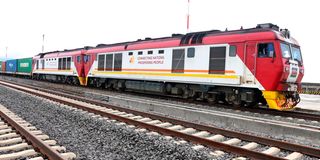
Standard Gauge Railway (SGR).

Photo credit: File | Nation Media Group

A rights advocate has moved to court seeking to halt the planned extension of the Standard Gauge Railway (SGR) from Naivasha to Kisumu, alleging secrecy, unlawful financing, and threats to land and environmental rights.

In a constitutional petition filed at the High Court in Kisumu, Francis Awino accuses State agencies of pushing ahead with the multibillion-shilling project without transparency or public participation.
The case targets Kenya Railways Managing Director Philip Mainga, the Kenya Railways Board, the Public Service Commission, the Ministry of Roads and Transport, and the National Land Commission.

Mr Awino says the proposed railway extension is a mega infrastructure undertaking with wide financial, social, and environmental consequences affecting multiple counties and thousands of residents.

The planned railway extension line, covering about 475 kilometres, is expected to pass through Narok, Bomet, Kericho, Nyamira, and Kisumu before reaching Malaba border to connect with Uganda’s planned railway.

The project is billed to improve the movement of goods and passengers while reducing the heavy dependence on road transport.

Transport CS Davis Chirchir on Monday inspected preparations for the groundbreaking ceremony at Kibos in Kisumu. He said the project will play a key role in unlocking economic opportunities in western Kenya and enhancing regional connectivity.

The line is expected to feature extensive civil works, including 79 railway bridges, eight tunnels measuring, and 376 culverts.

However, according to the petition, authorities initiated preparatory activities, including land acquisition planning and financing negotiations, while withholding key project documents from the public.

“The respondents have failed to disclose contractual frameworks governing the project including engineering contracts, concession agreements, financing arrangements, or risk allocation matrices,” the petition states.

Mr Awino argues that secrecy surrounding the financing model exposes taxpayers to unknown liabilities, including sovereign guarantees and revenue commitments tied to undisclosed public-private partnership agreements.

He claims the project may saddle the country with massive contingent fiscal obligations that Parliament and the public have not scrutinised.

The petitioner further alleges that procurement processes for contractors and financiers remain opaque, with no evidence of competitive tendering or value-for-money assessments.

“The respondents have not disclosed competitive tender processes used in selecting contractors, financiers, or concessionaires relating to the project,” the petition states.

Mr Awino also claims affected communities along the railway corridor have not been consulted despite looming acquisition of over 5,000 acres of land and potential displacement.

He says residents remain unaware of valuation criteria, compensation frameworks, or timelines for payment linked to compulsory land acquisition.

“Numerous affected persons lack formal title documentation yet remain constitutionally protected occupants entitled to compensation under compulsory acquisition doctrine,” the petition states.

The case further raises environmental concerns, arguing that Environmental and Social Impact Assessment reports have not been publicly disclosed to communities likely to be affected.

The petitioner warns that wetlands, biodiversity corridors, rivers, and agricultural ecosystems along the route risk irreversible degradation without transparent environmental safeguards.

He also cites lessons from the Nairobi–Mombasa SGR, arguing the earlier project left Kenya with heavy debt and operational losses that required continued Treasury subsidies.

Mr Awino claims the government has not published feasibility studies, fiscal risk analyses, or independent economic assessments justifying the railway extension.

“The continued concealment of project agreements denies citizens access to information necessary for protection of constitutional rights,” the petition says.

He is asking the court to declare the project unconstitutional, halt its implementation, compel disclosure of all project documents, and order an independent forensic audit of its finances.

The High Court has since directed that the application be served immediately, with responses expected before the matter is heard.

Follow our WhatsApp channel for the latest business and markets updates

PAYE Tax Calculator

Note: The results are not exact but very close to the actual.