Government to have final say on Safaricom's new regional expansion

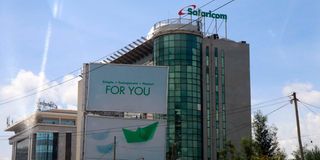
 Safaricom PLC headquarters in Westlands, Nairobi.

Photo credit: File | Nation Media Group

The Kenyan government will have the final say on Safaricom's expansion beyond Kenya and Ethiopia, giving the State significant control over the company's future entry into new markets, which could require substantial capital expenditure.

Safaricom's Kenyan business remains highly profitable, helping to fund its start-up operation in Ethiopia, which is still loss-making. The Ethiopian venture, which is expected to boost the company's earnings once it becomes profitable, has slowed the Nairobi Securities Exchange-listed firm's ability to increase dividend payouts to shareholders.
In the notice convening its 2026 annual general meeting, Safaricom's board will ask shareholders to approve a special resolution aimed at restricting the telco's expansion into new markets without the consent of the Government of Kenya.

The proposal is one of 14 special resolutions put forward by Vodafone Kenya Limited (VKL) as part of the agreement under which the National Treasury transferred its 15 per cent stake in Safaricom to South Africa's Vodacom, a transaction that made the Kenyan telecommunications provider a subsidiary of Vodafone Group Limited.

VKL is the holding vehicle through which Vodacom holds its 55 percent stake in Safaricom, increasing its ownership from the previous 35 percent. The South African firm also acquired a five per cent stake in Safaricom from its parent company, Vodafone Group Plc.

"Notwithstanding anything to the contrary contained in these articles, any resolution relating to... the expansion of the business of the Company into new territories outside of Kenya and Ethiopia shall not be deemed to have been passed unless the consent of the Government of Kenya has been obtained," reads part of the notice published on Wednesday.

Safaricom currently operates in Kenya, where it launched in 2000, and Ethiopia, which it entered in 2022 after winning the country's first private telecommunications licence through the Global Partnership for Ethiopia consortium.

Safaricom, East Africa's most profitable company, is listed on the Nairobi Securities Exchange, where the public owns a 25 percent stake following its initial public offering in 2008.

The government's insistence on retaining veto powers over future expansion reflects Safaricom's transformation from a telecommunications operator into one of Kenya's most strategic corporate assets.

Beyond providing mobile connectivity, the company underpins the country's digital payments ecosystem through M-Pesa, supports critical government digital services and remains one of Kenya's largest taxpayers and dividend contributors.

The State also retains a 20 percent stake in Safaricom, making it keen to protect future dividend flows. Restricting expansion into new, capital-intensive markets also shields minority shareholders from prolonged periods of lower dividend payouts that often accompany costly international investments.

Safaricom's expansion into Ethiopia has weighed heavily on the group's profitability as the company continues to invest billions of shillings in building network infrastructure and attracting subscribers in Africa's second-most populous country.

Although customer numbers have grown steadily, the Ethiopian business remains loss-making, reducing the group's overall earnings. Safaricom expects the subsidiary to post an operating profit by the end of the current financial year.

The board will also ask shareholders to approve a special resolution requiring the support of at least 75 percent of directors before any material change to the company's brand, reflecting efforts to safeguard one of Kenya's most valuable corporate assets. M-Pesa has become a global benchmark for mobile money innovation.

"Any resolution relating to ... any material change of the Company's brand shall not be deemed to have been passed unless at least seventy-five per cent (75 percent) of Directors vote in favour of the resolution and the consent of the Government of Kenya has been obtained," the notice states.

Vodacom will also gain the right to determine the next chief executive if shareholders approve the proposals at the July 31 annual general meeting.

Under the proposed changes, Safaricom's board will appoint the chief executive from a list of nominees provided by Vodacom for as long as the multinational holds more than 50 per cent of the company's issued share capital.

"The Directors may... appoint a Chief Executive Officer... from a list of nominees provided by VKL," the proposed amendment states.

The move could mark a return to Safaricom's earlier leadership structure, under which the company had expatriate chief executives until 2020 while a Kenyan chaired the board.

The proposed amendments also seek to make Safaricom adhere more strictly to its dividend policy of distributing at least 80 percent of net income to shareholders.

The proposal would be enshrined in the company's articles of association, which set out its internal governance rules.

In recommending dividends, directors would be required to comply with the dividend policy "unless otherwise approved by the company in general meeting."

The changes would also allow the board, subject to compliance with the dividend policy, to set aside part of the company's profits and determine how those funds are used.

PAYE Tax Calculator

Note: The results are not exact but very close to the actual.