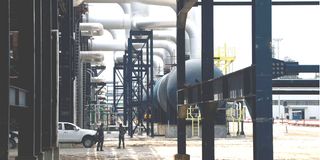
Dangote Industries Limited, led by its Vice-President for Oil and Gas and ultimate beneficial owner, Aliko Dangote, has formally communicated a proposal to construct a greenfield 700,000 bpd petroleum refinery on Lamu Island, Lamu County.
Preliminary site selection, geotechnical soil testing, and Front-End Engineering Design (FEED) work are already under way.
Groundbreaking is targeted before end of this month, with a construction window of three to five years.
Lamu is a Unesco World Heritage site holding over 41 percent of Kenya's total mangrove value, extensive coral reefs, and marine breeding grounds on which thousands of artisanal fishing households depend.
Kenya's Courts have twice intervened decisively in comparable Lamu infrastructure projects, halting a coal plant's environmental licence outright and awarding Sh1.76 billion in compensation over the Lamu Port project, each time for the same underlying failure: inadequate strategic and environmental impact assessment (SEIA), and public participation treated as a formality rather than a constitutional obligation.
A project of this scale cannot survive the same mistakes.
This proposal sets out how Government should approach the project so that it is bankable for the investor, defensible in court, and beneficial to the people of Lamu. All these three objectives are inseparable.
Three factors elevate this from a routine investment approval to a sui generis whole-of-government undertaking.
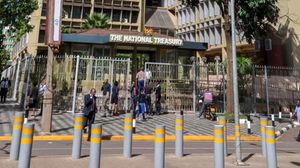
First, its Costing of Sh2.2 trillion makes it larger than several recent national budgets' entire development expenditure, and will require Parliamentary-level, land, fiscal and treaty instruments, not ministerial sign-off alone. The approvals will cut across many Ministries, State Departments, State Corporations and Lamu County.
Secondly, that it is located in Lamu Archipelago, a Unesco World Heritage Site with Mangrove forests valued at Sh3.96 billion per annum and representing 41.5 percent of Kenya's total mangrove value; the surrounding waters are breeding grounds for fish stocks that sustain the local artisanal fishing economy.
And thirdly, the Government has already lost one Lamu energy-infrastructure licence in the courts (the Amu Power Coal Plant). The Government also paid out Sh1.76 billion in compensation over the Lamu Port project, on nearly identical procedural grounds. The legal system has already told Government, in binding terms, what it must do differently this time.
The project will require approvals from inter alia the following laws, Petroleum Act, Energy Act, Environmental Management & Co-ordination Act, Special Economic Zones Act, Land Act, Physical & Land Use Planning Act, Government Owned Enterprises Act, Water Act and Occupational Safety & Health Act.
For the project to surmount Political, Legislative, Bureaucratic and Legal mine fields, the following need to be done: -
Establish an inter-agency and inter-ministerial Regulatory Secretarial that will be jointly chaired by The Attorney General and the Cabinet Secretary, Energy. The Secretarial will house all the applicable regulatory bodies, agencies and Lamu County.
To avoid delay, design the site boundary and it will involve mangrove area, wetland, riparian and beach frontage
Commission the Strategic Environmental Assessment before any project levies licence.
Initiate a public participation process that will survive Lamu Coal Project Court scrutiny.
Structure public compensation way before displacement begins.
Make local content and CSR commitment specific and enforceable.
A Host Governor Agreement has to be detailed enough that will provide in the long term, fiscal, operational and legal certainty.
An implementation Roadmap is required that will set out all the sequential steps from foundation until completion. This will cover statutory and legal approvals, public participation, commitment and legal costs et al.
If the above sequential steps are not followed, a loophole will be opened for litigation by way of Constitutional Reference in the High Court or Injunctive Orders in the Environment Court. The Government is forewarned how to make its biggest investment yet realisable and open doors for similar big-ticket investment. How we handle Dangote Refinery will be boon or boon to our future economy.
The writer is an commercial and corporate lawyer, KTK Advocates