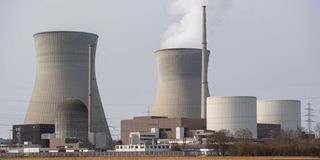
As Kenya accelerates its industrialisation agenda, the conversation around our energy mix has reached a critical turning point. The government’s strategic decision to construct a 2,000 megawatt (MW) nuclear power plant in Siaya County starting in 2027 represents a historic leap forward.
Through the Nuclear Power and Energy Agency (NuPEA) as the nuclear energy programme implementing organisation and KenGen as the owner operator, this infrastructure project is designed to deliver stable, affordable baseload electricity to power our manufacturing hubs and light up millions of homes by 2034.
Yet, as with any transformative technology, misapprehensions can cloud public discourse. I wish to address a lingering misconception directly: Kenya’s civilian nuclear programme has absolutely no connection to military applications or nuclear weapons. It is entirely designed for electricity generation and peaceful applications.
Furthermore, concerns that pursuing nuclear energy exposes Kenya to international military aggression or geopolitical targeting comparable to the historic tensions surrounding Iran’s non-compliant installations are fundamentally detached from legal and factual realities. To begin with, Kenya is a nation at peace, operating transparently under full international consensus.
To understand Kenya’s path, we must look back to the foundational philosophy of civilian nuclear energy.
In his historic 1953 “Atoms for Peace” address to the United Nations General Assembly, US President Dwight D. Eisenhower envisioned a world where atomic energy would be stripped of its military casing and instead “be adapted to the arts of peace.”
He urged the global community to mobilise this immense energy to “provide abundant electrical energy in the power-starved areas of the world.”
Kenya is now fulfilling that exact vision. Our actions are strictly bounded by robust, legally binding international architecture. Kenya is a proud and compliant State Party to the Treaty on the Non-Proliferation of Nuclear Weapons (NPT).
The NPT rests on three unshakeable pillars, namely, disarmament, non-proliferation, and the inalienable right of all states to develop nuclear energy for peaceful purposes.
By actively engaging with the NPT framework, Kenya explicitly rejects the pursuit of weaponisation while fully exercising her sovereign right to utilise clean nuclear technology to meet our domestic electricity demands. Kenya’s commitment to safety, transparency, and international oversight remains absolute. We operate in direct partnership with the International Atomic Energy Agency (IAEA).
As IAEA Director-General Rafael Mariano Grossi recently highlighted, the integration of nuclear power into expanding national grids must be anchored heavily on safe, secure, and well-regulated frameworks.
NuPEA’s ongoing technical collaborations and Memorandums of Understanding with the IAEA ensure that our Siaya installation will meet the highest standards of international transparency, physical security, and operational safety. Sceptics often worry about the physical security of nuclear plants against external threats.
The answer to this is that the global architecture provides strict protections for commercial facilities. Under international humanitarian law, nuclear electrical generating stations are classified as “installations containing dangerous forces.”
International law explicitly prohibits military attacks, sabotage, or hostile actions against these commercial facilities because of the severe humanitarian and environmental consequences of any disruption.
Customary international law treats any deliberate attack on a peaceful energy infrastructure as a severe violation and a war crime. Violaters of this rule expose themselves to the criminal jurisdiction of the International Criminal Court (ICC).
Unlike states that chose paths of geopolitical confrontation and unmonitored enrichment, Kenya’s facility will use commercially leased, low-enriched uranium reactor fuel that cannot be utilised for weapons. This will be procured from the international market that is safely regulated. Every ounce of nuclear material to be used in our nuclear plant will be subjected to the IAEA’s rigorous, regular, and intrusive verification and safeguards regime.
We are building a power plant, not a military outpost. The United States and other global powers do not and cannot oppose the peaceful, safeguarded expansion of nuclear energy in developing nations like Kenya. In fact, they actively partner with compliant nations to achieve global decarbonisation targets.
Justus Wabuyabo is the Nuclear Power and Energy Agency (NuPEA) CEO