Today, the Communist Party of China (CPC) marks its 105th anniversary. For some observers, the milestone is measured in years. For business leaders and development practitioners, however, it is better measured in outcomes.
After all, anniversaries do not build roads, educate children, expand exports, or lift people out of poverty. Policies do.
The story of the CPC began not in the industrial parks of Shenzhen nor the financial district of Shanghai, but on a modest wooden vessel anchored on Nanhu Lake in Zhejiang Province. In 1921 aboard this modest vessel, known today as the Red Boat, it was there that delegates concluded the First National Congress of the Communist Party of China and announced its founding.
What began as a gathering of a handful of visionaries has evolved into a political organisation with more than 100 million members overseeing the world's second-largest economy.
China's President Xi Jinping has stressed that ‘There are some fixed principles in governing a state, among which benefiting the people should be the root.’
The sentiment reflects a philosophy that places public welfare, poverty reduction, education, healthcare, and economic opportunity at the centre of national development. President Xi has often emphasised that even seemingly ordinary concerns such as warm housing, hot meals, clean air, and toilet facilities are fundamental measures of good governance.
A major success of China's people-centred development approach was the Poverty Alleviation Campaign (2013–2020). Rather than adopting a one-size-fits-all strategy, local officials identified poor households individually and implemented tailored solutions ranging from housing improvements and vocational training to relocation and agricultural support.
In 2021, China announced that it had eliminated extreme rural poverty under its national poverty standard, benefiting nearly 100 million rural residents.
Following this achievement, China launched the Rural Revitalisation Strategy to improve rural healthcare, expand digital connectivity, and upgrade infrastructure, alongside the Common Prosperity Agenda aimed at ensuring that economic development benefits a broader segment of society rather than a select few.
These people-centred initiatives have supported one of the world's most remarkable economic transformations, with GDP per capita rising from less than $100 to over $12,000, while positioning China as a global manufacturing powerhouse, infrastructure leader, and one of the world's largest trading nations.
Today, China is a key economic partner for countries across Africa. For Kenya, this relationship is increasingly significant as China has become a major trading partner and source of infrastructure investment.
Projects such as the standard gauge railway, road networks, and energy projects have improved connectivity and lowered business costs. At the same time, Kenya's exports to China, including tea, macadamia, avocados, seafood, and other agricultural products, continue to expand as access to the Chinese market grows through initiatives such as the zero-tariff policy.
As Kenya pursues its Bottom-Up Economic Transformation Agenda and seeks to strengthen manufacturing, agriculture, and the digital economy, China's experience offers an important reflection that sustained economic growth is often the result of sustained investment in people.
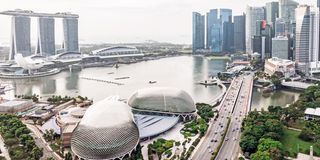
China is not alone in demonstrating this principle. Singapore offers another compelling example of people-centred development. When the city-state gained independence in 1965, its GDP per capita was about $500, comparable to many developing countries.
Despite having limited land, no significant natural resources, and a small domestic market, Singapore invested heavily in its people through initiatives such as the Housing Development Board (HDB), which provided affordable housing and helped eliminate slums, and the Skills Future Programme, which supports lifelong learning and workforce competitiveness.
One hundred and five years after a handful of delegates gathered on a small red boat, China stands among the world's leading economies. Singapore ranks among the world's most competitive business destinations, and Rwanda has emerged as one of Africa's notable development success stories.
Perhaps the common denominator is not ideology but continuity.
While many countries change policies when governments change, these three have largely kept their development missions afloat even as leaders have come and gone. After all, it is difficult to reach a destination if the captain keeps changing the map mid-voyage.
Human capital became Singapore's most valuable resource, with development viewed not simply as economic growth but as expanding opportunities and improving citizens' quality of life. This approach helped transform the country into one of the world's most advanced economies, with GDP per capita rising to more than $56,000 by 2015.
Today, Singapore ranks among the world's leading financial centres, logistics hubs, and innovation ecosystems.
As Singapore’s President Tharman Shanmugaratnam has often emphasized, true national success is measured not only by economic performance but by whether citizens can face the future with confidence, hope, and opportunity.
Africa offers its own compelling example in Rwanda. The country embarked on an ambitious reconstruction programme focused on healthcare, education, digital transformation, skills development, public service delivery, and investment promotion.
These reforms helped grow Rwanda's GDP from approximately $11 billion in 2021 to more than $13 billion in 2022, while positioning Kigali as a regional hub for innovation, conferences, and entrepreneurship.
Central to this approach is Imihigo, a performance-based governance system introduced in 2006 that links leadership accountability to measurable improvements in citizens' lives. Focusing on areas such as healthcare, education, job creation, agricultural productivity, and service delivery, the initiative reflects Rwanda’s President Paul Kagame's philosophy of putting people at the centre of development and governance.
China, Singapore, and Rwanda differ greatly in size, population, and history. Yet beyond their economic achievements, they share another important characteristic, and that is policy continuity.
Their priorities in poverty reduction, infrastructure, education, healthcare, and human capital development have remained consistent over time.
In China, Five-Year Plans are linked to longer-term national goals, enabling policy continuity while adapting to changing circumstances.
Singapore has maintained a steady focus on its critical policies with strong institutions and a professional civil service. Rwanda's Vision 2020, Vision 2050, and Imihigo system similarly ensure that national development goals remain central to governance.
For businesses and investors, policy consistency often matters as much as policy quality. Factories, ports, railways, and education reforms require years, sometimes decades, to deliver results. The ability to maintain strategic direction over long periods therefore becomes a significant competitive advantage.
Still policy continuity alone does not guarantee success. The experiences of China, Singapore, and Rwanda suggest that when long-term planning is combined with a sustained focus on citizens' welfare, continuity can become a powerful catalyst for economic transformation.
When national priorities are treated as generational projects rather than electoral projects, that’s where success lies.
Institutions such as the United Nations Development Programme (UNDP), World Bank, Organisation for Economic Co-operation and Development (OECD), African Development Bank (AfDB), and African Union also emphasize that progress should be measured not only by economic growth but also by improvements in people's well-being. Agenda 2063 envisions an Africa whose development is driven by, and benefits its people.
For Kenya, the discussion is timely as the country seeks to create jobs, expand manufacturing, boost exports, leverage opportunities and attract investment. Achieving these goals will require sustained investment in human capital, especially equipping young people with the skills needed to compete in an increasingly dynamic global economy.
The key reflections from China, Singapore, and Rwanda is not that countries should replicate one another's political systems, but that lasting development can be achieved when people remain at the centre of policy, and national priorities are pursued consistently over time.
Growth, trade and exports, are important, but they are ultimately tools for improving people's lives, opportunities, and well-being.
Susan Mukami is the Projects Coordinator, China Media Group Africa