It is now clear that the Iran war will have a huge effect on global oil markets and prices over the next year.
In fact, oil market analysts project that even if the war ended today, it would take at least six months for the situation to stabilise – pump prices and global benchmarks to get to pre-war levels.
It will take even longer – up to mid-2027 if damage to oil infrastructure in the gulf has been greater than estimated, and it takes longer to rebuild inventories.
What this means is that oil prices will not drop to pre-war levels within the remainder of this financial year.
Responsible governments should level with the public, communicate this clearly and adjust macro-economic plans accordingly.
Nonetheless, what the government of Kenya has done, and looks bent on continuing to do, is to take small reactive policy responses that remain vulnerable to continued volatility to geopolitics of the US war with Iran and will not actually stabilise the economy, let alone cushion businesses and wananchi.
The policy stance taken will only mean more weird Epra price adjustments and State House vetoes and u-turns that will further dim market confidence and sustain price volatility that will end in slower growth and revenue.
This is what government must do now: The Treasury Cabinet Secretary must now go to the budget proposals for FY2026/27 and find Sh50 billion recurrent expenditure to cut.
That will reduce revenue demands by an equal amount and obviate the need to raise the prices of oil. Here is why: Kenya raises about Sh330 billion annually from taxes on oil.
Broken down, as per FY2024/25 outturns, this is about Sh119 billion from Road Maintenance Levy Fund (RMLF); Sh36 billion from Railway Development Levy (RDL) on oil; Sh100 billion from VAT on fuel; and Sh70 billion from excise duty on petroleum.
Analysis of the impact of Iran war on global crude oil prices has been estimated to be up to about 15 percent. This computed means that the war will cause at least Sh50 billion increase in the economic burden that ordinary Kenyans and businesses have to bear in FY2026/27 for the government to maintain the Sh330 billion revenues it expects from tax on oil.
Since Kenya has already securitised [or planned to securitise] RMLF and RDL, which reels in the most oil taxes, it leaves VAT and Excise Duty as the only other options, policy tools, to apply to reduce taxes on oil and stabilise oil prices.
VAT brings on average Sh100 billion annually. Cutting the rate by half, from eight percent to four percent, would generate the Sh50billion needed in this instance to stay the cost of oil products, critical to the economy, where they were pre- war.
Of course this will cause a 1.4 percent cut in total government revenue and increase the FY2026/27 budget deficit by about 1.6 percent (to about Sh300 billion or widen by about 1.1 percent of GDP); which will make those folks in Washing- ton DC to come shouting about fiscal risk.
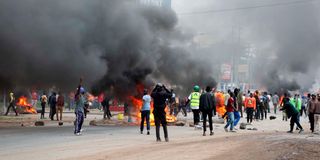
But what is the responsible and patriotic thing to do right now? Looking outside and watching the empty streets, burning tyres and blocked streets, businesses staring at further turmoil and citizens in despair?
To be frank, the options are not many. It could take the direction of more domestic borrowing, which nobody wants at this stage as it would push interest rates further and crowd-out credit for local businesses especially MSMEs.
External borrowing, from the usual suspects, would further expand the external debt burden and exacerbate forex risks. The Treasury could also tap into cash reserves it obtained from asset sales and recent Eurobond issues.
The more realistic option is to cut spending. Reduce unnecessary recurrent government expenditure by Sh50 billion this year to cover the revenue loss from halving VAT on oil at this dire season of global turmoil. There is still space to meaningfully cut recurrent spending, and we must now do it.
If Sh50 billion worth of expenditure cuts that government can do without this year is what is needed to stabilise things over the next six months, then we must do it. Now you see why those ridiculous expenditures in renovating houses, buying new cars and traveling to every corner of planet earth mean something? Someone said that we lose Sh2 billion a day, that would be just 25 days to sort out this ‘small matter’!
Cut budget, halve VAT on oil to end pump pain.
Kenneth Okwaroh is an International Development specialist and Executive Director at Africa Centre for People Institutions and Society (ACEPIS). Email: [email protected]